Show Notes
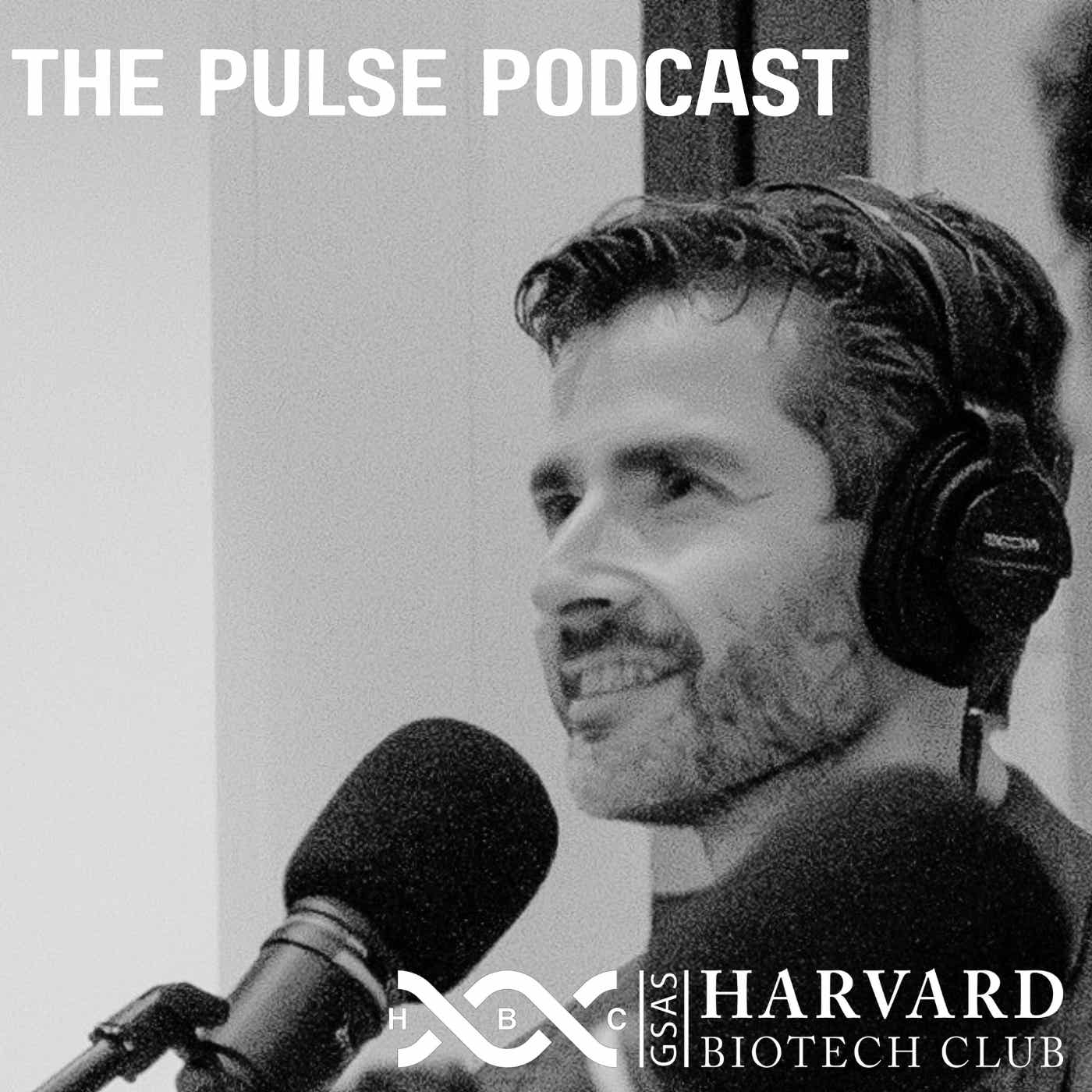
Ryan Flynn is pioneering a brand new field of biology. His seminal report of glycosylated RNA (glycoRNA) in 2021 reimagined the way we think about the cell surface and intercell communication. The discovery of glycoRNA revealed that cells intentionally express RNA on their surfaces and these RNAs interact powerfully with the immune system with potential implications in autoimmune disease and cancer immunology. Some of Ryan’s early work in these areas was adopted by Orna Therapeutics which was ultimately acquired by Eli Lilly for $2.4 billion. Ryan is no stranger to the wonderful world of RNA. He began his scientific career as an undergraduate at MIT in the lab of Nobel Prize laureate Phil Sharp, who won the prize for his work on RNA splicing. Ryan went on to complete an MD and PhD at Stanford in the lab of renowned RNA biologist Howard Chang, the discoverer of long non-coding RNA (lncRNA) before receiving post doc training from Carolyn Bertozi known for her Nobel prize winning work on bioorthogonal chemistry. Now, Ryan is spearheading the glycoRNA field as a member of the Boston Children’s Hospital Stem Cell Institute at Harvard. In this episode: * Ryan talks about his upbringing and his families background in medicine as well as his path from medical school to academia * Ryan explains his fascination with RNA as the molecule of life * Ryan walks us through how he discovered glycoRNA * Ryan touches on his translational work and his philosophy on the interaction between academia and industry * Ryan talks about his approach toward challenges in science and in life This episode was hosted, edited, and produced by Tanner Baldwin with help from Fang Xie.
This is a public episode. If you would like to discuss this with other subscribers or get access to bonus episodes, visit hbcpulse.substack.com
More from The Pulse Podcast
Dr Todd Golub is Director of the Broad Institute of MIT and Harvard, and a founding core member of the institute. He is also a member of the faculty of the Dana-Farber Cancer Institute and Harvard Medical School. Todd pioneered the application of genomics to cancer biology and therapeutic discovery. He is one of the first researchers to use genomic approaches to molecularly characterize human tumors, laying the foundation for the use of genomics to classify, diagnose, and treat cancer. Throughout his career, Todd is deeply committed to patient-focused research. He has advocated for and helped launch the free, rapid sharing of large-scale genomic data and tools to accelerate the pace of biomedicine, including but not limited to, GSEA (gene set enrichment analysis), Drug Repurposing Hub, Connectivity Map, Metastasis Map. As a founding core member of the Broad Institute, Todd helped launch the institute and established its Cancer Program. He served as director of the Broad’s Cancer Program for 17 years, and helped create a nimble, entrepreneurial, and supportive scientific community where researchers at all career levels and from laboratories across the greater Boston area can pursue transformative ideas in cancer. He also served as the Broad’s chief scientific officer for a decade before being named the institute’s director in January 2021. Todd is an elected member of the US National Academy of Medicine and the National Academy of Sciences. He is the recipient of multiple awards, and has served on the scientific advisory boards of many organizations, including St. Jude Children’s Research Hospital, the Ontario Institute for Cancer Research, the Sanford Burnham Prebys Medical Discovery Institute, and the National Cancer Institute. During this episode: * From his upbringing to medical school, Todd traces the experiences that led him to become a pediatric oncologist. * Todd shares his experience starting his own lab and using genomic technologies, such as DNA microarrays, to characterize pediatric cancers. * We explore the origin of the Broad Institute and his role in co-founding it and leading the Broad’s Cancer program. * Todd discusses some of the technologies developed in his lab, such as PRISM, a library of barcoded cancer cell lines. * As Director of the Broad, Todd shares his vision for the institute and its approach to advances in AI and gene therapy. * He also talks about his love of art and music and why he launched the Broad’s Artist-in-Residence Program.
Dr. Carl Novina is a physician-scientist, biotech founder, and Science Partner at Flagship Pioneering. Before joining Flagship, he spent nearly two decades as a principal investigator at Harvard Medical School, Dana-Farber Cancer Institute, and Broad Institute, where he studied RNA biology, cancer immunology, and therapeutic innovation. He received his MD from Columbia, his PhD from Tufts, and completed postdoctoral training in the laboratory of Nobel Laureate Phillip Sharp at MIT. Carl has co-founded multiple biotech companies, including Microbial Machines, Dynamic Cell Therapies, and NextRNA Therapeutics, spanning engineered microbes, cell therapies, and RNA-targeted medicines. He also served as a scientific advisor to the Harvard Griffin GSAS Biotech Club, led its biotech incubator for nearly a decade, and co-edited Biotechnology From Idea to Market. In this episode, we discuss: * Carl’s journey from MD/PhD training and RNA biology research to biotech company building. * How he founded companies while running an academic lab, and what he learned translating scientific discoveries into engineered microbes, cell therapies, and RNA-targeted medicines. * His involvement with the Harvard Biotech Incubator and how he evaluates whether a scientific idea can become a company. * His recent transition from academia to Flagship Pioneering and his new role in identifying and developing new biotech opportunities. * His advice for young scientists on career decisions, mentorship, and entrepreneurship. * His vision for the future of biotech, including emerging therapeutic platforms and AI. * A thought experiment about an interstellar journey, and Carl’s message to remain optimistic, focus on possibility, and resist cynicism and fatalism. * The books, movies, and activities he enjoys outside of science. Co-hosts: Sherin Xirenayi and Fang Xie Co-Producers: Sherin Xirenayi and Fang Xie
Dr. Tasuku Kitada is the co-founder, President, Head of R&D, and a board director at Strand Therapeutics, a clinical-stage biotechnology company developing programmable mRNA therapeutics for cancer, autoimmune disease, and in vivo cell engineering. Tasuku received his B.S. in Biophysics and Biochemistry from the University of Tokyo, earned his Ph.D. in Molecular Biology from UCLA, and completed postdoctoral training at MIT, where his work helped pioneer synthetic gene circuits built from mRNA. He later earned an MBA from the Wharton School at the University of Pennsylvania and worked as a senior biotechnology analyst at Candriam Investors Group before returning to science and company-building through Strand. At Strand, Tasuku and his team are developing technologies such as self-replicating RNA, circular RNA, and logic-gated mRNA circuits to engineer the next generation of RNA medicines. Strand’s lead program, STX-001, is designed to express IL-12 locally in tumors and has already entered clinical testing in patients with advanced solid tumors. Tasuku’s career sits at the intersection of molecular biology, synthetic biology, RNA therapeutics, and biotech entrepreneurship. His work has helped push the field beyond the idea of mRNA as a simple protein-expression vehicle and toward mRNA as a programmable therapeutic system — one that can sense cellular context, control expression, and potentially deliver potent medicines with greater precision. In this episode, we discuss: * Tasuku’s childhood between the United States and Japan, and how experiencing both cultures shaped his independence, discipline, and approach to science. * His decision to leave Japan for graduate school at UCLA and later pursue postdoctoral research at MIT, where he helped develop programmable mRNA gene circuits. * His unconventional transition from academic science into biotech investing, and what working as a public-market biotech analyst taught him about drug development, competition, and evaluating scientific ideas. * How the rise of the first generation of mRNA companies helped create the right moment to turn technology developed years earlier at MIT into Strand Therapeutics. * Strand’s programmable RNA platform, its clinical work using self-replicating RNA to express IL-12 in tumors, and the striking responses observed in some heavily pretreated cancer patients. * The next generation of Strand’s technology: systemically delivered RNA medicines that use molecular sensing to restrict therapeutic protein expression to specific tissues and cell states. * The potential to use in vivo RNA engineering to create CAR T-like cells directly inside patients, with the goal of making powerful immune-resetting approaches for autoimmune disease more scalable. * Tasuku’s lessons for young scientists and entrepreneurs: work hard enough to create opportunities, build a combination of experiences that makes you different, and don’t automatically talk yourself out of taking risks.
Chuan He is a world-renowned epigeneticist, a Wolf Prize laureate, and a recent inductee of the National Academy of Sciences. Chuan’s lab at the University of Chicago has spun out numerous companies including Ellis Bio (DNA methylation detection technologies) and Aferna Bio (plant biology). His discovery of the first RNA demethylase introduced a new layer of transcriptional regulation, and his subsequent work resulted in epigenetic based tools for detecting biomarkers of cancer, created super-crops that are more productive and resistant to drought, identified novel therapeutic targets, and enabled countless other discoveries in epitranscriptomics. In this episode: * Chuan talks about his experience growing up in China and his dreams of becoming a scientist. * Chuan describes his pathway to tenure at the University of Chicago and shares advice for those wanting to follow in his footsteps. * Chuan explains why his discovery of the first RNA demethylase (FTO) was so important, and why the rise of epitranscriptomics has been such an exciting journey. * Chuan shares some advice for trainees and expounds upon his philosophy towards the separation between academia and industry This episode was hosted, edited, and produced by Tanner Baldwin with help from Fang Xie.
Mark Namchuk is the Executive Director of Therapeutics Translation at Harvard Medical School. Before he joined Harvard, Mark had a 24-year research and development career in the biotech industry, working in a number of areas, including drug discovery, translational science and pharmaceutical development. Mark began his industry career at Cubist Pharmaceuticals as head of the enzymology group. Then Mark spent 17 years at Vertex, holding a number of senior research positions, including senior vice president of North American research and interim global head of research. In 2015, Mark joined Alkermes as senior vice president. In this episode: * He talks about how he fell in love with science after being inspired by the Star Trek character Spock and watching science programs on TV with his father. * He talks about his transition from academia to industry, including the moment he received his first job offer and ultimately describing the exciting energy at Vertex in its early days. * He comments on the wisdom he’s gained while serving in senior leadership positions at Vertex and other companies and expounds on he belief that “Biotech is an argument between science, management, and business… part of the art is knowing who’s turn it is to win.” * He talks about his philosophy on the differences between academic science and industry science and how to bridge the two. * He describes the premise and structure behind the Harvard Medical School Therapeutics Initiative and the Harvard Life Labs. * He provides actionable advice for PhD graduates and post docs trying to navigate a down job market Co-hosts: Tanner Baldwin and Fang Xie