Show Notes
The Nazi rise to power looms over Europe in the 1930s, causing an exodus of emigrants seeking refuge from persecution. But fleeing fascism involves contending with the arcane - and often arbitrary - immigration systems of other countries who turn a blind eye to the unfolding crisis. Some escape; most do not.
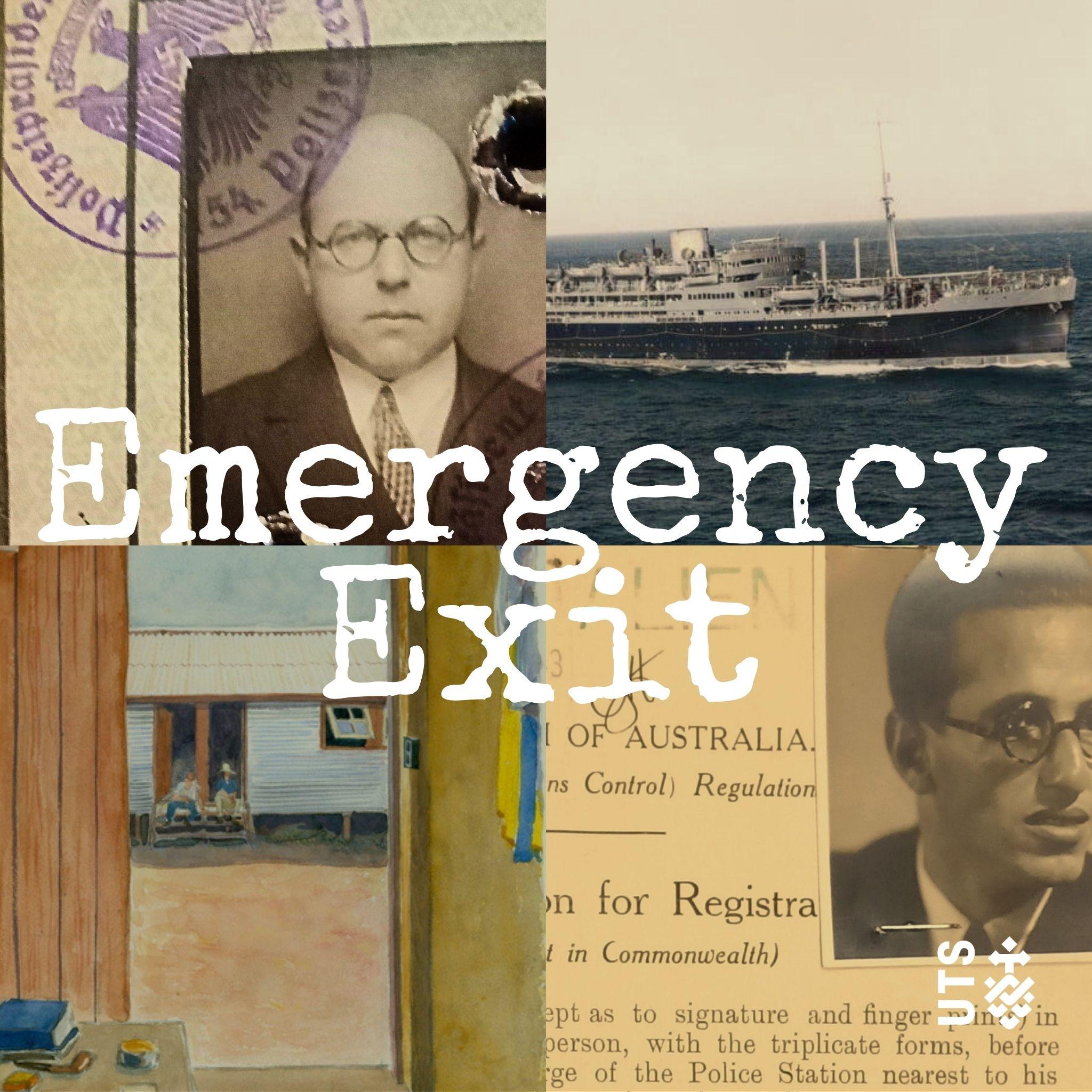
In Australia, a woman named Camilla Wedgwood works tirelessly, trying to help refugees navigate the requirements for would-be immigrants. Through her letters, archival records and personal stories, we meet individuals like German architect Richard Fuchs and Austrian lawyer Eduard Korten, whose futures were shaped by bureaucratic rules about money, age, profession and race.
The episode reveals how seemingly neutral systems such as immigration permits, professional admissions and citizenship rules, can shape lives in profound and unequal ways. What happens when rigid categories fail to reflect the complexity of human lives? How do lawyers - who are pivotal in forming bureaucratic rules - respond when they become the victims of them? Through the stories of real people whose survival hinged on bureaucratic decisions, this podcast introduces the concept of bureaucratic violence: a quiet but devastating force that determines who is allowed to belong, and who is left behind.
CreditsWriter and Producer: Olivia Rosenman Collaborating scholars: Katherine Biber, Sara Dehm, and Ana Filipa Vrdoljak Additional research: Eloise Chandler Sound design and audio engineering: Melissa May Narrator: Josh Bornstein
Thank you to everyone we interviewed and all the voice actors for this episode. Dr. Eureka Henrich, Justice Hament Dhanji, Professor Steve Hochstadt, Carina Camamile, Phoebe Borwick, Gideon Haigh, Bernhard Schmitz, Jonty Claypole, Rosa Saladino, and Paul McCartan.
Special thank you to Danny Mulheron, the grandson of Richard Fuchs, for allowing us to use his grandfather’s music throughout this episode.
Additional music from Blue Dot Sessions.
Emergency Exit was supported by funding from the Australian Research Council.
More from Emergency Exit
Leonhard Adam’s life was twice transformed by bureaucratic categories. Declared a “non-Aryan” by Nazi rules, he was forced out of his career and from his home in Germany. He fled to England in search of safety, only to be classified as an “enemy alien”, a category formed in panicked haste as Europe descended into war. Adam was swept up in a wave of mass internment that made little distinction between refugees and real threats.
In the aftermath of World War II, a charismatic Estonian man named Ilmar Tammelo arrived in Australia as one of more than 170,000 in the Displaced Persons Scheme. Trained as a lawyer and shaped by the upheavals of Soviet and Nazi occupation, Tammelo was assigned to manual labour in regional Australia, a condition of his participation in the DP scheme. A chance encounter brought him into the company of the leading legal theorist, Julius Stone, and Tammelo entered a small but influential circle of European émigré thinkers. Together, they challenged the narrow traditions of Australian legal education, introducing new ideas about law, justice, and society. Through Tammelo’s story and those of his contemporaries, the episode reveals both the constraints of bureaucratic systems and the resilience of those who navigated them, forging intellectual and cultural communities in an often unwelcoming environment.
Coming October 1st - This podcast explores the extraordinary stories of European refugees who escaped Nazi persecution, only to confront new forms of exclusion through Australia’s legal and bureaucratic systems.