Show Notes
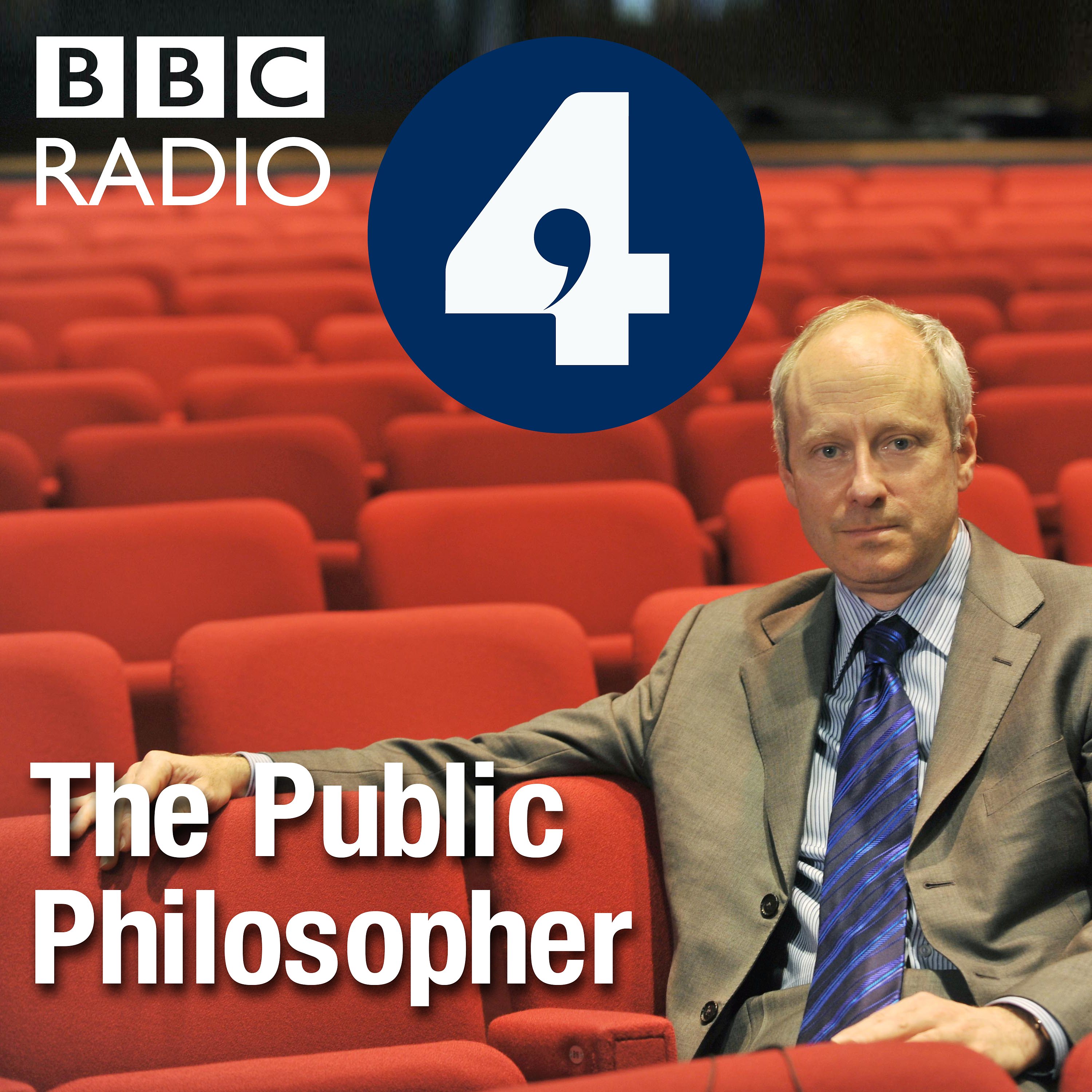
"We're going to engage in an experiment ....an experiment in public philosophy. We sometimes think that philosophy is remote, abstract and distant from the world we actually inhabit. I think otherwise". So says the eminent Harvard political philosopher Michael Sandel as he challenges an audience to examine the big ideas, the big philosophical questions that lie behind our views. In a series of public events, recorded at the London School of Economics, he brings his trademark style to a discussion on a current issue. This week, he delves into the thorny issue of access to universities. "Should students from poor backgrounds be given priority in admissions?" he asks. He demands a show of hands. The brave ones volunteer to explain the thinking behind their views. The audience is swept along. "Who decides if you're from a poor background...what does that mean to come from a poor background? The way our system works right now is fair because we're just numbers" says Georgia, arguing that academic results are all that matter. Fazal's view, reflecting his experience of American universities, is very different. "On one piece of paper you're writing down your experiences, your grades. On the other you're writing down your financial background...how much money you can potentially pay". Throughout, Michael Sandel acts as referee, thinker and devil's advocate. His lectures to Harvard undergraduates have been described as "spellbinding...an exhilarating journey". They are popular, provocative and interactive. Now he brings that approach to Radio 4. Producer: Adele Armstrong.
More from The Public Philosopher
Is extracting the voices of dead musicians, digitally de-aging living actors, or relying on AI algorithms to pick a future husband or wife creepy or cool? Professor Michael Sandel of Harvard University - Radio 4's 'Public Philosopher' - discusses these and other questions with an audience at the Hay Festival in Wales. Producer: Ben Carter Editor: Richard Fenton-Smith Sound Engineer: Andy Fell Production co-ordinators: Janet Staples and Liam Morrey Archive credits: Apple Music: The Beatles, Now and Then Intuition Robotics: ElliQ
Would you choose an algorithm rather than a human to mark your exam papers? Would you welcome a translation app that replaced foreign language learning? Would you trust a marriage prediction app to choose your life partner? Professor Michael Sandel of Harvard University - Radio 4's 'Public Philosopher' - puts these and other questions to an audience of students at the London School of Economics and Political Science. He generates a debate on the relationship between artificial intelligence and human decision-making, asking how far faith in technology depends on a mistrust of human subjectivity. Producer: Sheila Cook
Harvard philosopher Michael Sandel comes to St Paul's Cathedral to take on some of the hardest questions raised by the public discontent that characterises much of global politics today. With the help of a live audience, he asks whether globalisation and deepening inequality have eroded the bonds that hold communities together. He enquires if the continuing debate over Brexit reveals competing notions of political identity. Should we aspire to be citizens of the world, or is a citizen of the world a citizen of nowhere? He wonders if patriotism is a sentiment we should encourage or a prejudice we should overcome and whether, in diverse societies such as ours, a politics of the common good is even possible. Michael and his audience engage in a searching discussion of the contending visions of moral and civic identity that lie just beneath the surface of our fiercest public debates. Producer: Tim Mansel
Sixty people from around the world join Professor Michael Sandel in a digital studio at Harvard to discuss free speech. Free speech is a cornerstone of democracy and freedom of expression is regarded as a fundamental human right. But even in democracies there are disputes about the limits to free speech. And most countries have laws restricting free speech, such as libel laws, or laws controlling forms of pornography. But should limits be placed on free speech? Should people be allowed to say and write whatever they like, even if it is untrue and is deeply offensive to vulnerable individuals or groups? Professor Sandel unpicks the philosophy of free speech. Audience producer: Louise Coletta Producer: David Edmonds Executive Producer: Emma Rippon
Harvard philosopher Michael Sandel asks if life would be better if robots did all the work. Professor Sandel skilfully and entertainingly uses live audiences to help address important ethical and philosophical questions. He has travelled across the world and brought together global audiences for his method of Socratic dialogue. Michael gathers an audience in a secondary school in Dagenham, East London, to address one of the most pressing issues of our times - the future of work in a world where automation threatens to replace more and more workers with robots. A much-cited Oxford University report predicts that 35% of jobs in the UK are at risk. There is nowhere better to examine this issue than Dagenham, where once 40,000 people built cars at the famous Ford factory. The plant stopped making cars in 2002 and now makes vast numbers of car engines, but with fewer than 3,000 employees. Barking and Dagenham is judged by the Legatum Institute as the least prosperous borough in London and among the 10 least prosperous in the UK. The unemployment rate is one of the highest in London. As automation moves from the factory floor to the office, Michael Sandel and his audience will try to understand how we regard the ethics surrounding this profound shift. Producer: Tim Mansel.