Show Notes
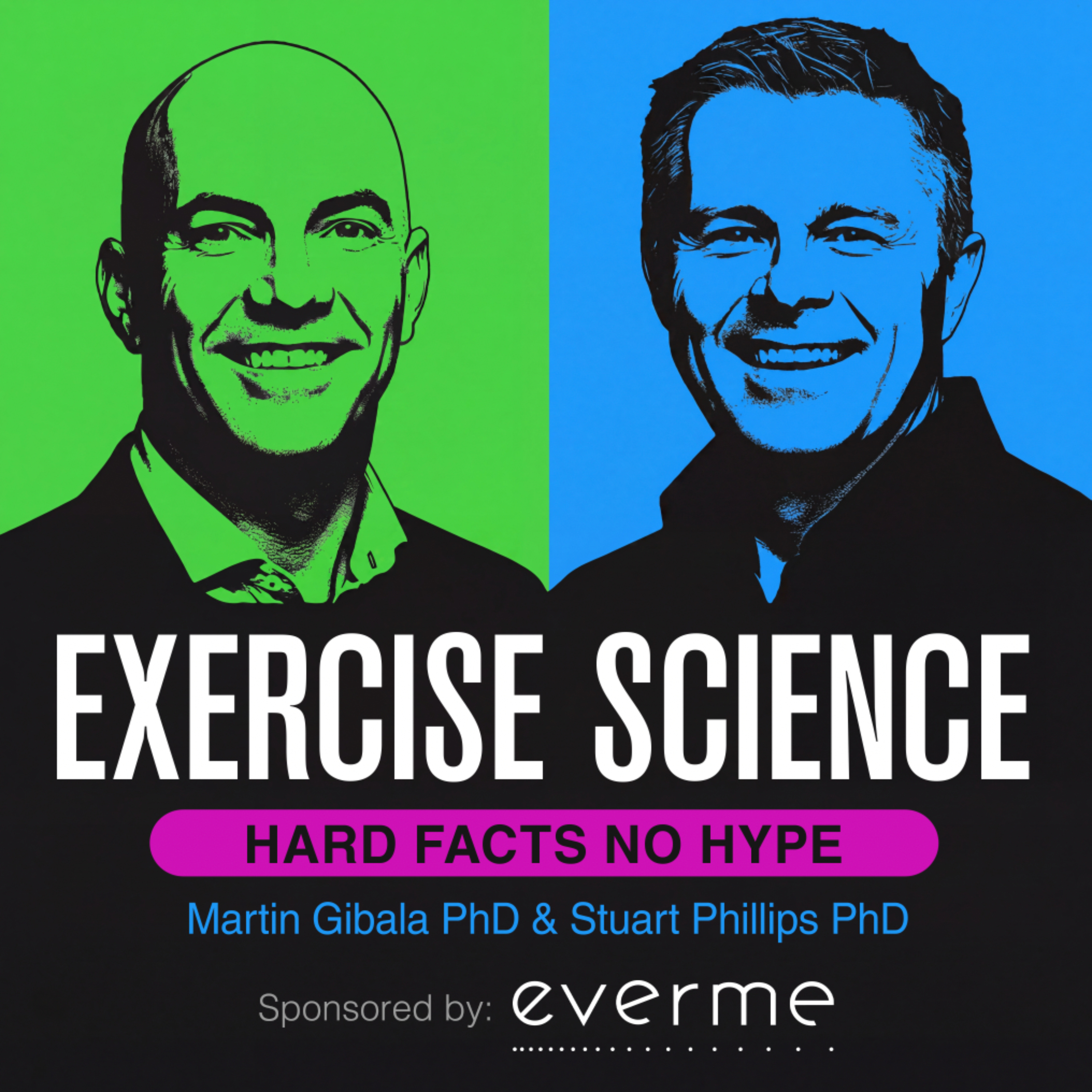
In a special episode that concludes the first season of Exercise Science we invited on Gary LeBlanc, the COO and president of our title sponsor, EverMe, to discuss the future of wellness in our first-ever live taping in downtown Toronto. Gary LeBlanc has been studying wellness and personal optimization for decades. As a leader at EverMe, Gary and his team are creating an agentic AI that breaks down complex longevity research, trending topics and expert perspectives into evidence-backed guidance. It also tracks your wearable data and provides guidance on the best way to achieve your health goals. Together, Stu, Marty and Gary discuss: Orthometria, Stu’s term describing an obsession with correct measurement of the self
How different wearables can assess the same things differently
The lack of standardization between devices like the Apple Watch, Whoop band or Oura ring
The EverMe origin story
The confusing world of signals we get from social media, wearables and agentic AIs, and how EverMe is designed to improve things
Where this world of AI and wearables will eventually lead
Send us ideas for future episodes, comments and listener questions at [email protected] Exercise Science is powered by EverMe, the longevity intelligence app. To get a free, no credit card two-month trial to EverMe exclusively for Exercise Science listeners, go to: everme.ai/exercisescience
EPISODE LINKS Stu’s orthometria post on LinkedIn Google search crediting Stu with coining the term The EverMe website Live Long and Prosper: The Globe and Mail’s feature article on EverMe Gary LeBlanc’s book, Find Your Superhuman, and personal website. He’s also on Instagram SHOW LINKS Follow or subscribe at your favourite platform @realexercisescience: Substack. YouTube. TikTok. Instagram. Apple Podcasts. Spotify. On X you can find us @realexscience. Find Stu on Instagram and X. Follow him on TikTok too! Marty is on Instagram. He’s also on X. Exercise Science is produced by Ghost Bureau, the Toronto content agency. DISCUSSION POINTS 00:00 Wearable tech experiences 00:36 Podcast introduction 01:21 Episode overview 02:19 Defining orthometria 02:57 Introducing Everme 06:25 Gary's origin story 07:42 Everme's distinct features 09:31 Data obsession 10:22 Information discernment 12:21 Proxies vs benchmarks 13:46 Reliable metrics 15:26 Building signals 17:00 Health guideline struggles 18:04 Reducing coaching friction 20:25 Behavioral tracking 22:13 Future of wellness 24:37 Humanity and tech 27:39 Purposeful technology use 29:15 Sifting social media 30:36 Assessing scientific credibility 33:06 Audience Q&A DISCLAIMER The Exercise Science podcast is for educational and entertainment purposes only and is not a substitute for professional medical advice. Strength training and fitness carry inherent risks. Always consult with a physician or qualified healthcare provider before starting any new exercise program or making changes to your diet. The hosts, producers, sponsors and guests of this podcast disclaim any liability for any injuries or losses connected with the information discussed in this show. The science of strength and fitness is continually evolving. While we strive to provide accurate, evidence-based information, we make no representations or warranties regarding the completeness, accuracy, or timeliness of the information discussed. Martin Gibala is an advisor to and holds equity in Longevity League Ltd., a US-based company whose services in part relate to exercise.
More from Exercise Science
You’re a busy person. Career, family, social obligations and everything else. What SHOULD you be doing for your cardio if you have just five hours a week to devote to your training? What’s the proper mix of long, slow effort, interval sessions and tempo bouts? How many times a week should you be getting out? And what’s the ideal duration per workout? To work out the answer, Marty and Stu invite on to the show the science journalist Alex Hutchinson, who has a physics Ph.D. from Cambridge and was on the Canadian national running team. He writes the Sweat Science column, on the science of human performance, for Outside magazine. He’s also the author of the bestselling books Endure and The Explorer’s Gene. Together, the guys discuss: the challenge of cardio training when you’re not a professional athlete.
What’s the most efficient way to fuel human performance during endurance sports? Australian Louise Burke is one of the best-known sports nutritionists on the planet, known for her Supernova race-walking studies that showed that keto- and low carb, high fat diets don’t fuel endurance athletes as well as carbohydrate-burning approaches. She also practices what she researches, holding the women’s Australian marathon record in her age group—the age group, she jokes, of “never you mind.” In this episode Dr. Burke walks Stu and Marty through her research that found carb-based approaches to fueling yield about 5% more of the muscle cell’s energy currency, ATP, compared to fat-burning approaches, with carb-burning also yielding 7-8% better performance. She also: —discusses her own approach to fuelling endurance events —provides tips on carbohydrate periodization —answers a listener question about carb-loading —shows that carbs during a race are good for the brain
You have an older person in your life, or perhaps you are an older person yourself and you need that push to start strength training. This is the episode for you—because today we’re talking with Ashley Gluchowski, Ph.D., one of the most enthusiastic evangelists on strength training around and the University of Salford exercise scientist who helps older adults get stronger, improve balance and reduce risk of falls. In this episode we discuss: The surprising activities of daily living that require strength as we get older Why older adults should be doing strength training The association between strength and decreased dementia risk
It’s no longer just the longevity bros and fitness fiends obsessing over their protein intake. So what does the science actually say about protein consumption? How much do you need, and what’s the best way to get it? In today’s episode, Marty takes our own in-house world-renowned protein expert Stuart Phillips through the math behind the macros. In this episode Stu and Marty discuss: Stu says why the old guideline of 0.8 g/kg body weight wasn’t enough
A little morsel of an episode on exercise snacks and Vigorous Intermittent Lifestyle Physical Activity, known as VILPA. Along with a handful of scientists around the world, Marty is leading research into the health benefits of short, vigorous bouts of exercise that are scattered through the day. One key finding is that just four minutes of vigorous physical activity can decrease risk of all-cause mortality by 25%. So in our eighth episode, Stu leads Marty through a discussion of the research into the benefits of short, vigorous bouts of physical activity. The guys discuss: —What’s the difference between exercise snacks and VILPA? —What health benefits are provided by short, vigorous bursts of exercise scattered throughout the day? —What are some examples of great exercise snacks that anyone can do? —What’s the shortest amount of exercise that will make a difference to one’s health? Finally, we explore the idea that exercise snacks and VILPA may be able to liberate physical activity from the confines of planned gym visits that require special clothing and fancy equipment. Send us ideas for future episodes, comments and listener questions at [email protected] Exercise Science is powered by EverMe, the longevity intelligence app. To get a free two-month trial to EverMe exclusively for Exercise Science listeners, go to: everme.ai/exercisescience Thanks also to our sponsor BiaFit, your all-in-one fitness platform designed to help you become the best version of yourself. Enter the promotional code HARDFACTS at checkout to receive a one-time 10% discount on the purchased subscription. Download BiaFit at your favorite app store, and learn more here: https://getbiafit.com/ Exercise Science sponsor Precision Nutrition is the #1 most recommended nutrition certification program in the world. And now it specializes in GLP-1 coaching. For a free assessment to learn your GLP-1 type, visit GLPCoaching.com.