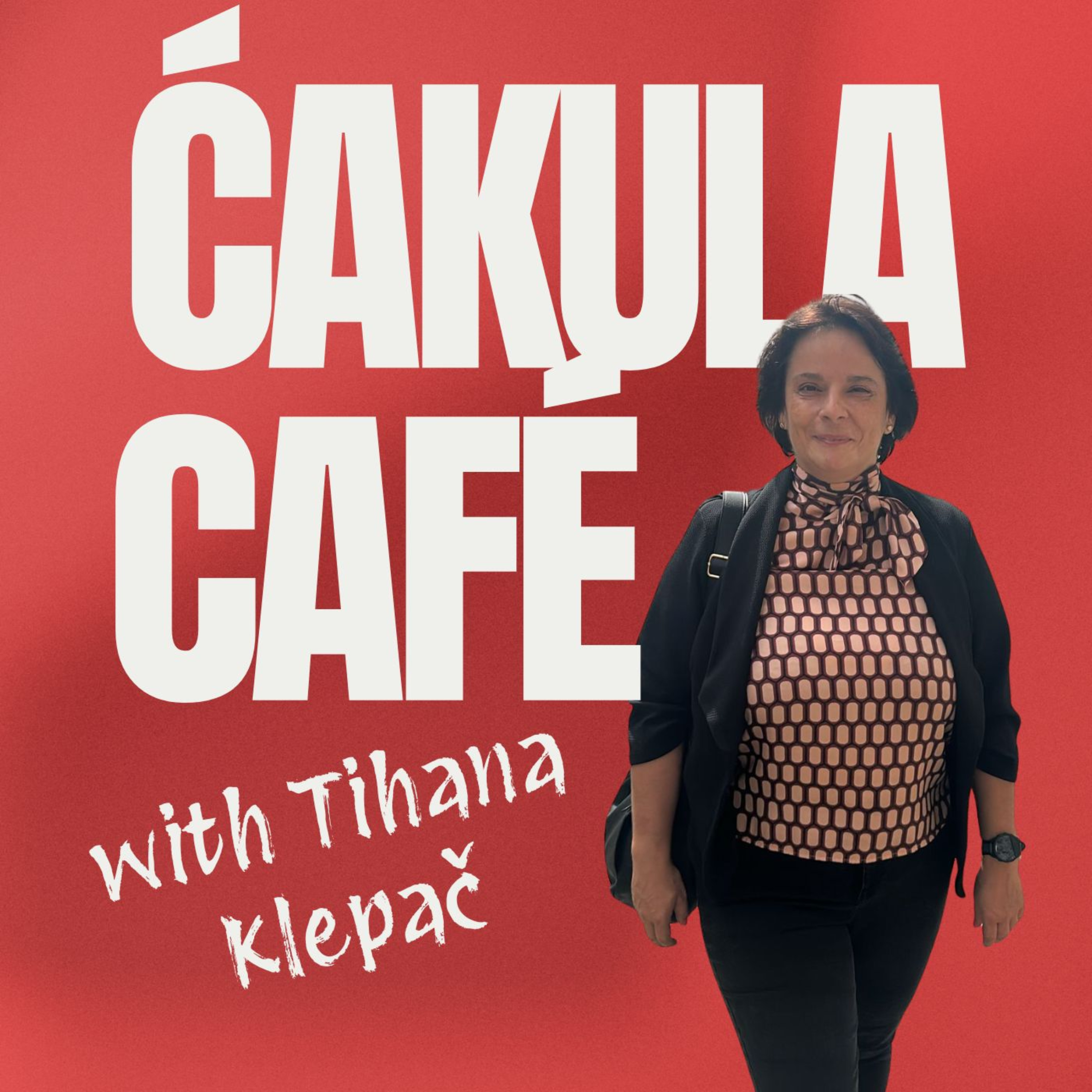
Sve razumijem, but I reply in English | Ćakula Café slow Croatian podcast
Ćakula Café — Slow Croatian Podcast | Learn Croatian With a Cultural TwistShow Notes
There is a person at every Croatian family table who follows every word and says nothing for four hours. They laugh in the right places. They pass the bread before anyone asks. And they do not speak. Everyone assumes they are quiet by nature. They are not. This episode of Ćakula Café is about the silence heritage speakers keep at their own family table: the sentence that was ready and arrived four seconds too late, the answers you have built so that nobody asks twice, and the particular tiredness of a day spent understanding everything and saying nothing. There is research behind this. Heritage speakers carry something ordinary language learners do not, because the language was supposed to already be theirs. This episode names it. Nothing more this week, and naming it is enough. Slower, clearer Croatian for A2 learners — for heritage speakers and diaspora Croatians who have spent a whole afternoon at a table in Croatia without saying one full sentence. Key vocabulary: Šutjeti (SHOO-tyeh-tee) - to be silent / to keep quiet
Slušati (SLOO-shah-tee) - to listen
Razumjeti (RAH-zoo-myeh-tee) - to understand
Smijati se (SMEE-yah-tee seh) - to laugh / to smile
Prekasno (PREH-kahs-noh) - too late
Umoran (OO-moh-rahn) - tired
Čekati (CHEH-kah-tee) - to wait
Stranac (STRAH-nahts) - stranger / foreigner
Greška (GRESH-kah) - mistake / error
Tiho (TEE-hoh) - quiet / quietly / softly
How to use this episode: Listen on Spotify with subtitles on. Find your key words. Look those up. Not every word. Just the key ones. Then listen again. Each time you will understand a little more. Free masterclass: talktimecro.com/free-masterclass Learn Croatian With a Cultural Twist.
More from Ćakula Café — Slow Croatian Podcast | Learn Croatian With a Cultural Twist
You practised the sentence in the car. You say it correctly. And the waiter answers you in English. Three seconds, and the conversation is over. This episode of Ćakula Café is about those three seconds: what happens inside them, why the person in front of you switches, and why it is almost never about your Croatian. Croatia ranked second in the world for English proficiency last year, behind only the Netherlands. The waiter was not correcting you. He was being quick, and being kind, and showing you the thing his whole country happens to be world-class at. That does not make it hurt less. It does change what it means. At the end you get one sentence to keep the conversation where you wanted it, and one thing to do with your face while you say it. Slower, clearer Croatian for A2 learners — for heritage speakers and diaspora Croatians who have walked out of a café rehearsing what they should have said. Key vocabulary: konobar, prijeći, odgovoriti, brzo, pomoći, promijeniti, vježbati, ipak, oprostite, molim How to use this episode: Listen on Spotify with subtitles on. Find your key words. Look those up. Not every word. Just the key ones. Then listen again. Each time you will understand a little more. Free masterclass: talktimecro.com/free-masterclass Learn Croatian With a Cultural Twist.
You call your grandmother, you have paper and a pen, and you ask how much flour. And she says: well, however much it needs. This episode of Ćakula Café is about the recipe that can't be written down, because it doesn't live in words but in hands, in one particular cup from her cupboard, and in the feeling in her fingers. And about why language is exactly the same: word lists and grammar tables exist and they're useful, but Croatian isn't learned from paper, it's learned by standing next to it for a long time. At the end, one small request involving the camera on your phone. Slower, clearer Croatian for A2 learners — an episode built around Croatian grandmother recipes and Croatian cooking vocabulary, for heritage speakers and diaspora Croatians who've tried to write down what can only be shown. Key vocabulary: recept (REH-tsept) recipe; the thing she genuinely cannot give you brašno (BRASH-noh) flour tijesto (TYES-toh) dough vaga (VA-ga) scales; she does not own one šalica (SHA-lee-tsa) cup; not any cup, that cup prsti (PURS-tee) fingers; where the recipe actually lives. Prst in the singular zapisati (za-PEE-sa-tee) to write down; the thing that does not work here snimati (SNEE-ma-tee) to record, to film; the thing that does ispasti (ees-PAS-tee) to turn out. Nije ispalo means it did not work osjećaj (OS-yeh-chai) feeling, instinct; the goal in the kitchen and in the language How to use this episode: Listen on Spotify with subtitles on. Find your key words. Look those up. Not every word. Just the key ones. Then listen again. Each time you will understand a little more. Free masterclass: talktimecro.com/free-masterclass Instagram: @talktimecro Substack: talktimecroatian.substack.com Learn Croatian With a Cultural Twist.
The phone rings at three in the morning, and you know before you even answer. In Croatia the funeral will be in two or three days, and you're on the other side of the world. This episode of Ćakula Café talks about something rarely said out loud: the funeral watched through a phone a relative holds up at the cemetery, the days around the funeral that turn out to be what you miss most of all, and the grave that someone else tends before Svi Sveti. In the second half of the episode, you get the sentences many people find themselves missing when it's time to write to the family: moja sućut, pokoj mu duši, laka mu zemlja, mislim na vas. Slower, clearer Croatian for A2 learners — a look at Croatian funeral customs and Croatian condolences phrases for heritage speakers and diaspora Croatians who've had to grieve from far away. Key vocabulary: sprovod (SPROH-vod) funeral groblje (GROB-lyeh) cemetery grob (GROB) grave; the one somebody else is tending svijeća (SVYEH-cha) candle; it counts wherever you light it sućut (SOO-choot) condolence. Moja sućut is the sentence you have been missing pokojnik (poh-KOY-neek) the deceased. Pokojnica for a woman duša (DOO-sha) soul. Pokoj mu duši, peace to his soul ispratiti (ees-PRA-tee-tee) to see someone off, and also to attend their funeral javiti se (YA-vee-tee seh) to get in touch, to answer the phone Svi Sveti (svee SVEH-tee) All Saints, 1 November, when the whole country smells of candles How to use this episode: Listen on Spotify with subtitles on. Find your key words. Look those up. Not every word. Just the key ones. Then listen again. Each time you will understand a little more. Free masterclass: talktimecro.com/free-masterclass Instagram: @talktimecro Substack: talktimecroatian.substack.com Learn Croatian With a Cultural Twist.
People write in from Canada, Australia and America, and the same sentence comes up again and again: my parents spoke Croatian to each other, and English to me, and I don't know why. This episode of Ćakula Café answers that question. It goes back to the sixties and seventies, to a shop where people laughed when someone spoke with a foreign accent, and to a conversation with a teacher who gave parents advice we now know was wrong. This isn't a story about guilt, but about a decision made with fear and with love. And about why people who grew up that way aren't starting from zero. Slower, clearer Croatian for A2 learners — an episode on heritage language loss and raising bilingual children in Croatian, for diaspora Croatians and heritage speakers still wondering why their parents made that choice. Key vocabulary: odluka (OD-loo-ka) decision. Donijeti odluku is to make one savjet (SAV-yet) advice; in this story, the wrong kind zaostati (za-OS-ta-tee) to fall behind; the word that frightened a generation of parents zaštita (ZASH-tee-ta) protection; what they believed they were giving naglasak (NA-gla-sak) accent; the thing they did not want you to carry prepoznati (preh-POZ-na-tee) to recognise; what your ear does before you can explain it uho (OO-hoh) ear; the advantage you have and did not ask for nestati (NES-ta-tee) to disappear; the language did not djetinjstvo (dyeh-TEEN-ystvoh) childhood; where it is still lying quietly prekasno (preh-KAS-noh) too late; it is not How to use this episode: Listen on Spotify with subtitles on. Find your key words. Look those up. Not every word. Just the key ones. Then listen again. Each time you will understand a little more. Free masterclass: talktimecro.com/free-masterclass Instagram: @talktimecro Substack: talktimecroatian.substack.com Learn Croatian With a Cultural Twist.
In Croatia, they call you American, or Australian, or Švabo. Where you live, you are Croatian. This final episode in the series is about what it's like to stand between two countries and never be quite at home in either one, and why the sentence I'm not from here or from there doesn't have to mean something is missing. It also talks about one moment people remember for the rest of their lives: when they speak up in a shop, and the person in front of them doesn't pause, doesn't ask where they're from, and doesn't switch to English. That moment lasts three seconds. Slower, clearer Croatian for A2 learners — an episode on Croatian diaspora identity and belonging between two countries, for heritage speakers and diaspora Croatians who know exactly what that pause feels like. Key vocabulary: dijaspora (dee-YAS-poh-ra) the diaspora; the people, not the idea stranac (STRA-nats) foreigner, outsider; the role you play in two countries at once naglasak (NA-gla-sak) accent; heard in the first sentence, and that is all right pripadati (pree-PA-da-tee) to belong domovina (doh-moh-VEE-na) homeland; heavier than the English word, and not the same as a country putovnica (poo-TOV-nee-tsa) passport; useful, and not enough objašnjavati (ob-yash-NYA-va-tee) to keep explaining; the tiring part spajati (SPA-ya-tee) to join, to connect two things oboje (OH-boh-yeh) both; what you know and others do not izabrati (ee-ZA-bra-tee) to choose; you do not have to How to use this episode: Listen on Spotify with subtitles on. Find your key words. Look those up. Not every word. Just the key ones. Then listen again. Each time you will understand a little more. Free masterclass: talktimecro.com/free-masterclass Instagram: @talktimecro Substack: talktimecroatian.substack.com Learn Croatian With a Cultural Twist.