Show Notes
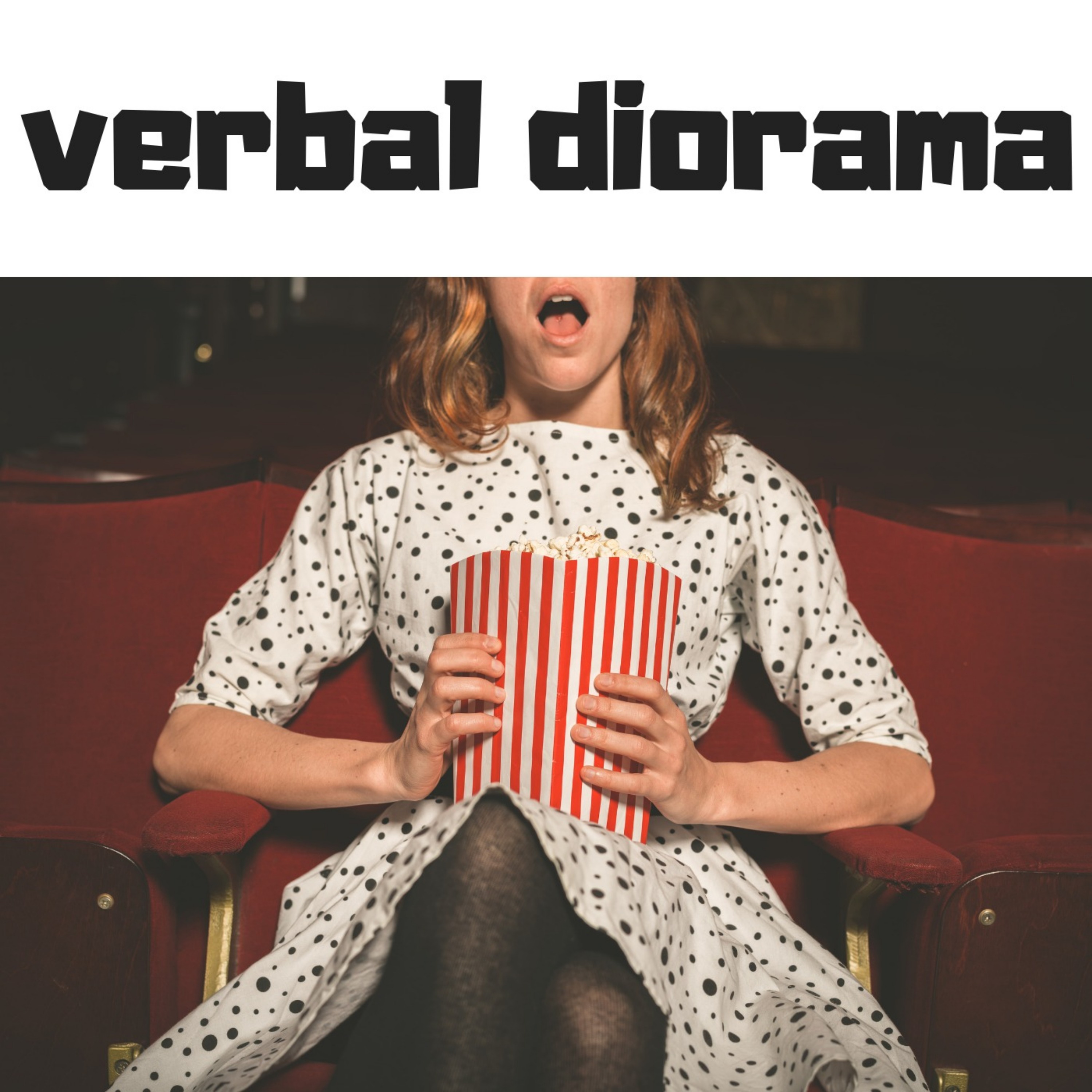
In 1994, five young women answered an ad in The Stage looking for "streetwise, outgoing, ambitious" singers. What happened next became one of the most explosive cultural phenomena of the 1990s. The Spice Girls didn't just dominate the charts, they redefined what a pop group could be, wresting creative control from their management, coining "Girl Power" as a global rallying cry, and selling millions of records worldwide. But their meteoric rise was matched by equally dramatic behind-the-scenes chaos: firing their manager Simon Fuller at the height of their fame in 1997, and then losing Ginger Spice in 1998, a departure that sent shockwaves through pop culture. At the centre of their madcap peak sits Spice World, a gloriously absurd film that somehow combined Beatles pastiche, multiple celebrity cameos, alien visitors, and a runaway double-decker bus into 93 minutes of pure pop delirium. Panned by critics but adored by fans, the movie captured the Spice Girls at their most chaotic and confident; a snapshot of a moment when five women from working-class backgrounds were simultaneously the biggest thing in the world and completely winging it. Today, both the group and the film have been critically reassessed, recognized not just as silly fun but as genuinely subversive forces that gave a generation of girls and women permission to be loud, ambitious, and unapologetically themselves. The Spice Girls' influence extends beyond music; they sparked conversations about feminism and female empowerment, proving that friendship and girl power can truly change the game. And did we ever find out what Zig-a-zig-ah actually meant? Support Verbal Diorama Loved this episode? Here's how you can help: ⭐ Leave a 5-star review on your podcast app 💰 Join the Patreon for bonus content and early access ☕ Send a tip to support the show 📱 Share this episode with fellow film lovers Get In Touch I would love to hear your thoughts on Spice World Twitter: @verbaldiorama Instagram: @verbaldiorama Facebook: @verbaldiorama Letterboxd: @verbaldiorama Email: verbaldiorama [at] gmail [dot] com Website: verbaldiorama.com
About Verbal Diorama Ear Worthy 2024 Best Movie Podcast Winner | Golden Lobes 2025 Earworm Award Nominee | Ear Worthy 2025 Best Movie Podcast Nominee Verbal Diorama is hosted, produced, edited, researched, recorded and marketed by me, Em. Theme Music: Verbal Diorama Theme Song Music by Chloe Enticott - Compositions by Chloe Lyrics by Chloe Enticott (and me!) Production by Ellis Powell-Bevan of Ewenique Studio Thank You to Our Patreon Supporters Current Patrons: Simon, Laurel, Derek, Cat, Andy, Mike, Luke, Michael, Scott, Brendan, Ian, Lisa, Sam, Jack, Stuart, Nicholas, Zo, Kev, Danny, Stu, Brett, Xenos, Sean, Ryno, Philip, Adam, Elaine, Aaron and Steve. Thank you for supporting Verbal Diorama. Mentioned in this episode: Please consider supporting this podcast on Patreon Patreon
This podcast uses the following third-party services for analysis:
Podscribe - https://podscribe.com/privacy OP3 - https://op3.dev/privacy
More from Verbal Diorama
Infinite space. Infinite terror. From the depths of space, and the depths of hell (not sure which is more terrifying, to be honest!) comes a cosmic science fiction Lovecraftian horror, all about the existential dread of space, and that your imagination is scarier than anything you could ever see. 1997 was the year if you were a doomed ship. The biggest was hit by an iceberg, quite famously. But as far as movies go, Event Horizon was far more doomed. Arguably one of Paul W.S. Anderson's best movies, starring the late, great Sam Neill and Laurence Fishburne, among a stellar supporting cast, Event Horizon looks and feels unlike any other science fiction movies of the 90s, and beyond, but it could have been even more graphic. After an extreme reaction from test audiences, Paramount were not happy with Paul W.S. Anderson’s original cut, demanding a sweeping edit to dial back the nastiness and the runtime be cut to around 90 minutes. Much of the extreme gore, sexual references and mutilation was removed, but gone too were a string of tension and story-building scenes. And thanks to a salt mine, we will likely never see a director's cut... Support Verbal Diorama Loved this episode? Here's how you can help: ⭐ Leave a 5-star review on your podcast app 💰 Join the Patreon for bonus content and early access ☕ Send a tip to support the show 📱 Share this episode with fellow film lovers Get In Touch I would love to hear your thoughts on Event Horizon Twitter: @verbaldiorama Instagram: @verbaldiorama Facebook: @verbaldiorama Letterboxd: @verbaldiorama Email: verbaldiorama [at] gmail [dot] com Website: verbaldiorama.com
We'll tear your soul apart.... From the depths of hell comes body horror, an exploration of sexual desire, lust and gratification, and the pleasure pain theory, as hedonistic Frank Cotton solves the Lament Configuration and receives a gruesome demise, only to be accidentally resurrected. Hellraiser is unlike any other horror movie of its time, not just for its content, but for the risk New World took on a first-time writer-director, based on his own novella rooted in sadomasochism, with no major stars involved in the production. It was planned for a direct to video release, until executives realised how special and different this movie was... they invested more money, and it birthed not only a new resurrection scene for Frank Cotton, but also a horror icon in Pinhead. And who knew so much lube and condoms were necessary for horror movie making in the 1980s... Jesus wept This episode was originally released on 19th October 2023 Mentioned in this episode: From the Archive There's no new episode this week, so I thought you might be interested in revisiting this slightly older, but no less brilliant episode. Just bear in mind, this episode is several years old, it may not sound quite as polished as newer episodes, and new information may have come to light in recent years with regards to the making of this movie (please see above for the original date of release)
Shaun of the Dead is remembered now as a genre landmark; the film that made "rom zom com" a real category and launched the Three Flavours Cornetto trilogy, but its road to the big screen was anything but assured. Fresh from Spaced; a landmark cult British TV comedy about young people living, working and partying in North London (when that was something young people could afford to do!), Spaced was written by 20-somethings Simon Pegg and Jessica Stevenson about 20-somethings, directed by 20-something Edgar Wright, and after Season 1 Episode 3 "Art", an idea festered, like a gaping zombie wound, and they were dead set on doing a zombie movie. Despite the success of Spaced, it would be a difficult sell. Commissioned by Film4, but saved by WT2, Shaun of the Dead paid loving homage to the seminal zombie classics from George A. Romero, and all they wanted was for Romero to see the movie and give it his blessing... Support Verbal Diorama Loved this episode? Here's how you can help: ⭐ Leave a 5-star review on your podcast app 💰 Join the Patreon for bonus content and early access ☕ Send a tip to support the show 📱 Share this episode with fellow film lovers Get In Touch I would love to hear your thoughts on Shaun of the Dead Twitter: @verbaldiorama Instagram: @verbaldiorama Facebook: @verbaldiorama Letterboxd: @verbaldiorama Email: verbaldiorama [at] gmail [dot] com Website: verbaldiorama.com
Waaassssssuuuuupppppppppppppp!! In July 2000, a $19 million parody film outgrossed most of the slasher movies it was mocking, and in doing so, quietly ended the very genre it fed off. The late-90s teen horror boom, which included Scream and I Know What You Did Last Summer had built its appeal on self-aware, meta-textual cleverness, characters who knew the rules of horror movies and still couldn't escape them. Scary Movie took that self-awareness and pushed it past the breaking point, turning Drew Barrymore's iconic Scream cold open into something closer to a Looney Tunes sketch. This episode traces how Shawn, and Marlon Wayans, along with their brother Keenen Ivory Wayans, took a script originally titled Last Summer I Screamed Because Halloween Fell on Friday the 13th, developed by writing collaborators Buddy Johnson and Phil Beauman as a more traditional slasher spoof, and reworked it into something rowdier, cruder, and more racially and sexually explicit than anything the genre's white-coded parody tradition (like Airplane! and The Naked Gun) had attempted before. But there was also a rival script, written at the same time, by Aaron Seltzer and Jason Friedberg, titled Scream if I Know What You Did Last Halloween... What are you waiting for, huh? What are you waiting for?! Support Verbal Diorama Loved this episode? Here's how you can help: ⭐ Leave a 5-star review on your podcast app 💰 Join the Patreon for bonus content and early access ☕ Send a tip to support the show 📱 Share this episode with fellow film lovers Get In Touch I would love to hear your thoughts on Scary Movie (2000) Twitter: @verbaldiorama Instagram: @verbaldiorama Facebook: @verbaldiorama Letterboxd: @verbaldiorama Email: verbaldiorama [at] gmail [dot] com Website: verbaldiorama.com
The Empire Strikes Back is often called the best film in the Star Wars saga, and it started with a decision that seems almost unthinkable in retrospect. George Lucas, creatively burnt out after directing the first film, chose not to direct the sequel at all. Instead he handed the reins to his old USC film professor Irvin Kershner, hired veteran pulp sci-fi writer Leigh Brackett to draft the screenplay, and set about building Lucasfilm and Industrial Light and Magic into more than one-hit studio products. Brackett's now-legendary first draft featured a very different Yoda, a very different Lando, and a twin sister for Luke that never made it to screen, but Lucas and a young Lawrence Kasdan reshaped the story into the darker, more ambiguous film we know, including the introduction of one of cinema's most famous twists. The Empire Strikes Back's production is as dramatic a story as anything in the film itself. Lucas bet his own solvency on financing the sequel independently, taking out a loan to keep Fox's creative hands off the project, only to watch the budget balloon during the shoot and the bank pull its financing mid-production. That gamble very nearly sank the film, but it ultimately paid off in ways that reshaped Lucasfilm's entire business model, particularly around merchandising rights, and ultimately a film that ends in defeat, with its heroes scattered, became the template for how blockbuster sequels are allowed to work. Support Verbal Diorama Loved this episode? Here's how you can help: ⭐ Leave a 5-star review on your podcast app 💰 Join the Patreon for bonus content and early access ☕ Send a tip to support the show 📱 Share this episode with fellow film lovers Get In Touch I would love to hear your thoughts on The Empire Strikes Back (Star Wars: Episode V) Twitter: @verbaldiorama Instagram: @verbaldiorama Facebook: @verbaldiorama Letterboxd: @verbaldiorama Email: verbaldiorama [at] gmail [dot] com Website: verbaldiorama.com