3.3 Americas — Threads Knotted by Conquest
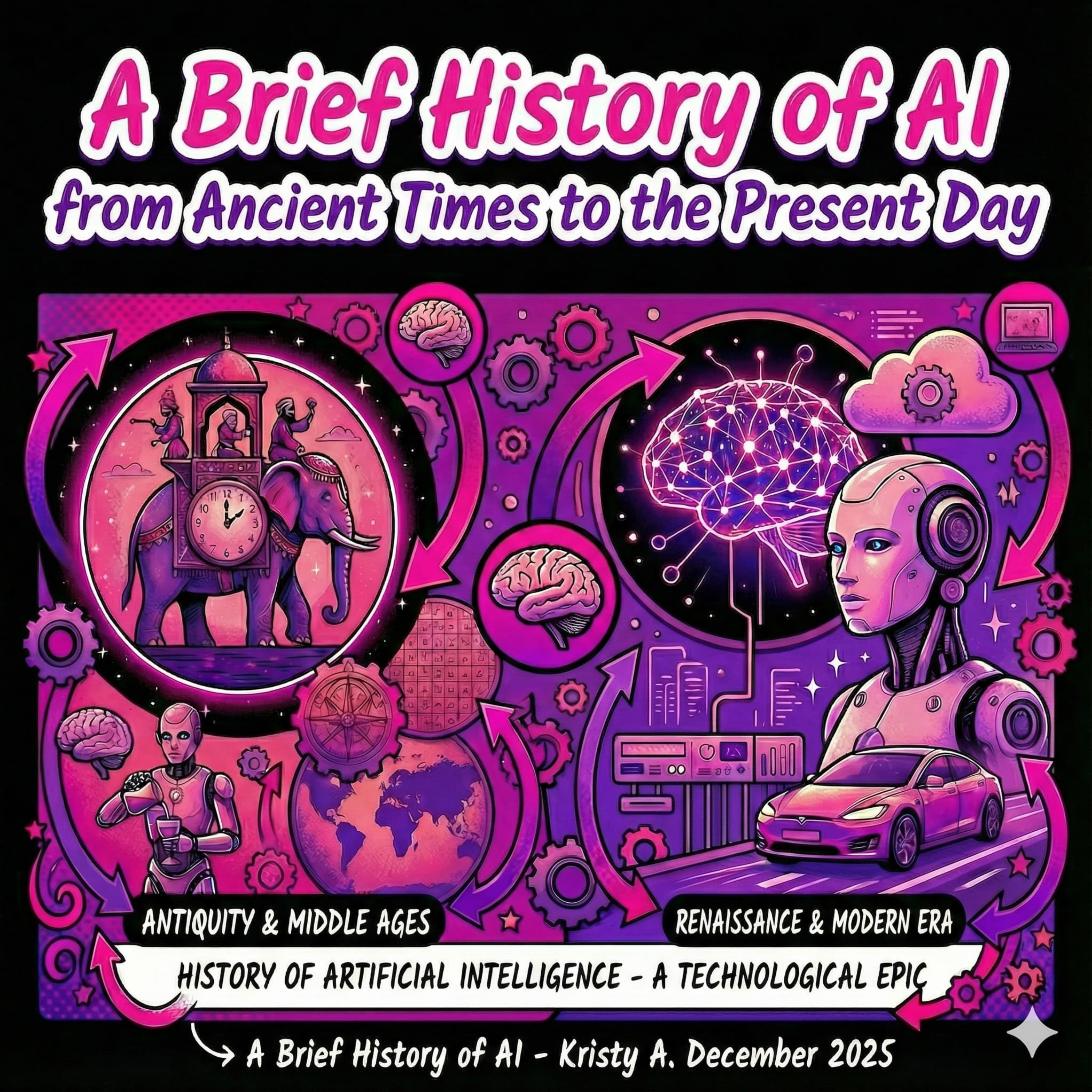
A brief history of AI from ancient times to the present dayShow Notes
Threads Knotted by Conquest: How American Knowledge Survived Its Destruction
A thread can be cut. It can also, sometimes, be reknotted. In this episode, we explore what survived of American thought after the cataclysm of conquest—and what this thought might teach us about artificial intelligence.
When the conquistadors landed, they found civilizations whose knowledge systems rivaled their own. They destroyed them methodically. Thousands of manuscripts were burned. Diego de Landa, Bishop of Yucatán, boasted of having destroyed "a great number" of Mayan books. Oral traditions were interrupted. Experts were killed or forcibly converted. But fragments survived. You will discover the Codex Vergara, written around 1540 under Spanish colonization. This document preserves the calculation methods of Aztec surveyors—and reveals something astonishing: adaptive algorithms. The surveyors did not follow a single method. They chose from a repertoire of techniques according to the terrain's shape. This flexibility prefigures what computer scientists call conditional architectures.
You will meet the tlamatinimeh—"those who know something"—those Nahua philosophers whose sophistication James Maffie's work has revealed. For them, the world was tlalticpac—a slippery, unstable place where truth depended on context. Two apparently contradictory propositions could be simultaneously true. This tolerance for ambiguity strangely resembles how large language models work—with probabilities, distributions, nuances.
And the concept of teotl—that dynamic force flowing through all things, neither matter nor spirit, but continuous process of transformation. A relational ontology where nothing exists in isolation, where everything is defined by its relationships. The knowledge graphs of contemporary AI embody, unknowingly, this worldview.
The conquistadors cut the threads. But the patterns they formed have not entirely disappeared. They await, in colonial archives, to be reknotted.
More from A brief history of AI from ancient times to the present day
What the Deep Learning Revolution Teaches Us: Conclusion and opening toward the future
Archipelago of Innovation: How Australia seeks its place in the AI revolution
Silicon Gardens: How the desert became an artificial intelligence laboratory
Rule and Exception: How Europe regulated AI and made Mistral emerge from the improbable
The New Center of Gravity: How Asia became the beating heart of global artificial intelligence