Show Notes
Last Wednesday, I was working on the draft of a newsletter I had intended to send out later in the week. Of course, that was before my Twitter feed was taken over by the failed coup or insurrection or seditious mob, or whatever else one may call it, which stormed the Capitol to interrupt the certification of the electoral college votes and, as far as some participants were apparently concerned, hang the Vice President of the United States. I’m fully aware of the insignificance of my own judgments on these matters, but let me nonetheless make clear at the outset that, however dispassionate the following discussion may seem, I consider the actions of mob, its enablers, and its apologists reprehensible and seditious. Moreover, I regret to add, the proceedings were, in my view, merely one particularly dramatic symptom of a grave, possibly fatal condition, which will not magically resolve itself come January 21st. It’s hard to know where to begin, of course; the situation has many interlocking layers. The most notable and disturbing elements have been well covered, and we continue to learn more about the event each day. The picture, it seems, only grows darker. For my part, I’ve been especially interested in thinking through the role of digital media in these events and what it portends for the future. Here, then, are a few reflections for your consideration along those lines. In light of the complexity and gravity of the situation, which transpired just days ago (although it may already seem like weeks), I feel obliged to stress that this is a tentative exercise in thinking out loud. I’ll begin with a few comments about the labels and categories we use to think about digital media before turning to a more direct analysis of last week’s events and what they reveal about our media environment. More than is usually the case, the following discussion lacks a tight, well-ordered structure, so I’ve supplied the numbering to provide some sense of how my thoughts were grouped together. Think of what follows not so much as an argument but as a series of interlocking perspectives on the same phenomenon. (1) Reading through the torrent of commentary on the assault on the Capitol has left me with the sense that we’ve still not quite figured out how exactly to talk about the relationship between digital media and human experience. Much of the discussion has centered on the moderation policies of social media companies, particularly given their role in the organization of the assault on the Capitol. Some have commented on the role of social media during the assault. And others have sought to examine whether digital media played a more fundamental role in these events and, by extension, our cascading national omni-crisis. Each of these deserves our attention, as does much else, of course. For my part, I’ve been thinking about related matters for some time now under the assumption that digital media—like writing, printing, and electronic media before it—occasions profound social and political change. This is not, in my view, a techno-determinist position. I fully acknowledge that new technologies interact unpredictably with existing values, institutions, and social structures. Moreover, all along the way, people make choices, although perhaps increasingly constrained and conditioned by the new media infrastructure once it has become entrenched. But I remain convinced that media ought to be understood ecologically rather than additively. When a new species is introduced into a natural ecosystem, you don’t just get the old ecosystem plus a new species. You may very well end up with an entirely new ecosystem or even a collapsed ecosystem. Thus, when digital media restructures human communication in roughly 25 years time (dating roughly from the early years of the commercial internet), we should expect significant social and political change. The challenge is to make sense of it midstream, as we still are. (2) As events unfolded and also in thei
More from The Convivial Society
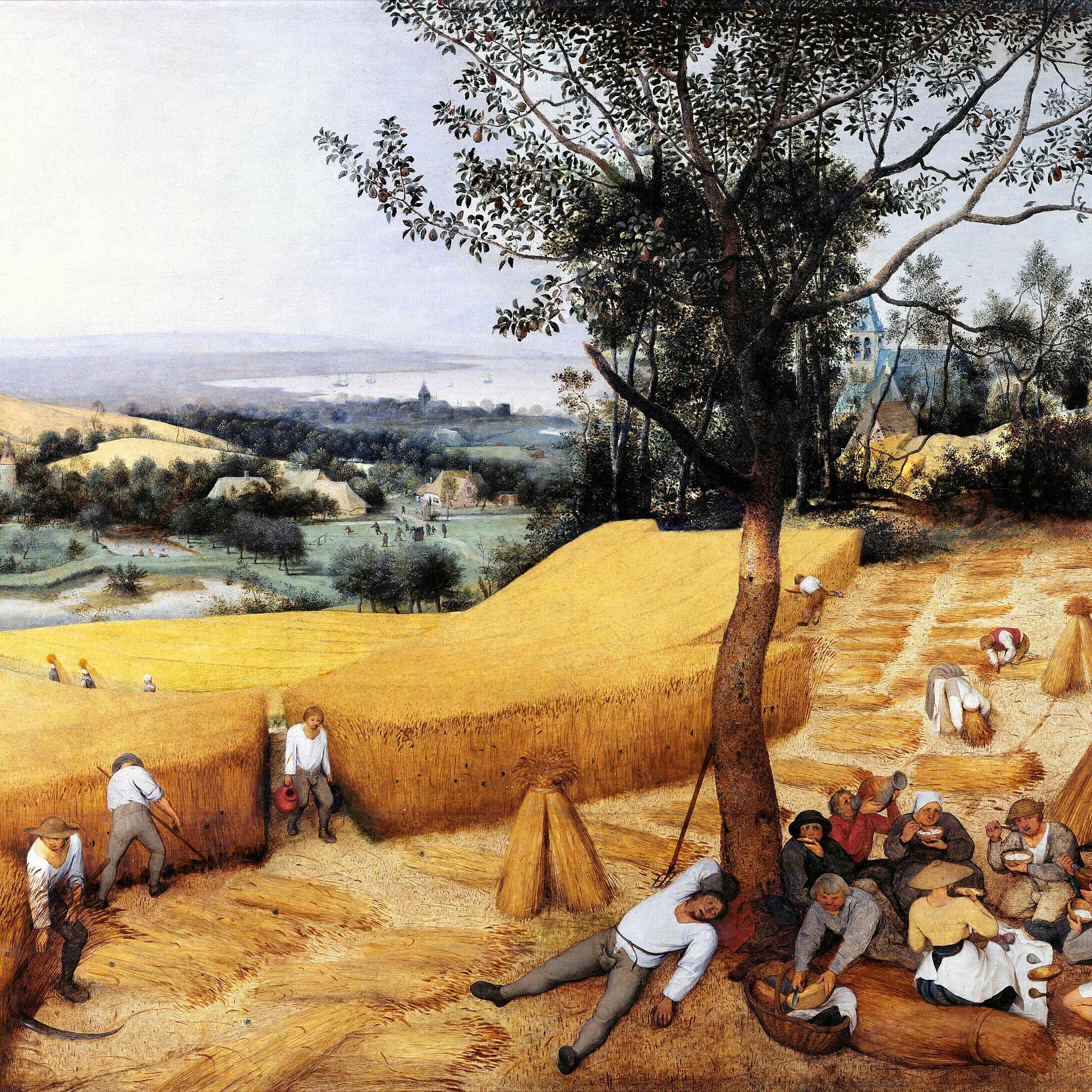
Hello all, The audio version keep coming. Here you have the audio for Secularization Comes for the Religion of Technology. Below you’ll find a couple of paintings that I cite in the essay. Thanks for listening. Hope you enjoy it. Cheers, Michael
I continue to catch up on supplying audio versions of past essays. Here you have the audio for “Vision Con,” an essay about Apple’s mixed reality headset originally published in early February. The aim is to get caught up and then post the audio version either the same day as or very shortly after I publish new written essays. Thanks for listening!
Just before my unexpected hiatus during the latter part of last year, I had gotten back to the practice of recording audio version of my essays. Now that we’re up and running again, I wanted to get back to these recordings as well, beginning with this recording of the first essay of this year. Others will follow shortly, and as time allows I will record some of the essay from the previous year as well. You can sign up for the audio feed at Apple Podcasts or Spotify.
At long last, the audio version of the Convivial Society returns. It’s been a long time, which I do regret. Going back to 2020, it had been my practice to include an audio version of the essay with the newsletter. The production value left a lot to be desired, unless simplicity is your measure, but I know many of you appreciated the ability to listen to the essays. The practice became a somewhat inconsistent in mid-2022, and then fell off altogether this year. More than a few of you have inquired about the matter over the past few months. Some of you graciously assumed there must have been some kind of technical problem. The truth, however, was simply that this was a ball I could drop without many more things falling apart, so I did. But I was sorry to do so and have always intended to bring the feature back. So, finally, here it is, and I aim to keep it up. I’m sending this one out via email to all of you on the mailing list in order to get us all on the same page, but moving forward I will simply post the the audio to the site, which will also publish the episode to Apple Podcasts and Spotify. So if you’d like to keep up with the audio essays, you can subscribe to the feed at either service to be notified when new audio posts. Otherwise just keep an eye on the newsletter’s website for the audio versions that will accompany the text essays. The main newsletter will, of course, still come straight to your inbox. One last thing. I intend, over the coming weeks, to post audio versions of the past dozen or so essays for which no audio version was ever recorded. If that’s of interest to you, stay tuned. Thanks for reading and now, once again, for listening. Cheers, Michael The newsletter is public and free to all, but sustained by readers who value the writing and have the means to support it.
Welcome back to the Convivial Society. In this installment, you’ll find the audio version of the latest essay, “What You Get Is the World.” I try to record an audio version of most installments, but I send them out separately from the text version for reasons I won’t bore you with here. Incidentally, you can also subscribe to the newsletter’s podcast feed on Apple Podcasts and Spotify. Just look up The Convivial Society. Aside from the audio essay, you’ll find an assortment of year-end miscellany below. I trust you are all well as we enter a new year. All the best to you and yours! A Few Notable Posts Here are six installments from this past year that seemed to garner a bit of interest. Especially if you’ve just signed up in recent weeks, you might appreciate some of these earlier posts. Incidentally, if you have appreciated the writing and would like to become a paid supporter at a discounted rate, here’s the last call for this offer. To be clear, the model here is that all the writing is public but I welcome the patronage of those who are able and willing. Cheers! Podcast Appearances I’ve not done the best job of keeping you all in loop on these, but I did show up in a few podcasts this year. Here are some of those: With Sean Illing on attention With Charlie Warzel on how being online traps us in the past With Georgie Powell on reframing our experience Year’s End It is something of a tradition at the end of the year for me to share Richard Wilbur’s poem, “Year’s End.” So, once again I’ll leave you with it. Now winter downs the dying of the year, And night is all a settlement of snow;From the soft street the rooms of houses show A gathered light, a shapen atmosphere, Like frozen-over lakes whose ice is thin And still allows some stirring down within. I’ve known the wind by water banks to shakeThe late leaves down, which frozen where they fell And held in ice as dancers in a spell Fluttered all winter long into a lake; Graved on the dark in gestures of descent, They seemed their own most perfect monument. There was perfection in the death of ferns Which laid their fragile cheeks against the stone A million years. Great mammoths overthrown Composedly have made their long sojourns, Like palaces of patience, in the grayAnd changeless lands of ice. And at Pompeii The little dog lay curled and did not rise But slept the deeper as the ashes roseAnd found the people incomplete, and froze The random hands, the loose unready eyes Of men expecting yet another sunTo do the shapely thing they had not done. These sudden ends of time must give us pause. We fray into the future, rarely wroughtSave in the tapestries of afterthought.More time, more time. Barrages of applause Come muffled from a buried radio.The New-year bells are wrangling with the snow. Thank you all for reading along in 2022. We survived, and I’m looking forward to another year of the Convivial Society in 2023. Cheers, Michael