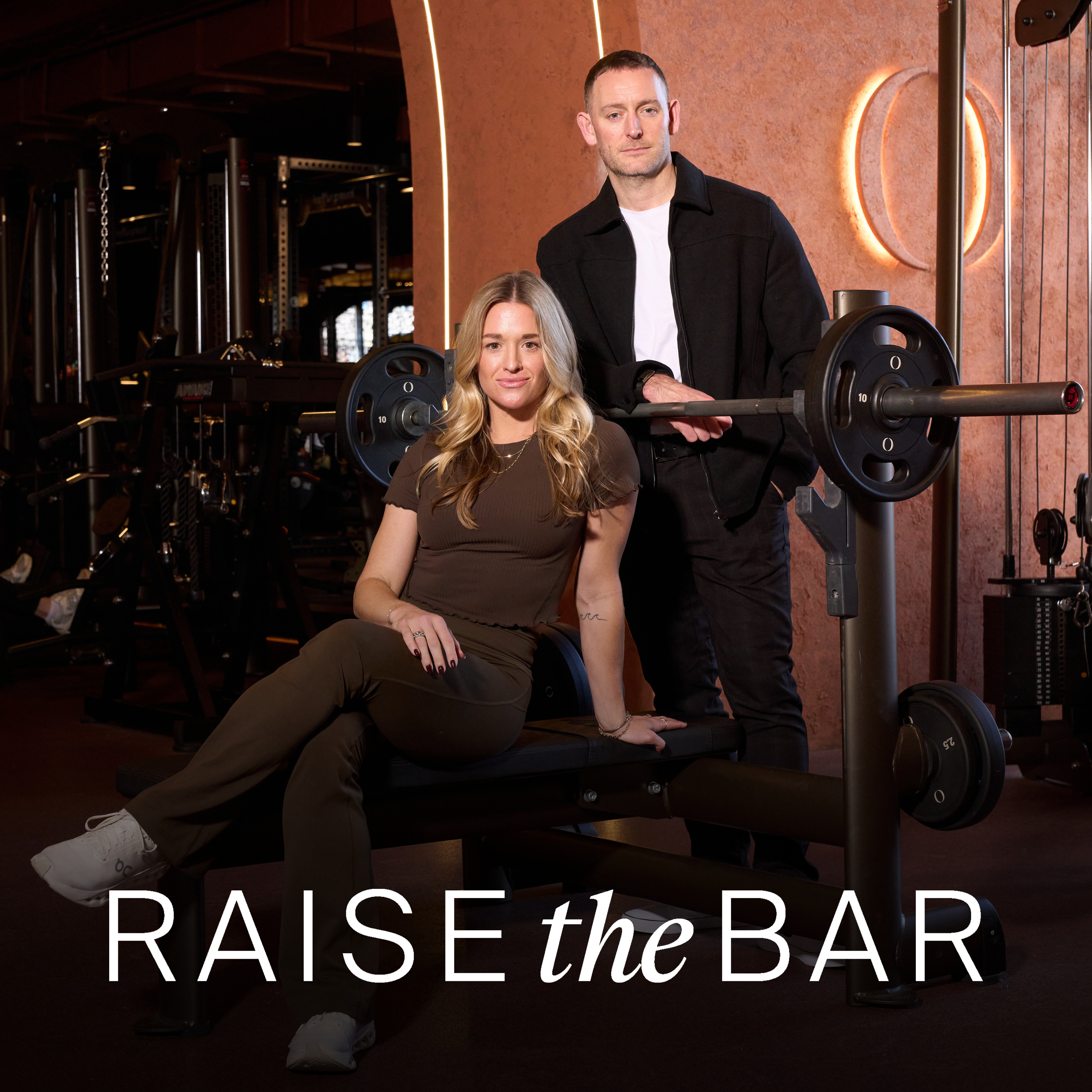
Coach to the Strongest Man Alive On Breaking Plateaus and Building Max Strength - Sebastian Oreb
Raise The BarShow Notes
Strength coach Sebastian Oreb, The Australian Strength Coach, reveals why maxing out every week is the reason you stopped getting stronger, how long you should really be resting between heavy sets, and the four-week model behind the heaviest deadlift in human history. Sebastian is the coach behind Hafthór Björnsson, aka Mountain from Game of Thrones. He coached Thor through breaking multiple world records, including his 510 kilogram deadlift and has since become one of the most sought-after strength coaches in the world. He is also an elite powerlifter in his own right, with multiple Australian records, who started as a 63kg 19-year-old too embarrassed to take his shirt off on Bondi Beach. He is the founder of Strength System and has coached everyone from professional fighters to the strongest people on the planet. Sebastian explains: Why maxing out every week is the fastest way to stall, and the four-week effort model that fixes it
Why the rest you take between heavy sets is nowhere near long enough, and the eight-minute window nobody can explain
The eight exercise categories every program should be built from, and how to audit yours tonight
What a real taper looks like two weeks out from a world record attempt
Why getting very strong and staying healthy start pulling against each other at the top end
How he broke Australian records without ever believing he was the best, and why outlasting people beats out-training them
In This Episode You Will Learn: (01:37) — The Bondi Beach moment: how being a 63kg 19-year-old who was embarrassed to take his shirt off started the whole thing (13:26) — Why running the same program forever stopped working, and the plateau that made him quit lifting weights entirely (22:21) — What he learned from Ernie Lilliebridge Sr that mattered more than any programming: the coach-athlete relationship (28:04)— How a SodaStream seminar in 2016 accidentally put the strongest man on the planet in his gym (35:27) — 450 to 501 to 505 to 510 to 515: the long-game strategy behind breaking a world record in small increments (41:35) — Neural recovery, the mysterious eight-minute sweet spot, and how long you should actually be resting between sets (46:49) — Periodisation of effort explained: the RPE 7, 8, 9, send-it four-week model for breaking plateaus (01:09:07) — The uncomfortable truth about how he got the Australian record: he simply didn't stop when everyone else did (01:17:16) — The eight exercise categories he programs from for every single athlete, and this week's action step to audit your own (01:25:24) — Raising strong daughters: how a 16-year-old squatting 110kg built self-esteem that shows up everywhere
Resources: Connect with One Coach: https://one.coach/ Connect with Sebastian Oreb: Instagram: @australianstrengthcoach YouTube: Australian Strength Coach Website: strengthsystem.com
More from Raise The Bar
What if everything you're doing to improve your health is actually making it more complicated?You're tracking your sleep, buying supplements, following health experts and trying the latest wellness trends. But are you actually getting healthier, or just getting better at measuring everything?Biohacker and author, Camilla Thompson, joins Raise the Bar to challenge the idea that better health requires more money, more technology or a perfectly optimised routine.After years of unexplained illness and a difficult recovery from mould exposure, Camilla became determined to understand what her body needed. But her journey also taught her something unexpected: knowing when to stop optimising can be just as important as knowing where to start.Camilla explains:Why getting the basics right should come before expensive biohacking trends How to use health testing and wearables without becoming obsessed with the numbersWhy the same diet, supplements or health routine won't work for everyoneWhich free and paid biohacks Camilla actually usesHow exercise, sleep and everyday habits can support brain health and healthy ageingWhy doing everything perfectly isn't necessarily the healthiest approachFrom genetics and supplements to sleep, brain health and longevity, this conversation will change how you think about taking control of your health.In This Episode You Will Learn:00:00 Intro01:00 What Is Biohacking and How Do You Start?03:13 The Foundations of Better Health: Sleep, Diet and Exercise 07:46 Camilla Thompson's Chronic Illness and Recovery Story 15:27 Biohacking for Longevity: Healthspan vs Lifespan 17:23 Do You Really Need Supplements? Why Testing Comes First 21:04 Are Health Trackers and Wearables Helping or Hurting? 31:20 Can Your Lifestyle Change Your Genetic Risk? 41:59 Can You Get Everything You Need From Food? 57:23 How to Protect Your Brain Health as You Age 01:06:06 How Exercise and Sleep Support Brain Health 01:20:47 How to Build a Better Sleep Routine 01:26:22 The Best Free and Paid Biohacks to Try 01:36:21 How to Avoid Biohacking Overwhelm*Resources:*Follow Camilla Thompson:Instagram: @biohackmecoach - https://www.instagram.com/biohackmecoach/ Website: https://www.biohackme.com.au/*Raise the Bar Podcast:*Experience OneCoach: https://one.coach/Visit One Playground: https://oneplayground.com.au/Follow Raise the Bar: https://www.instagram.com/raisethebarpodcast/Follow Ariel: https://www.instagram.com/arielcomeau_/Follow Matt: https://www.instagram.com/mattduncancoach/
Talent is highly overrated; undeniable execution is what scales. In this episode, Ariel Comeau and Matt Duncan sit down with undefeated UFC middleweight fighter Cameron Rowston (3-0 UFC, "The Battle Giraffe") to strip back the hyper-polished world of professional mixed martial arts and reveal what it actually takes to survive the trenches. If you are a martial artist, a personal trainer, or an everyday high performer fighting through self-doubt, gym slumps, or an unforgiving professional transition, Cam’s story is a masterclass in resilience. Discover why his elite coaches at City Kickboxing in Auckland told him he had "zero talent" from day one, how he survived a brutal cross-country relocation and institutional locker room hazing as the lone Australian on the mat, and what it truly feels like to look up at the ring announcer and realise you are making your UFC debut on five weeks' notice. Cam also pulls back the curtain on the hyper-scientific training protocols designed by performance specialists like Bill Smart to engineer functional power. Learn why heavy barbell grinding might be stalling your development, the agony of 2-minute bodyweight isometric lunge holds, and how to program your weekly split across three distinct energy systems. TIMESTAMPS: 00:00 - The "Zero Talent" Reality Check: Why Accountability Beats Raw Ability 01:20 - Transitioning from Metropolitan Basketball to Competitive Combat 02:01 - Unpacking the Nickname: How COVID Shuttle Runs Created the "Battle Giraffe" 03:08 - Majoring in MMA: Balancing a UTS Exercise Management Degree with the Gym 04:51 - Stepping Into a Real Fight Gym: Overcoming Family Scepticism at 18 06:26 - The 18-Month Litmus Test: Sparring a UFC Veteran to Prove You Belong 09:01 - Running Off 4 Long Blacks: The Exhausting Balance of Early Amateur Training 10:52 - Turning Pro in 2016: Filtering Out Distractions and Sacrificing Social Circles 12:38 - The Amateur Apprenticeship: Why Early Losses Are Essential Lessons 14:47 - The MEN'S HEALTH Circuit Myth: Moving to Scientific Training Layouts 16:43 - Getting Dropped on Your Head: The Brutal Stinger That Forced a Technical Shift 22:08 - Assembling Your Performance Team: Why Every Fighter Needs Specialist Coaches 24:10 - Finding a Head Coach Who Has Walked the Walk (City Kickboxing Auckland) 27:44 - Numb on Adrenaline: Surviving the Panic of the Locker Room Wait 30:45 - The Turning Point: Getting Knocked Out Cold by an Undefeated Prospect 34:57 - Vetting the Madmen: Inside the Screening Processes of Elite Fight Teams 39:13 - Negative Motivation and Old-School Approval: The Power of the Silent Nod 42:05 - The Road to the UFC Contract: Navigating the Brutal Contender Series 47:11 - Dana White's Ultimatum: Turning a High-Pressure Vegas Show into a 1st Round KO 54:10 - The Penthouse vs the Reality: Debuting on the Perth and Sydney Cards 01:00:11 - The Science of Isometrics: Building Absolute Strength Without Heavy Lifting 01:02:48 - Foot Strength and Pogo Drills: Why Training Barefoot Changes Mechanics 01:05:18 - Mapping the Training Week: Balancing Striking, Grappling, and Weight Cuts 01:12:01 - Emotional Down-Regulation: Staying Present in the Middle of an Octagon 01:20:05 - Fueling a 4,500 Calorie Deficit: Six Espresso Shots and Clean Macro Strategies 01:27:03 - Learning from Alexander Volkanovski: High-Definition Focus and Time Management 01:33:03 - Shifting to an "Unk": Using the Sour Energy of the Next Generation to Raise Your Bar
In this Coach's Corner, the hosts reflect on their conversation with exercise physiologist Rob Lyon. They take two ideas from his episode and turn them into steps listeners can use throughout the week. The first is the lead domino, an idea that a single change makes every following event easier. They discuss how to use the mindset as a coach, from assessing training regimens to determining the best systems for beginners, including sleep schedules. The second part of their conversation focuses on intensity. While plenty of people sweat through classes that sit in zone three, most coaches agree that it’s a dead zone because it's too hard to build an aerobic base and too easy to raise VO2 max. Matt and Ariel break down the heart rate zones and explain why a 20-second all-out sprint often never gets your heart rate into zone five. They also walk through the 4x4 protocol: a ten-minute warm-up, four minutes at zones four to five, and three minutes of active recovery, repeated four times for 16 minutes of hard work. In This Episode You Will Learn: (00:01:08) How to tell whether your biggest problem is spending too little energy or recovering too little
Training can be about more than numbers on a scale. In this episode, exercise physiologist Rob Lyon joins Raise the Bar to discuss his unique training approach and why he's chosen to focus on lifestyle changes and longevity over aesthetically based results. He explains the importance of family history and how to use it to build an effective training routine. Rob has spent more than 20 years in the fitness industry, training all types of people. He’s delivered over 10,000 personal training sessions, but his work as a cardiac stress testing technician shifted his mindset. Today, his work is dedicated to special populations and at-risk clients such as those with diabetes and cardiovascular disease. In this conversation, he makes the case for approaching health with the same energy as fitness. He covers topics like heart screenings and how to break unhealthy diets and exercise habits and shares the simple tests he uses to measure fitness. He also gives listeners the scoop on the interval work that earned him a two-minute HYROX PB with almost no running. In This Episode You Will Learn: (00:03:14) What an exercise physiologist does that a typical personal trainer does not
After speaking with Hattie Boydle, professional bodybuilder and world champion fitness model, Ariel and Matt sit down to discuss a hot topic in the fitness community: discipline. Hattie’s story is a prime example of what discipline can achieve. Her strict training regimens transformed her body and ultimately led her to become a world champion. But her struggle to separate discipline from control stayed with the coaches. In this episode, they explore what it looks like when discipline turns from being beneficial to controlling. It walks through the psychology behind Hattie’s story. Discipline helped her do the work and win the title, but she questioned whether she deserved it. Her reaction isn't uncommon. In the professional fitness world, disciplinary schedules and routines are critical for success. They move you forward but can also be a form of control that masks a fear of uncertainty. Throughout the conversation, the hosts break down the gap between the two, including the signs to look for when discipline has tipped into control, how common behaviors (an early gym session, a strict eating pattern) can stem from different places, and what coaches can do when a client starts showing those warning signs. In This Episode You Will Learn: 00:34 Revisiting Hattie Boydell's story and the real question behind it: is your discipline serving you, or controlling you 01:48 The study on newly tenured professors that proves why hitting a goal rarely produces lasting satisfaction 04:14 Why the process matters more than the achievement 05:11 Body image and motivation: why loving where your body is now doesn't stop you from working to change it 08:48 The warning signs that discipline has been overtaken by control, including a physiological spiral when a plan goes off track 09:15 Discipline flexes with life and control treats any deviation as failure 11:28 The language test: "I must" points to control, "I get to" points to discipline 13:51This week's practice: notice the thoughts that show up around small setbacks, and write them down to get perspective Resources: Follow Hattie Boydle: Instagram: @hattieboydle Website: https://hattieboydle.com.au/ Raise the Bar Podcast: Experience OneCoach: https://one.coach/ Visit One Playground: https://oneplayground.com.au/ Follow Raise the Bar: https://www.instagram.com/raisethebarpodcast/ Follow Ariel: https://www.instagram.com/arielcomeau_/ Follow Matt: https://www.instagram.com/mattduncancoach/