Show Notes
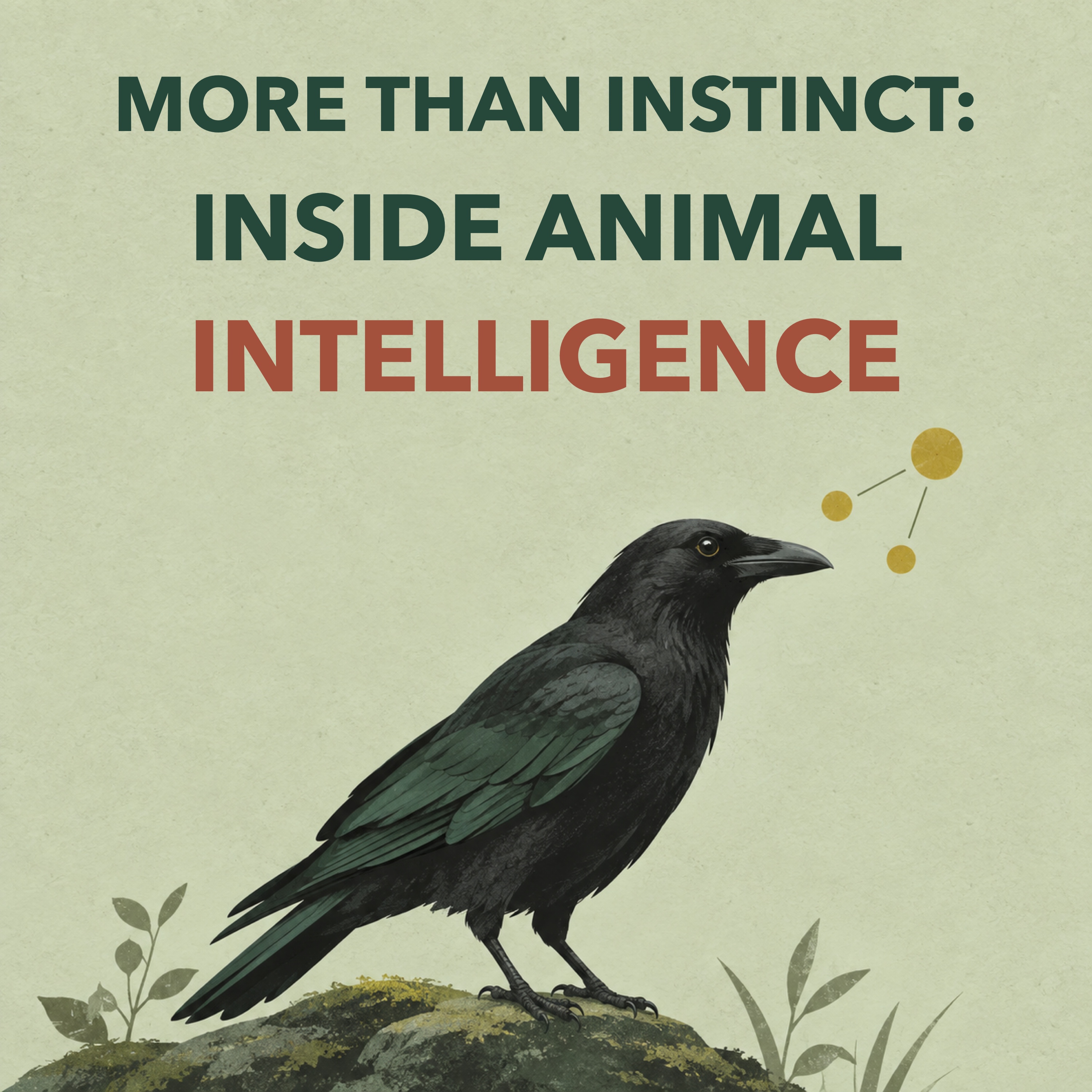
This episode explores what controlled observations reveal about tool choice, modification and flexible problem-solving. The story keeps the mechanisms clear and the research grounded for a casual listener.
Inside this episode:
- A specialist among crows - Choosing a functional object - Making and modifying - Reading the hook - Tools for tools
Sources include Tool use at natural foraging sites, New Caledonian crows attend to multiple tool properties, and Cognitive processes in sequential tool use.
This episode is a researched narrative summary. Historical records may be incomplete, translated differently, or interpreted differently by scholars. We distinguish documented facts, estimates, disputed interpretations, and later stories where material. Corrections are logged and incorporated into future editions.
Follow More Than Instinct: Inside Animal Intelligence for more researched stories about the science of animal intelligence.
More from Inside Animal Intelligence
Explore how elephants use long-term social knowledge to recognize calls, navigate relationships and respond to changing groups. The evidence is compelling, while the limits of what researchers can infer remain clear.
Step into the maze to see how rats learn routes, recognize patterns and adjust when rules change. The episode separates observed behavior from broader claims about intelligence.
How does a dolphin recognize another individual by sound? Follow the evidence behind signature whistles, including playback experiments and the limits of comparing these calls to human names.
This episode explores the waggle dance, orientation cues and experimental evidence behind its interpretation. The story keeps the mechanisms clear and the research grounded for a casual listener.
This episode explores Evidence for memory of location, food type and time in species that store food. The story keeps the mechanisms clear and the research grounded for a casual listener.