Billy Corgan Says Women His Age Have “Baggage" 🙄 Feminists say he's the problem.
Messy Liberation: Feminist Conversations about Politics and Pop CultureShow Notes
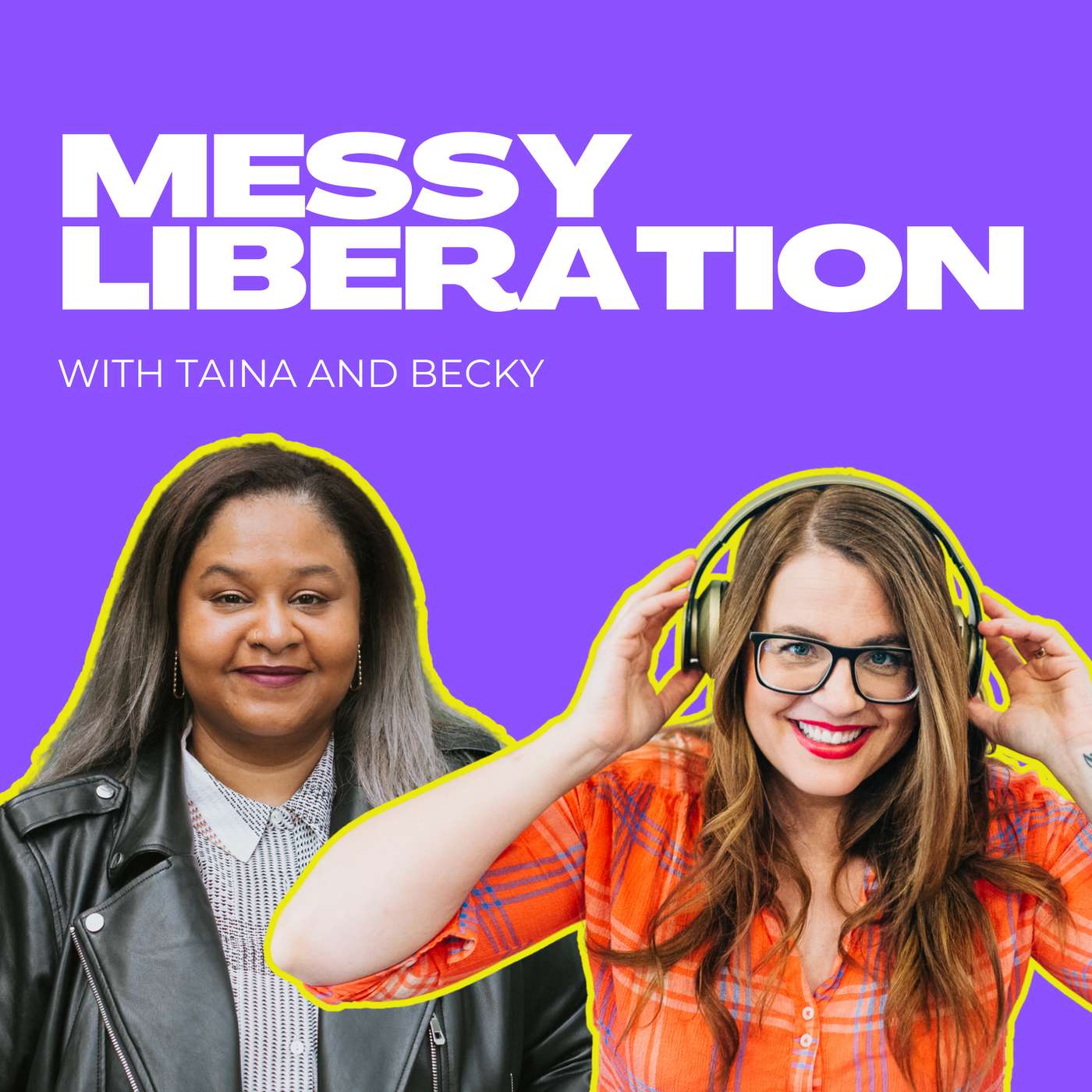
On this episode of Messy Liberation, Becky Mollenkamp and Taina Brown break down Billy Corgan’s viral NYT Popcast interview. In it, the Smashing Pumpkins frontman explained that he chose his much younger wife because women his own age come with too much “baggage,” and he defended his friendship with Marilyn Manson. They dig into age gap relationships, grooming and power dynamics, and how a culture obsessed with youth teaches men to want younger and younger women. They also go back and forth on whether critiquing big age gaps slides into ageism, and why they don’t fully agree. Content note: This episode discusses grooming, child sexual abuse, and sexual violence, including a host’s personal disclosure. In This Episode: 03:39 – Billy Corgan and the myth of the “not political” rock star 05:05 – Why the richest people take the fewest risks (Metallica, Ed Sheeran, and golden handcuffs) 09:00 – Billy Corgan is 59 and his wife is 33: Becky and Taina split on age gaps 10:39 – Youth obsession, “barely legal” culture, and the Epstein files 12:59 – They met when she was 19 and he was 45: where power dynamics become grooming 15:03 – “I personally didn’t feel he was guilty”: Corgan defends Marilyn Manson 17:34 – The “no baggage” clip 19:38 – Taina: “They’re adults,” but dating someone that much younger sounds like more work 22:19 – Corgan’s theory that Gen X women weren’t feminist enough (we’re not post-patriarchy) 25:38 – Becky reflects on her own 7-year age gap at 17 26:35 – Hannah Waddingham, Jennifer Hudson, and the safety of dating your own age 29:03 – A green flag worth looking for: partners who are attracted to people their own age 30:31 – Is critiquing age gaps ageist? “Equals” vs. “peers” 35:11 – Where do we draw the line in the Epstein era? 37:06 – The stats on age, sexual violence, and street harassment 39:43 – Bill Belichick and the “feminist” permission structure 41:11 – Our own relationships, ego, and the need for validation 44:40 – Ageism, sexism, and who actually holds power (did we just define intersectionality?) 48:30 – “Yes, and”: age gap relationships can exist AND reflect a broken system 49:53 – Boys and sexual abuse 52:05 – Recommendations: go to therapy (and Rec League) Resources Mentioned • Billy Corgan on the NYT Popcast: https://www.youtube.com/watch?v=7Q3_scdiXe4 • Hannah Waddingham on The Jennifer Hudson Show: https://www.youtube.com/shorts/isAhnzHkjqI • "Old men dating young women” by Becky Mollenkamp: https://yesandotherwise.substack.com/p/old-men-dating-young-women • Rec League: http://recleague.com/ • RAINN National Sexual Assault Hotline: 800-656-4673 https://rainn.org 🎤 JOIN US IN THE FEMINIST PODCASTERS COLLECTIVE: http://feministpodcastcollective.com/
More from Messy Liberation: Feminist Conversations about Politics and Pop Culture
Want to keep the conversation going? Dr. Carter is joining us for a live author Q&A inside the Messy Liberation Circle. Bring your questions, your stories, and your trickiest “was that racist?” moments: https://messyliberation.com/community/ What do you actually do when someone you love says something racist? On this episode of Messy Liberation, hosts Becky Mollenkamp and Taina Brown talk with social psychologist and DEI practitioner Dr. Evelyn R. Carter, author of Was That Racist? How to Detect, Interrupt, and Unlearn Bias in Everyday Life. They dig into why so many well-meaning people freeze instead of confronting racism, why speaking up is everyone’s responsibility (especially white folks), and the deceptively simple question that can disarm bias in the moment. In this episode, we get into: • Why “it’s not my place” is a cop-out, and why people outside a targeted group are often heard more when they call out bias • Treating that pounding heart and churning stomach as a signal to engage, not flee • The gap between the 80% of people who say they’d speak up and the 25–33% who actually do (plus a hand-washing detour on “moral hygiene”) • What Dr. Abdul El-Sayed’s viral exchange with “Tommy” teaches us about staying calm and asking questions • Why “What makes you say that?” beats preparing for a debate • Confrontation as a practiced skill, and the difference between being kind and being nice • How white people speaking up can create “places of rest” for people of color • Why 98% of confronting happens with friends, family, and acquaintances, not strangers • “What about racism against white people?” Racial bias vs. racism, explained • Separating personal morality from systemic racism so we can actually do the work Timestamps 00:40 – Monthly author Q&As coming to the Messy Liberation Circle 01:18 – Why Dr. Carter wrote Was That Racist? 02:48 – “Is it my place?” Speaking up when it’s not your lived experience 07:07 – Toxic individualism and the “not my business” mindset 08:49 – Listen to your body: discomfort as a call to engage 11:02 – 80% say they’d speak up; only 25–33% do 13:37 – The Abdul El-Sayed vs. “Tommy” video 18:44 – Confronting bias is a skill: kind vs. nice 21:24 – Confronting is about relationship: the 98% vs. 2% finding 24:40 – Why online arguments skew to the extremes 28:44 – Racial bias vs. racism 30:28 – How anyone, of any race, can uphold white supremacy 32:22 – Separating morality from systemic racism Resources Mentioned • Was That Racist? How to Detect, Interrupt, and Unlearn Bias in Everyday Life by Dr. Evelyn R. Carter • Messy Liberation Circle, including the upcoming author Q&A with Dr. Carter • Yes and Otherwise conversation with Dr. Carter • Dr. Abdul El-Sayed responds to “Tommy” 🎤 JOIN US IN THE FEMINIST PODCASTERS COLLECTIVE
On this Indigenous Peoples’ Day episode of Messy Liberation, Becky Mollenkamp and Taina Brown start with the “where are you really from?” question and follow it into who gets to look and who gets looked at. Taina, who is Afro-Latina with Taíno roots, explains the difference between race and ethnicity, what separates Latin from Hispanic, and why self-identification is a form of resistance. It’s an intersectional feminist conversation about objectification, colonialism, and letting people name themselves. In this episode, we get into: Why “What are you?” is never okay, and how to tell real curiosity from nosiness Taina’s PT appointment, and a lifetime of being mistaken for Egyptian, Indian, Dominican, and Middle Eastern “Clarity is kindness”: why a blunt question can be better than a covert one Intent vs. impact: how treating someone as a puzzle to solve strips their dignity Becky’s confession about staring at a trans woman in an airport 30 years ago, and what she’d do differently now Who gets the privilege to look and who becomes the spectacle, from Shane Gillis’s SNL “spandex” joke to the history of slave auctions Oppositional looking: refusing to look away, and why white women should stare at cops, not at the people they’re harassing Jordan Peele, Get Out, and horror that doesn’t center whiteness Latin vs. Hispanic, explained through Brazil, Guyana, Mexico, and Puerto Rico Race as a social construct that still shapes real lives, plus the “file folder” metaphor for identity, gender, pronouns, and reclaimed language Timestamps 00:00 – Indigenous Peoples’ Day, Hispanic Heritage Month & Filipino American History Month 02:42 – Being mistaken for everything: growing up racially ambiguous 07:00 – “It’s really none of your business”: lessons from college 11:40 – Objectification, intent vs. impact, and human dignity 17:47 – Shane Gillis, SNL, and who gets to be the object 21:00 – Ways of Seeing, Stuart Hall & oppositional looking 25:01 – Stare at power, not at the oppressed 26:40 – Jordan Peele, Get Out, and horror that doesn’t center whiteness 29:41 – Why travel (or a new neighborhood) can radicalize white folks 36:10 – Race as a social construct, from slavery to ICE sweeps 40:41 – Latin vs. Hispanic: what’s the difference? 47:48 – How perception changes race: New York vs. Florida 49:17 – The Hyphenated Life, file folders & gender as a construct 53:02 – Capitalism and the myth of limited categories 56:50 – Refusing the file folder: queer identity & she/they pronouns 1:00:05 – Messy Liberation Circle open house (Oct. 15) Resources mentioned: "Ways of Seeing" by John Berger: https://link.amazon/B05cwPa5S “The Whites of Their Eyes” by Stuart Hall: https://bpb-us-e1.wpmucdn.com/sites.psu.edu/dist/c/4578/files/2015/04/Hall-Whites_of_Their_Eyes_Full_Text.pdf?bid=4578 “The Oppositional Gaze" by bell hooks: https://warwick.ac.uk/fac/arts/english/currentstudents/postgraduates/pgmodules/femlit/bell_hooks.pdf "The Hyphenated Life" by Han Ren: https://link.amazon/B03IkAQOr Messy Liberation Circle open house, Thursday, Oct. 15: https://bit.ly/4yjbTVW
Content warning: This episode discusses SA and r*pe culture. Becky Mollenkamp and Taina Brown of Messy Liberation unpack the Cornell sexual assault case, the group chat of 50-plus men who joked about it, and the rape culture that made it possible. This intersectional feminist conversation covers victim blaming, fraternity culture, consent, and why staying silent when your friends say harmful things makes you complicit. It also covers how misogyny hurts men too. In this episode, we get into: • Taina's trip to Iceland for the Wicker premiere, and why the film's nameless characters make it a feminist fable without being Barbie-style feminism • The pneumonic plague case in Russia: why panic isn't the answer, and why access to antibiotics should be universal • The Cornell case: what to call it, and why "rapist" sounds like a job title • Fraternity culture, hazing, and why consent under duress isn't consent • Kendall Francis speaking out at LSU, and campus-wide warnings to "stay home" instead of telling men not to rape • Why men need to stop talking about "training their daughters" and start calling out their friends • How misogyny hurts men: male sexual assault, shame, and the cycle of harm • The group chat as a permission structure, and complicity in the Nolan Wells case • Asking vs. demanding: liberal feminism, "hearts and minds," and why willful ignorance is violence • White educators, unconscious bias, and why "no one's paying me to learn" is an excuse Timestamps 00:00 – Taina's back from Iceland: the Wicker premiere at the Reykjavik International Film Festival 07:01 – Pneumonic plague in Russia: why we'll (probably) be okay 15:20 – The Cornell case and what to call it (content warning) 21:13 – Fraternity culture, hazing, and consent under duress 24:09 – Kendall Francis and the LSU case 27:05 – Victim blaming: she's allowed to drink, and she's allowed to say no 31:35 – Misogyny hurts men: sexual assault, shame, and silence 37:15 – The 50 in the group chat: permission structures 41:08 – Nolan Wells and why the getaway driver is complicit 44:53 – Asking vs. demanding: MLK, Malcolm X, and liberal feminism 51:38 – White educators and unconscious bias 53:51 – Why we keep having heavy conversations (and a note on consent from the Hasan Piker episode) 55:19 – Join us: the Messy Liberation Circle and our free October 15 event Resources mentioned • "More Salt Than Diamond" by Aline Mello: https://bookshop.org/a/93627/9781524871024 • Previous episode: "Is Violence Part of Liberation? Breaking Down Hasan Piker, MSNow, and Palestine": https://messyliberation.com/hasan-piker-palestine/ • Free October 15 author event with Aline Mello: https://taina-m-brown.myflodesk.com/messy-lib-open-house • Messy Liberation Circle: https://messyliberation.com/community/ 🎤 JOIN US IN THE FEMINIST PODCASTERS COLLECTIVE: http://feministpodcastcollective.com/
On this episode of Messy Liberation, Becky Mollenkamp and Taina Brown share their feminist origin stories: how each of them came to see the white supremacist capitalist patriarchy, and what unlearning and relearning has looked like since. Taina talks about getting fired from her evangelical church and finding intersectional feminism at a women's college. Becky traces her path from "we don't see color" white feminism to Ferguson, bell hooks, and coming out as pansexual. In this episode, we get into: What "unlearning and relearning" means, and why it looks so different depending on your identities Getting fired from a church, and how churches run like any other exploitative workplace A congregation with "90 nations represented" and white men at the top Why "my Black friend voted for Trump" isn't a real argument, and how internalized oppression works Taina's move from evangelical faith to women's studies, and the three readings that gave her language for what she'd lived Where intersectionality actually came from: Kimberlé Crenshaw's legal scholarship Becky's mom, colorblind second-wave feminism, and what happened when Becky brought home a Black boyfriend White saviorism, campaigning for Obama, and the disillusionment afterward Ferguson, bell hooks, Audre Lorde, and starting a feminist reading group Being queer before you know you're queer, internalized homophobia, and no longer feeling like you're co-opting a community that's yours Timestamps: 01:00 – Origin stories, and why our journeys look different 02:53 – Growing up evangelical 04:33 – "I didn't think racism was still a thing" 07:15 – Holding an identity doesn't protect you from internalizing oppression 10:00 – An intense friendship and the first signs of queerness 12:30 – The three classes that changed Taina's life 16:34 – Leaving the church: "People are flawed, but God isn't" 23:21 – Becky's origin story: raised outside religion 26:02 – Second-wave feminism and "we don't see color" 29:38 – White savior complex and campaigning for Obama 32:38 – Ferguson and the murder of Michael Brown 36:31 – Our pansexual identities 42:37 – You don't need a PhD to belong Resources mentioned: Paula Gunn Allen, "Who Is Your Mother? Red Roots of White Feminism" The Seneca Falls Convention and the Declaration of Sentiments The Combahee River Collective Statement "Demarginalizing the Intersection of Race and Sex" by Kimberlé Crenshaw "Feminism Is for Everybody" by bell hooks "Sister Outsider" by Audre Lorde "Pleasure Activism" by adrienne maree brown "White Feminism" by Koa Beck Our interview with Koa Beck
On this episode of Messy Liberation, Becky Mollenkamp and Taina Brown break down the viral Clock It interview where Symone Sanders Townsend pushed back on Hasan Piker for comparing US police-brutality protests to Palestinian resistance. They dig into what violence actually is, including poverty, discrimination, and state-sanctioned deprivation, why the nonviolence stories we're taught about MLK and Gandhi are incomplete, and how holding a marginalized identity doesn't exempt anyone from upholding the system. In This Episode: 01:17 – The viral Clock It interview with Hasan Piker 02:41 – Hasan's argument: resistance to systemic violence always gets labeled differently 03:47 – Holding a marginalized identity doesn't exempt you from upholding the system 04:34 – The role of violence in revolutions and liberation movements 07:44 – Taina: "I'm tired of talking about this" (and why she's talking about it anyway) 08:20 – State-sanctioned violence becomes invisible because it's normalized 11:51 – "Have they never read Freedom Is a Constant Struggle?" 12:40 – US cops and campus security trained by the IDF — Taina's grad school at Georgia State 13:14 – George Floyd and the knee on the neck we all watched 14:55 – Liberal ≠ progressive: corporate media and who funds it 15:35 – The Hundred Years' War on Palestine and being done with "I don't know enough" as an excuse 17:07 – The disconnect between your identity and your understanding of liberation 18:13 – Gandhi, MLK, and the version of history taught inside a tiny bubble 19:41 – Respectability politics: be peaceful, be presentable, mind your tone 22:26 – Why the powers that be always negotiate with the most moderate voice in the room 23:30 – The one-hero narrative and how it dissolves collective action 27:16 – The myth of the perfect agitator 29:01 – Democrats vs. Hasan Piker, and the all-or-nothing loyalty test 35:03 – Ask yourself: what do you actually know about Hamas, and who told you? 38:36 – Public education as the system's most reliable tool 42:22 – To be clear: this isn't a call to violence, it's a call to understand what liberation involves 44:14 – Why "why?" is the most important question you can ask 46:35 – The rape-culture parallel: why didn't you fight back, why did you fight back 49:06 – Wrap-up and a real question for listeners Resources Mentioned • Hasan Piker on Clock It: https://www.youtube.com/watch?v=U4lZ0SwPDEs • Critique of Clock It episode: https://www.youtube.com/watch?v=7CX3YshKpjE • "The Hundred Years' War on Palestine" by Rashid Khalidi: https://link.amazon/B0bhg6Uic • "Freedom Is a Constant Struggle" by Angela Davis: https://link.amazon/B029YDKo7 • "Original Sins: The (Mis)education of Black and Native Children and the Construction of American Racism" by Eve L. Ewing: https://link.amazon/B06y22SH7 🎤 JOIN US IN THE FEMINIST PODCASTERS COLLECTIVE: http://feministpodcastcollective.com/