Show Notes
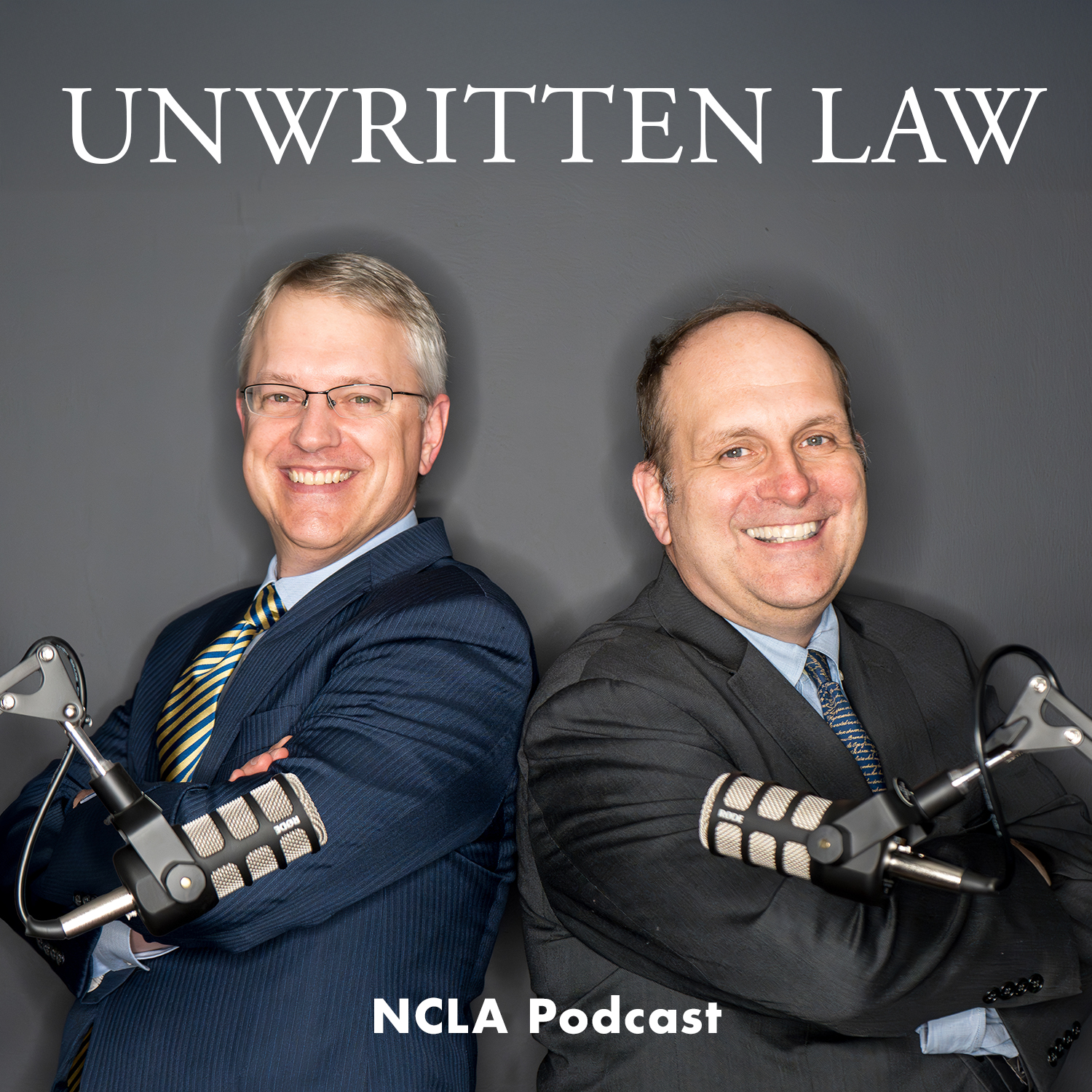
In this episode of Unwritten Law, NCLA President and Chief Legal Officer Mark Chenoweth and Senior Litigation Counsel John Vecchione discuss a major victory in Flint Ave. LLC v. U.S. Department of Labor, after the federal government decided not to move forward with its appeal. The case challenged a Department of Labor rule that dramatically increased the salary threshold for employees classified as exempt from overtime and minimum wage requirements under the Fair Labor Standards Act. NCLA argued that the rule unlawfully elevated salary level over the actual duties employees perform—contrary to the statute Congress enacted. John explains how the district court permanently set aside and vacated the rule nationwide, why the government’s appeal remained pending for more than a year, and what it means now that the Department of Justice has agreed to dismiss the appeal. The discussion also explores the practical consequences of the rule for businesses and workers who rely on flexible schedules, including part-time managers and employees who prioritize flexibility over rigid salary structures. Mark and John explain why the decision represents both a major victory for their client, Flint Ave. LLC, and an important reaffirmation that agencies cannot rewrite statutes through regulation.
More from Unwritten Law
Can the president fire a federal prosecutor appointed by judges? That's the constitutional question at the center of Trump v. Rogoff, a dispute now before the U.S. Court of Appeals for the Ninth Circuit. After federal judges appointed Roger Rogoff as U.S. Attorney for the Western District of Washington, President Trump fired him less than an hour later. Rogoff sued, arguing that the president lacked the authority to remove a court-appointed prosecutor. A district court granted a preliminary injunction in Rogoff's favor, but the Ninth Circuit stayed that order while the appeal proceeds. On this episode of Unwritten Law, NCLA President and Chief Legal Officer Mark Chenoweth and Senior Litigation Counsel John Vecchione welcome Senior Litigation Counsel Jacob Huebert to discuss NCLA's newly filed amicus brief. NCLA argues that the president has the constitutional authority to remove U.S. attorneys, regardless of who appointed them. The brief also raises a broader constitutional concern: whether federal judges should be appointing executive-branch prosecutors in the first place. Mark, John, and Jacob examine the Supreme Court's recent Trump v. Slaughter decision, the separation of powers, the role of the Senate in confirming federal prosecutors, and why this dispute could have implications far beyond Washington State.
Can the government deny you a jury trial—and then refuse to let you challenge that denial in federal court? NCLA is asking the Supreme Court to hear Smith v. SEC, a case challenging the constitutional limits of administrative adjudication and the procedural barriers that can prevent Americans from asserting their rights. On this episode of Unwritten Law, NCLA President and Chief Legal Officer Mark Chenoweth and Senior Litigation Counsel John Vecchione are joined by Senior Litigation Counsel Russ Ryan to discuss the newly filed Supreme Court cert petition. NCLA client Eric Smith was sanctioned through a FINRA disciplinary proceeding without a jury or an Article III judge. The SEC subsequently affirmed the sanctions after years of delay. When Smith sought review in the Sixth Circuit, NCLA argued that the proceedings violated constitutional protections recognized by the Supreme Court in SEC v. Jarkesy. But the appeals court declined to consider the constitutional challenge because Smith had not first presented it to the SEC. NCLA is asking the Supreme Court to resolve disagreements among federal appeals courts over whether Americans must raise structural constitutional objections before administrative agencies—and whether they can be excused from doing so when the agency has already made clear that the argument would be futile. Mark, John, and Russ explain why this dispute matters far beyond Eric Smith, why administrative agencies should not be the gatekeepers of constitutional challenges to their own proceedings, and what happens next as NCLA asks the Justices to hear the case.
What happens when a federal investigator secretly obtains a U.S. senator's phone records—and prevents her from challenging the search? NCLA has filed a lawsuit on behalf of Senator Marsha Blackburn against former Special Counsel Jack Smith, challenging his acquisition of her telephone records during the Arctic Frost investigation. On this episode of Unwritten Law, NCLA Senior Litigation Counsel John Vecchione is joined by NCLA attorney Caitlin Moyna to discuss the lawsuit, the constitutional protections at stake, and the extraordinary circumstances surrounding the subpoenas. According to NCLA's complaint, Smith sought telephone records belonging to members of Congress, identifying the targets by their phone numbers rather than their names. His team also obtained nondisclosure orders preventing telephone providers from alerting anyone about the subpoenas. NCLA alleges that investigators failed to tell the court that the records belonged to sitting members of Congress. The lawsuit argues that these actions violated the Constitution's Speech or Debate Clause, which protects legislative independence from executive interference, as well as the Fourth Amendment. NCLA also challenges the constitutionality of Smith's appointment as Special Counsel. John and Caitlin discuss why these protections matter, what newly disclosed documents suggest about the government's awareness of congressional privileges, and why Senator Blackburn is seeking accountability rather than a large monetary award. They also explain an unusual development: all four district judges in the Middle District of Tennessee have recused themselves from the lawsuit. At stake is a fundamental question about separation of powers: Can executive-branch investigators circumvent constitutional protections designed to safeguard Congress from government interference?
After more than three years, Judge Pauline Newman's judicial conduct and disability proceeding has been transferred out of the Federal Circuit. It's a significant and unprecedented development in a case that NCLA has been fighting since 2023. On this episode of Unwritten Law, NCLA Senior Litigation Counsel John Vecchione and Andy Morris discuss the newly disclosed order from Eleventh Circuit Chief Judge William Pryor confirming that Judge Newman's proceeding has been transferred to the Eleventh Circuit. Judge Newman has sought a transfer since April 2023, arguing that judges involved in the controversy should not adjudicate the proceeding themselves. Now, after multiple orders, suspensions, and years of litigation, a different judicial council will handle the matter. John and Andy explain: Why Judge Newman sought a transfer in the first place What the Eleventh Circuit's new order reveals Why a transfer after more than three years is unprecedented What remains confidential about the proceeding Why Judge Newman requested broader public disclosure What the transfer means for the next phase of her case Why this development does not yet change her status on the bench
What happens when a federal agency publicly declares a product unsafe—but can't adequately explain the evidence behind that declaration? NCLA has secured an important ruling for Dreamland Baby Company in its challenge to the Consumer Product Safety Commission. On this episode of Unwritten Law, NCLA President and Chief Legal Officer Mark Chenoweth is joined by Senior Litigation Counsel Kara McKenna Rollins to discuss the latest decision in Dreamland Baby Company v. Consumer Product Safety Commission. Dreamland makes weighted infant sleep products. CPSC publicly warned consumers against using such products, a declaration with potentially devastating consequences for a company selling products for babies. Dreamland challenged the agency, arguing that its statements were inaccurate and misleading and weren't supported by the available data. The agency fought to prevent judicial review of its action. The court rejected that position. And when it examined what CPSC had actually considered, it found the record insufficient to evaluate the agency's decision and sent the matter back to CPSC for further consideration. Mark and Kara discuss what the ruling means for Dreamland, why agencies shouldn't be able to sidestep statutory procedures through public warnings, and why government safety pronouncements should be grounded in transparent evidence and data.