Show Notes
Digital Reconstruction: How Europe Invented the Computer, Scuttled Its Future, and Rebuilt Itself
Europe invented the computer twice. The first time in secret. The second time in oblivion.
In 1941, Konrad Zuse completed the Z3 in Berlin — the world's first programmable computer. The Nazi regime saw no use in it. A bombing raid destroyed it. In 1944, Tommy Flowers delivered Colossus to Bletchley Park — the first electronic computer, two years before ENIAC. He was ordered to burn the plans. Then came the Lighthill Report.
In 1973, a British mathematician with no AI experience published a devastating assessment: "total failure to achieve its grandiose objectives." The government cut funding. Europe had just triggered the first "artificial intelligence winter." But Europe rebuilt itself.
In Marseille, Alain Colmerauer invented Prolog — the language that would inspire the Japanese Fifth Generation project. At CERN, Tim Berners-Lee created the World Wide Web. In Finland, Linus Torvalds wrote Linux — the system that runs most of the world's servers. In France, Yann LeCun laid the foundations for convolutional neural networks — the technology behind image recognition.
You will discover Donald Michie, a Bletchley Park veteran who built MENACE — a machine learning tic-tac-toe through reinforcement. Edsger Dijkstra, who invented the shortest path algorithm. DeepMind, founded in London, whose AlphaGo would beat the world Go champion.
Europe invented, forgot, scuttled — and started over. Its resilience is part of its genius.
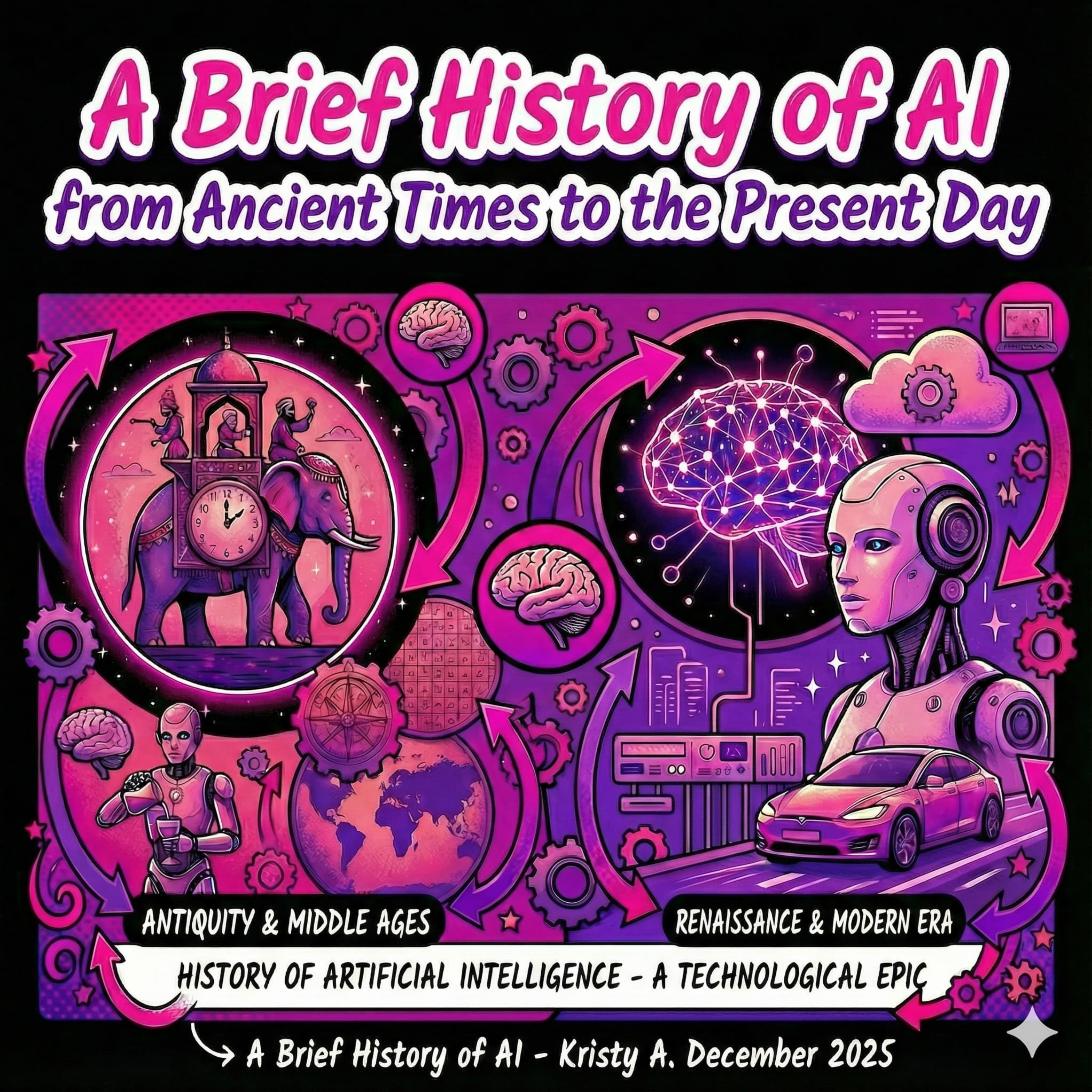
More from A brief history of AI from ancient times to the present day
What the Deep Learning Revolution Teaches Us: Conclusion and opening toward the future
Archipelago of Innovation: How Australia seeks its place in the AI revolution
Silicon Gardens: How the desert became an artificial intelligence laboratory
Rule and Exception: How Europe regulated AI and made Mistral emerge from the improbable
The New Center of Gravity: How Asia became the beating heart of global artificial intelligence