Show Notes
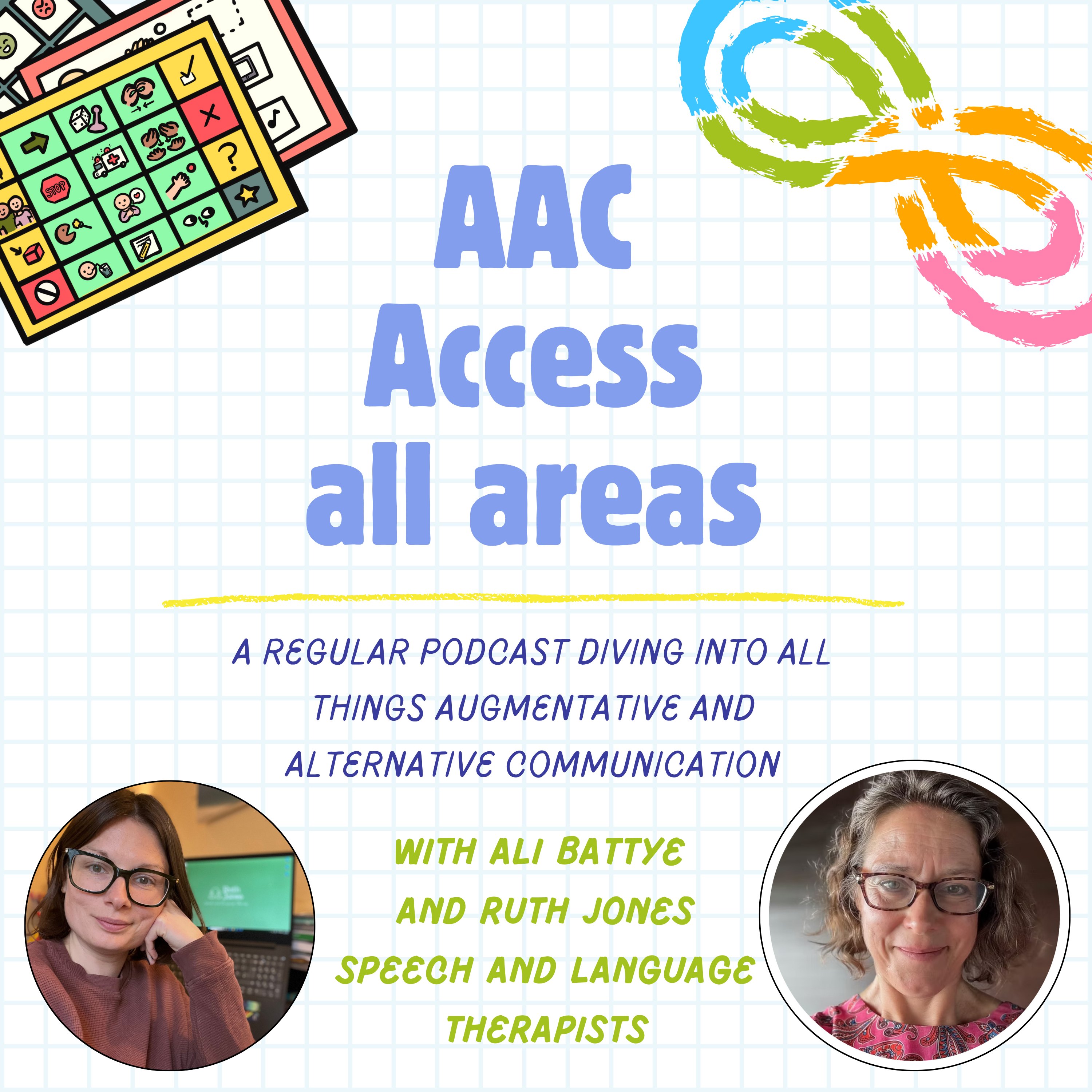
In this episode of AAC Access All Areas, Ruth and Ali discuss the various types of Augmentative and Alternative Communication (AAC) systems, their evolution in practice, and the importance of providing diverse language access for children with communication needs.
They explore the shift from traditional paper-based systems to more modern, technology-driven solutions like iPads, emphasizing the need for individualized approaches based on each child's unique preferences and needs.
The conversation highlights the significance of modeling language, the importance of patience in the AAC learning process, and the various tools available to support effective communication.
Ruth's Instagram: ruth_jones_slt Ali's Instagram: ali_battye_speech
More from AAC Access All Areas
In this episode of AAC Access All Areas, hosts Ali Battye and Ruth Jones discuss how to support children with monotropic attention profiles using AAC. They explore the importance of understanding hyperfocus, the nuances of stimming, and practical strategies for engaging children in communication while respecting their individual needs.
The conversation covers a range of topics related to AAC, including personal reflections, writing projects, technical advancements, AI in AAC, representation in literature, and lived experiences of AAC users.
In this episode, Ali and Ruth explore practical strategies for supporting adults involved in AAC communication, addressing feelings of overwhelm and emphasizing the importance of flexibility, connection, and personal pacing. Whether you're a parent, teacher, or therapist, discover how to create sustainable AAC practices that honour each individual's unique journey.
Summary In this episode, Ruth Jones and Ali Battye explore the complexities of AAC engagement, emphasizing patience, understanding fluctuating capacities, and honouring individual communication rhythms. They share practical insights and personal stories to support effective AAC use.