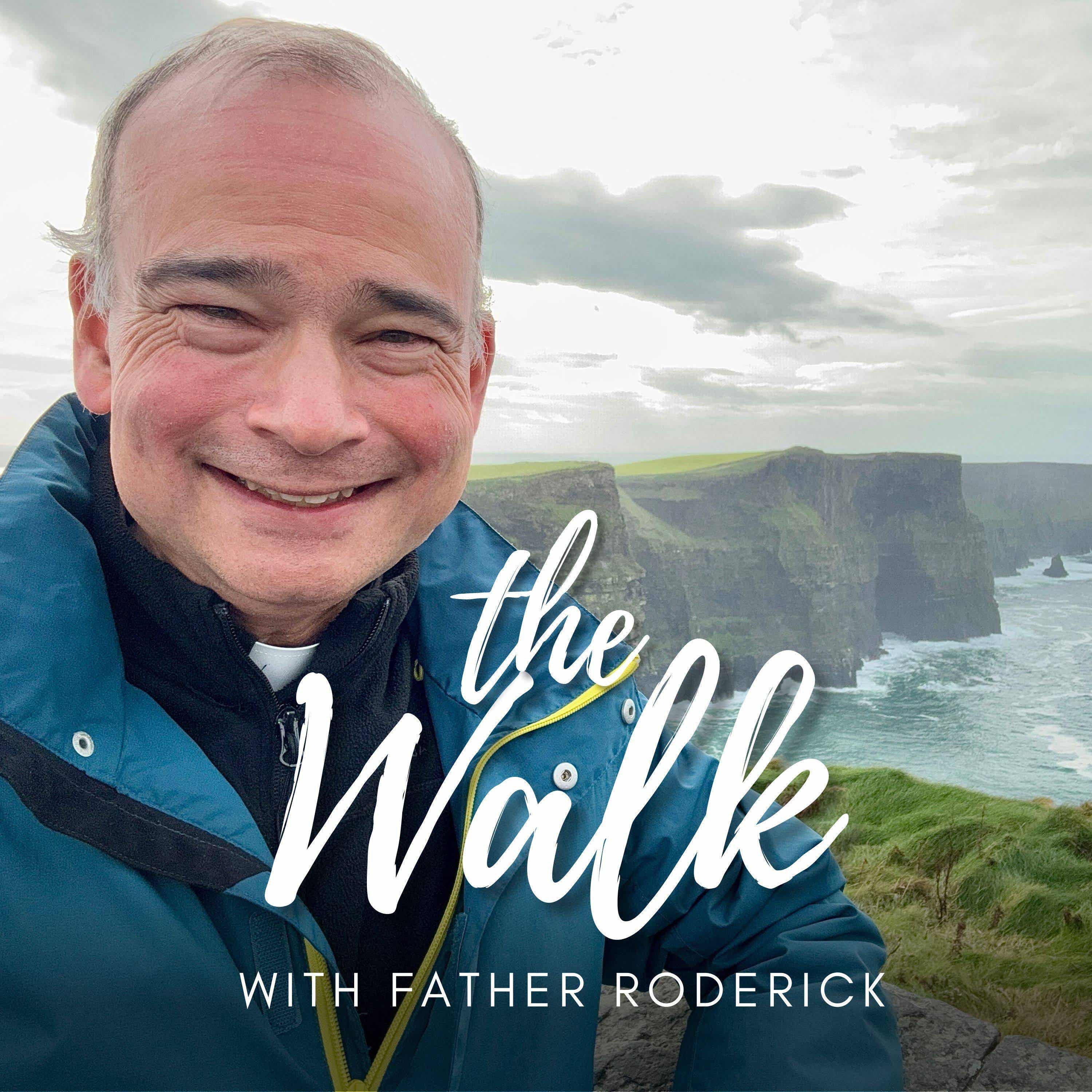
Show Notes
This week, I realized something I didn’t expect: doing less can actually help you do more.
After weeks of high blood pressure and creeping exhaustion, I finally took a step back to reevaluate how I work. With the help of an AI coach, I started looking at the patterns behind my stress. What emerged was confronting. I’ve spent most of my life in overdrive—driven by deadlines, fueled by people-pleasing, and constantly measuring myself by what I produce. Even when I thought I was resting, I wasn’t. I was just switching gears and calling it downtime.
This week, I tried a different approach. One script a day. No work at night. Shorter walks. No “just one more thing” before closing the laptop. And to my surprise, it started working. My mind cleared. I felt calmer. The sense of urgency began to fade. And then something unexpected happened: I finally launched a BookTok channel I’d been overthinking for more than a year. Not out of pressure or guilt, but because I had space to breathe. I had energy again.
That’s when I started to understand what it really means to “protect the process.” I’ve always been focused on progress, on finishing, on pushing through. But now I see that the process itself needs care. It needs time, and margin, and trust. You can’t keep planting seeds if the soil is dry and cracked.
I used to think rest was a reward you had to earn. Now I’m learning it’s the foundation everything else depends on.
If you’ve been feeling overwhelmed or stretched thin, you’re not alone. It’s easy to fall into the trap of believing that you’re only valuable when you’re achieving. But that pressure is a weight we’re not meant to carry. And maybe it’s time we stopped trying to carry the world on our shoulders.
We’re not built for that. We’re not superheroes. We’re not gods. We’re just people. Beloved, limited, called—not to be perfect, but to be faithful.
And sometimes, being faithful means closing the laptop, stepping outside, and letting the sun remind you that life continues, even when you slow down.
Get full access to Father Roderick at fatherroderick.substack.com/subscribe
More from The Walk
Of all the rooms in my house, I spend most of my working day in what is basically a closet. It was never meant to be an office. When I moved into the former rectory where I live, this tiny room beside the front door was simply where people hung their coats. It measures 2.5 meters (about 8.2 feet) in length and 2 meters (about 6.6 feet) in width. Last year, I turned it into my Hobbit hole.There was just enough space for a small IKEA desk, a chair, and a few bookshelves. One wall holds a cupboard with all the house’s electronics, and there’s a single square window. I’ve always loved the image of Bilbo Baggins sitting safely inside Bag End, surrounded by books and familiar things, writing down his adventures while the outside world disappears. That’s more or less what I wanted for myself: a small, warm place where I could shut out distractions and step into a story. There was also a very practical reason for choosing the smallest room in the house: it was the only room I could afford to keep warm. Writing with gloves on The rectory was built in the 1950s, when apparently nobody expected heating a house to become a luxury. The roof has never been properly insulated. The insulation inside the walls has largely deteriorated. Downstairs there are enormous old windows through which both heat and money disappear at alarming speed. Last January, I spent around €1,200 on heating alone. So during the winter I mostly retreat to my Hobbit hole. I keep the rest of the house at a fairly low temperature and heat only the room where I work. Last year there were days when even that wasn’t enough and I sat behind my computer wearing thin gloves. It turns out that typing fantasy novels with cold fingers is considerably less romantic than it sounds. This week I finally decided that something has to change. I had two people from a local energy service inspect the house and explain where the biggest problems are. A company is coming to look at the walls and give me a quote for new insulation. I’m also investigating how to insulate the attic without spending a fortune. And for the Hobbit hole itself, I’m considering an infrared panel. Bilbo had a fireplace. I’ll take what I can get. The unromantic side of a creative life I’ve been thinking about this because October has been such an intensely creative month for me. Every morning I sit in that little room and work on stories. My big fantasy novel is slowly being rebuilt. The children’s book about Pangur the magical monastery cat is evolving almost every day. Then, after several hours behind the desk, I put on my coat and walk into the woods to solve whatever story problem is currently occupying my brain. It is pretty close to the life I imagined when I decided I wanted to become a writer. Except that imaginary writers never seem to spend much time comparing insulation quotes. They don’t worry about natural gas prices or whether their hands will be warm enough to type in January. Real life insists on being considerably more practical. But perhaps those practical things matter more than I used to think. The stories may happen in my imagination, but I still need somewhere to sit while I write them. I need enough peace to concentrate. I need food, electricity and a room that is not thirteen degrees Celsius. Creativity doesn’t exist separately from all of that. A small room can hold a very large world The funny thing is that I don’t wish my office were bigger. There are much larger rooms in this house, but I rarely want to work in them. I like being surrounded by bookshelves. I like being able to reach almost everything without getting out of my chair. I like that when I close the door, the room feels separate from the rest of the house. The physical world gets smaller, and somehow that makes the imaginary world bigger. Over the past two years, that tiny room has contained medieval Ireland, dragons, saints, magical storytellers, short stories, podcasts and now a white monastery cat who is causing considerab
Today, I ran into some parishioners while walking in the woods. “I thought you were going to be in Ireland,” they said. So did I. For months, October had been blocked out in my calendar as my writing month. The original plan was to travel to Ireland, move from hostel to hostel, walk for hours every day and spend the rest of my time working on my fantasy novel. Then I looked at the prices. Travel alone had become expensive, accommodation would add another considerable amount, and suddenly my supposedly simple writing retreat was turning into a trip of several thousand euros. So I stayed home. At first that felt a little disappointing. Now, halfway through October, I’m beginning to think it may have been exactly what I needed. This Substack is reader-supported. To receive new posts and support my work, consider becoming a free or paid subscriber.
I think I might be suffering from time travel whiplash. A couple of days ago, I spent most of an afternoon editing a podcast I had recorded at the Elfia fantasy festival in Arcen two weeks earlier. The recording had gone badly wrong. My ancient audio recorder had apparently decided that fifteen years of loyal service was enough, and large chunks of conversations had simply disappeared. So I spent six or eight hours reconstructing what was left, cutting around the gaps and trying to make the finished episode sound as if nothing unusual had happened. By the end of the day, something strange had happened to me as well. I felt as if I had just returned from the festival. I could remember the sunshine, the people I had talked to, the atmosphere, the conversations. Audio does that to me. The moment I start editing an old recording, I am back there again. Then I opened Instagram and started promoting episodes of my saints podcast based on recordings I had made six weeks earlier. At the same time, I was scheduling other episodes that won’t be published until November. Past, present and future were all occupying the same afternoon. No wonder my brain occasionally wonders what month it is. The month I was supposed to write October was supposed to be simple. I had deliberately cleared the month so I could concentrate on rewriting my fantasy novel. Originally, I imagined myself spending much of October in Ireland, moving between hostels, walking during the day and writing the book in the evenings. Instead, the first week mostly involved recovering from everything I had done to clear the month in the first place. I slept. I tried to slow down. I looked at travel prices, discovered that Ireland would cost considerably more than I’d expected, and started wondering whether I should change the plan. Then I started another story. Then I researched medieval monasteries. Then medieval storytellers. Then architecture. Then ninth-century Irish monks living in Germany. All fascinating. None of which involved actually rewriting the novel. I know this pattern rather well. When something important feels difficult, I become extremely good at improving everything around it. I reorganize the system, fix my email, rethink my routines, do more research and make a better plan. All of those things can be useful, but they can also become an extraordinarily sophisticated form of procrastination. The problem isn’t motivation This morning I finally sat down and asked myself what was actually going on. I’m not lacking motivation. I love this book, I love the world, and I know much more about the story than I did when I wrote the first draft. That’s part of the problem. The better I understand it, the more pressure I feel to get everything right. If I’m creating an entire fantasy world, shouldn’t I know exactly how the monasteries work? Shouldn’t I understand the history? Shouldn’t the magic system make sense? Shouldn’t I know how all of this affects books I haven’t even written yet? Before I know it, I’m standing at the bottom of another research rabbit hole. Meanwhile, writing my little story about an old monk and his magical cat feels effortless. I think that’s because I’ve told myself it’s a small story. I’m allowed to play with it. I’m allowed to make jokes. I’m not worrying about whether I’ll regret chapter seven five years from now. The bar is lower, and apparently that makes it much easier to jump. Standing on the platform It reminded me of something I did years ago during youth camps. We had one of those climbing courses high up in the trees. At one point you had to step off a small platform and trust the cable attached to you to carry you across to the next tree. I hate heights. I remember standing there calculating everything that could possibly go wrong. Then a girl of about eleven went before me. She didn’t hesitate. She jumped and had a wonderful time. And there I was, still standing on the platform, considerably older and supposedly wiser, imagining
October has finally arrived, and I’ve been looking forward to it for quite some time. I deliberately cleared as much as possible from my calendar. No big recording trips. No looming podcast deadlines. No administrative projects. For once, I want most of my days to revolve around one thing: writing. Getting here was not particularly relaxing. Over the past two weeks, I produced around thirty episodes of my Dutch saints podcast, finished the paperwork for the audit of our foundation, and spent more than four hours on trains to record another ten episodes in a basilica in the south of the Netherlands. By the time October arrived, I was exhausted. But the blinking lights in my head had finally gone out. When everything keeps blinking I’ve noticed this about myself before. I can have plenty of time to write, but if there are five other things demanding my attention, I find it almost impossible to really disappear into a story. An email I still need to answer. A recording that has to be scheduled. A problem someone else is waiting for me to solve. None of those things may take much time on their own, but together they create a kind of white noise in my head. Producing a daily podcast has created a lot of that noise this year. I’ve loved making it, but it also asks for a constant stream of creative energy. Spending your working day telling stories doesn’t necessarily make it easier to sit down afterwards and tell another one. Last year, I was constantly dreaming up new stories. This year, much of that came to a halt. I missed it more than I realised. Three days into October On October 1, I started writing again. I’m back to rewriting my fantasy novel, and the year away from it may actually have helped. The world is much clearer to me now. I understand the characters better, and I have a stronger sense of why I want to tell this story in the first place. At the same time, another idea came back to life. A couple of months ago, while walking through Utrecht, I had a very simple thought: what if an old monk had a magical cat? The cat soon acquired nine lives, each lasting a century. The monk became a former story mage who had lost confidence in his abilities. Something hidden beneath the monastery should probably have remained there. This week I wondered whether I could combine that idea with Inktober, the annual drawing challenge with a different prompt for every day in October. Three days later, I had the outline for a 31-chapter story. I’m still tired, and I’m already behind on the drawings. But my brain is making things again. That is the difference. Keeping it playful I’m deliberately keeping this second project small. The novel gets the serious writing hours. The story about the monk and his cat gets my lunch breaks. One short chapter, one small illustration, then back to the novel. I’ve learned that tiny side projects have a habit of turning into enormous undertakings if I’m not careful. This time, I want the lunch breaks to remain playful. I want to make something because the idea makes me smile, not because it has to become part of some larger strategy. Ireland can wait I still haven’t booked my trip to Ireland. A few years ago, that probably would have made me panic. Instead, I looked at the possibilities and realised that travelling immediately would be unnecessarily expensive. So I’m not going yet. My first job this month isn’t to maximise every available day. It’s to recover from the sprint that got me here, to walk, sleep, settle into a rhythm, and write every day. Ireland can wait another week or two. For once, I’m not particularly worried about how much I’ll accomplish by the end of the month. Three days in, something more important has already happened. I’m excited about writing again. And I’ve missed that feeling. P.S. This article grew out of this week’s episode of The Walk. You can hear more about my plans for October, the stories I’m working on, and why I may end up in Ireland, Scotland, or both by hitting play on t
At the beginning of this year, I decided I was going to read 100 books. It seemed perfectly reasonable at the time. I’d read even more than that in previous years, and although I knew 2026 would be busy, surely I could manage 100? We are now approaching October. I recently looked at my Goodreads account and discovered that, to reach my goal, I’d pretty much have to read a book every single day until the end of the year. Part of my brain immediately went: Challenge accepted! Fortunately, another part asked a much more sensible question. Why? When goals become obligations There’s nothing wrong with setting goals. I love goals. The problem starts when circumstances change but the goal doesn’t. When I decided to read 100 books, I didn’t know quite how demanding producing a daily podcast would become. I didn’t know how much time I’d spend recording, editing, traveling and doing everything else around it. And yet there was still a little voice telling me that I’d failed because I wasn’t keeping a promise I’d made to myself nine months ago. I recognize exactly the same voice when I look at my writing. At one point, I wanted to publish eight books this year. Then I meet another author who published their first novel last year and already has their second book out, and immediately I think: I’m so far behind. Behind whom? Nobody is waiting outside my house with a stopwatch. The deadline mostly exists in my own imagination. The Halloween project I ran into the same problem again this week. I had come up with an idea for a special series of seven episodes of my Dutch saints podcast leading up to Halloween. There are some surprisingly eerie stories about saints, demons and supernatural encounters, and I thought it would be fun to tell them almost like horror stories, complete with music and sound effects. I loved the idea. Then I tried writing them. It was hard. I’ve never written horror before. I’m actually rather impressionable myself, so I tend to avoid it. The first attempts felt cheesy. I couldn’t find the right voice. After struggling with it for a couple of days, I realized that doing this properly might consume another two weeks. A few years ago, that wouldn’t have stopped me. I’d had the idea. I’d committed to it in my head. Therefore I had to finish it. This time I asked myself another question. Why? Nobody had asked for these seven episodes. We already have interviews recorded that can fill those slots perfectly well. The Halloween series was something I’d invented because it sounded fun. So I parked it. Maybe I’ll return to it someday. Maybe I’ll have learned enough about writing horror by then to make it work. For now, letting it go gave me something much more valuable: room to breathe. Goals can change. Priorities don’t have to. I’m slowly learning to distinguish between my goals and the reasons I set those goals in the first place. Reading 100 books was a goal. Loving books and wanting to read more is the priority. Publishing eight books was a goal. Becoming a better writer and bringing my stories into the world is the priority. Creating a Halloween series was a goal. Telling good stories is the priority. Once I look at it that way, changing a goal doesn’t feel nearly as much like failure. Sometimes the circumstances simply changed. And sometimes I changed. That doesn’t mean giving up on the things that matter. Quite the opposite. It means protecting them from all the arbitrary targets, deadlines and expectations that can gradually make them feel like obligations. My desire to write hasn’t disappeared because I haven’t published eight books this year. If anything, it’s stronger. And now that I’ve cleared a few things from my October calendar, I’m getting ready to return to Ireland. This time, I don’t have a target for how many chapters I need to finish while I’m there. I just want to write. That seems like a pretty good goal to me. P.S. This article grew out of this week’s episode of my podcast The Walk. You can listen to th