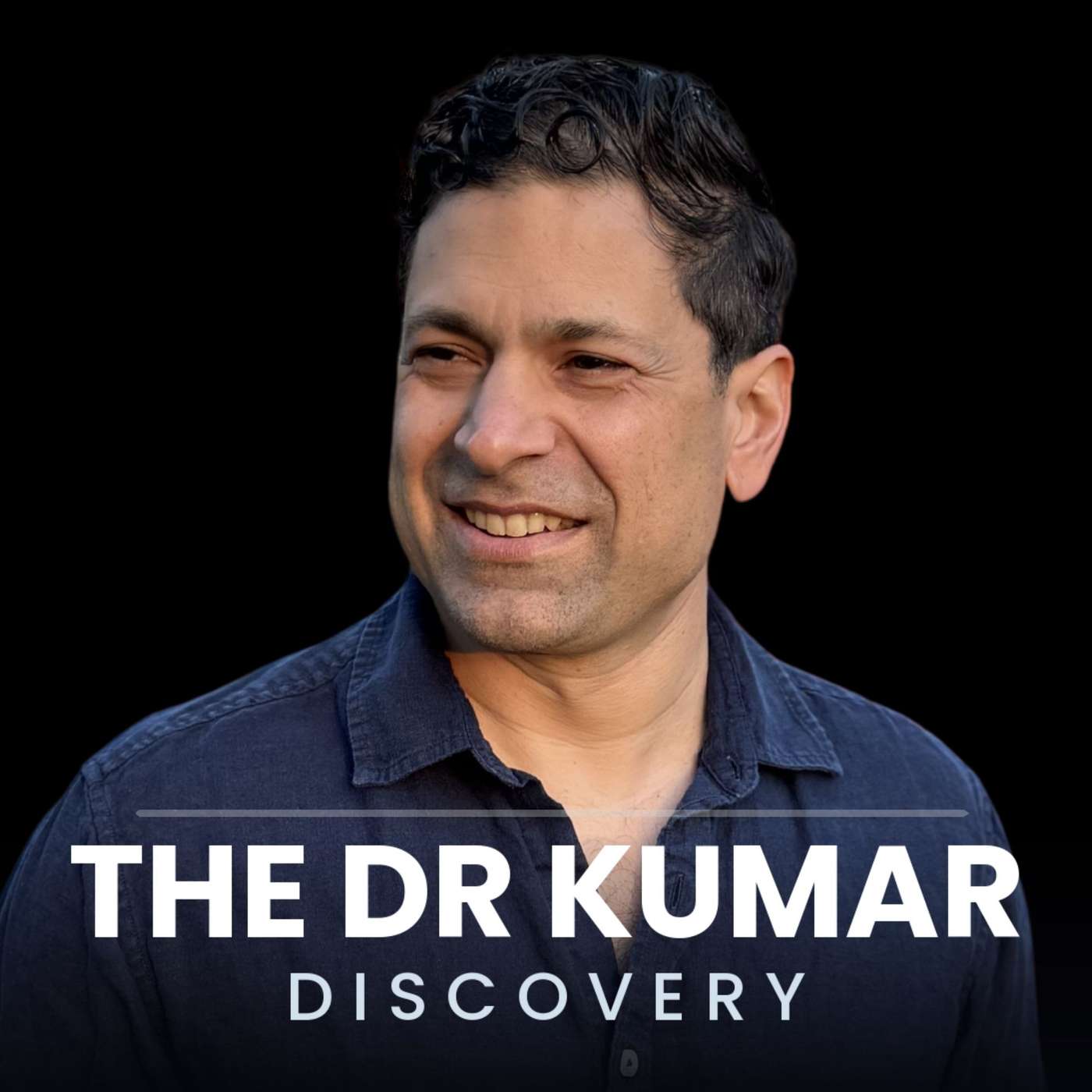
The Prediabetes Warning Sign Your Doctor Isn't Testing For | Dr. Keith Berkowitz
The Dr Kumar DiscoveryShow Notes
Struggling with energy crashes, brain fog, or "hangry" meltdowns after you eat? The tool Dr. Kumar and Dr. Berkowitz discuss in this episode, Clarity Blood Sugar, is built to help you figure out what is actually going on with your metabolic health and walk into your doctor's office prepared. Check it out here: https://bloodsugar.claritytx.ai
Most people have never heard of reactive hypoglycemia, and many physicians haven't either. But it may affect up to half the population, and it is one of the earliest warning signs on the road to prediabetes and diabetes. In this episode, Dr. Ravi Kumar sits down with Dr. Keith Berkowitz, who worked alongside Dr. Robert Atkins in the late 1990s and became the torch bearer for that whole way of practicing medicine after Atkins passed away. Today Dr. Berkowitz runs the Center for Balanced Health in Manhattan, where he has spent thirty years treating the whole person instead of chasing a single number on a lab report. Together they unpack what reactive hypoglycemia actually is, your blood sugar crashing in the first few hours after you eat, why it leaves you feeling worse instead of better, and how insulin resistance quietly builds for years before glucose ever looks abnormal. Along the way they trace the low-fat era back to its roots, the sugar industry's role in villainizing fat, the gut-brain connection, and why the tools to catch all of this early are finally here. Episode Resources Dr. Keith Berkowitz, Center for Balanced Health Clarity Blood Sugar Dr. Ravi Kumar on LinkedIn Dr. Ravi Kumar's Website In this episode, you will discover What reactive hypoglycemia is, and why up to 50 percent of people may have it without knowing Why you can feel more tired, foggy, or anxious after eating instead of energized The insulin resistance that shows up years, even decades, before glucose ever looks "high" Why it is cortisol, not the low blood sugar itself, that triggers the shakiness, sweating, and racing heart The everyday clues: vivid dreams, afternoon crashes, "hangry" spells, needing caffeine or sugar to focus How Dr. Berkowitz's own glucose tolerance test dropped him into the 40s, and what it revealed The Atkins story: standing against the low-fat craze, and why almost every warning proved right How the sugar industry helped villainize fat and eggs, and what the research actually showed Why digestion, the gut microbiome, and blood sugar are the two foundations of real health The simple, evidence-backed way to protect your microbiome when you have to take antibiotics Why the continuous glucose monitor has been a game changer for catching this early How Clarity Blood Sugar uses human-curated expertise plus AI to validate what you are feeling and build a real plan Key Takeaways Reactive hypoglycemia is essentially your blood sugar crashing within a few hours of eating, driven by an inappropriate surge of insulin, and it is one of the earliest predictors of prediabetes and diabetes. The symptoms most people write off, such as fatigue after meals, brain fog, anxiety, vivid dreams, and hangry crashes, are actually your body's cortisol response trying to pull your blood sugar back up. Insulin resistance can build for twenty years before glucose ever looks abnormal on a standard lab, which is why so much of this gets missed. Real metabolic health rests on two foundations: blood sugar and digestion. And the good news is that the biggest levers, including sleep, meal timing, exercise, and easing up on caffeine and alcohol, cost nothing and require no prescription. About the Guest Dr. Keith Berkowitz is the founder and Medical Director of the Center for Balanced Health in Midtown Manhattan, and a founding member of Clarity TX. He trained at Memorial Sloan Kettering and worked directly with Dr. Robert Atkins before carrying that integrative, root-cause philosophy forward into thirty years of his own practice. He sees patients remotely in New York, New Jersey, Florida, and California. Disclaimer: This show
More from The Dr Kumar Discovery
Need a better habit than doom-scrolling? Brain Gamer, the app Dr. Kumar designed, gives you nine quick games that work different parts of your thinking, knowledge, logic, and planning, in about the time it takes to wait for coffee. Play three free games a day, or go unlimited for a small monthly fee. A surgical robot trained on 100,000 cases can be smart on day one, maybe smarter than a surgeon with decades of grey hair to show for it. That should feel backwards. Every surgeon learns that older surgeons are safer than younger ones, because judgment and a feel for anatomy only come from years of cases and complications. So what happens when a machine skips that apprenticeship entirely and shows up already trained on more cases than one surgeon could see in a lifetime? Ravi's guest is Ryan Estes, a serial tech entrepreneur who runs a holding company in Denver with a portfolio of service agencies, software, and media brands. One of those brands is AI for Founders, where Ryan interviews startup founders building in AI, technology, and robotics, with AI in medicine as a recurring theme. He livestreamed years ago on Justin TV, before it became Twitch, and he says he's not a doctor and doesn't play one online, though he listens to Ravi's episodes at least twice to keep up. Most of what's broken in medicine isn't the medicine, it's the paperwork around it. Ryan points out that of your appointment time, you might only get about thirteen minutes with your actual physician, the rest eaten by clipboards, iPads, and insurers. Ravi has lived the fix on one side: AI scribes that used to take him as long to chart as the visit itself now produce a note in about a minute, so a slot that used to buy five minutes of face time now buys thirteen or fourteen. On the other side, he describes surgery requests denied in a split second, even for patients who can't walk, and his read is that insurers are counting on busy doctors not appealing. They also walk through where automation makes sense first. Acne, strep throat, and hypertension are treated with algorithms that are already written down, which is why Ryan uses an app called Nala Health, $4.99 a month, to get his daughter a prescription without needing a doctor on the other end of a text. Diagnostics are moving just as fast but in stranger directions: fifteen trained beagles sniffing a breath mask can pick up early stage cancers that billions of dollars in liquid biopsy research still haven't matched, and a wearable called Canary listens to someone's voice for signs of anxiety, depression, or the kind of subtle decline a caregiver might miss day to day. Robots are already in neurosurgery, urology, and orthopedics, placing screws through a two-millimeter corridor with sub-millimeter accuracy, though Ravi is careful to note they're human-controlled, the surgeon still lines up the shot and drives the screw. He admits he'd rather trust an algorithm that knows how to do a task as safely as possible than a human who makes mistakes, joking that his surgical colleagues are probably planning how they're going to lynch him for saying so. His actual position is narrower than that joke suggests: combine machine accuracy with the empathy, mission, and curiosity only humans bring, and medicine gets better, not replaced.
Clear-cut a patch of rainforest and plant açaí in neat rows, and you'd expect more fruit per acre. You get less. Thirty years on the ground, plus a stack of studies, point the same way: açaí managed in the wild agroforestry system outproduces the monoculture that would replace it. And the fruit itself breaks the rules too. Açaí has no sugar in it at all, it's one of the only fruits built around fat instead. Travis Baumgardner co-founded Sambazon, now serving as its Chief Impact Officer, after a 1995 trip to Brazil that was supposed to last three weeks. He ended up in Rio with zero Portuguese, studying environmental geography at a Catholic university, until a question from his ecology professor about the açaí bowl in his hand sent him on an overnight riverboat into the Amazon estuary. He partnered with Ryan Black, Sambazon's CEO, and has spent three decades since building the supply chain on the ground. Travis was a California kid headed to carnival in Olinda for what he thought was a three week vacation. Three months later he was living in Rio, then enrolled in a Catholic university studying environmental geography. The turn came in his senior year, when his ecology professor pointed at the açaí bowl in his hand and asked if he knew where it actually came from. He didn't. That question sent him on an overnight riverboat to Marajó Island, an island the size of Switzerland sitting in the Amazon estuary with no roads. He expected a plantation. What he found instead was a tidal, flooded forest tended by riverside families called ribeirinhos, a biodiverse system that wasn't built on clearing anything. That system turns out to out-produce the alternative. Travis says his own thirty years of observation, backed by several studies, show that açaí planted in cleared monoculture yields less fruit per hectare than palms left standing in managed agroforestry, partly because the wild pollinators are still there. It's the same logic behind Sambazon's supply chain: cut out the middlemen who used to buy fruit on exploitative terms, pay growers directly, and audit and certify every supplier so a customer can email a barcode and learn which family picked their fruit and on what day. A percentage of every purchase funds schools and health posts, with more than $1.2 million invested so far. Nutritionally, açaí is strange in a good way. It's a drupe like an olive or a cherry, mostly pit, with just a thin layer of fruit scraped off for puree, and it spoils like milk, needing to be frozen within a day of picking. That fruit has no sugar of its own. Instead it carries omega 3, 6 and 9 fats with oleic acid similar to olive oil, plus polyphenols, essentially the Mediterranean diet's two best ingredients held together by fiber in one fruit. The sweet bowl most people know today is a later Rio invention, built with added syrup.
Most people treat migraine like a scavenger hunt, chasing the wine, the weather, or the skipped meal that set it off. Dr. Amelia Barrett says that hunt misses the point. The trigger is only the last drop into a bucket that chronic biology has been filling for weeks or years, and every round of trial and error with preventives in the meantime isn't harmless waiting. It's maladaptive neuroplasticity, the brain practicing the migraine and learning it as a bad habit, a process she calls chronification. Dr. Amelia Barrett is a board certified neurologist who trained at Stanford and spent twenty five years in private practice doing what she calls the usual mainstream medicine thing. Frustrated with the limits of medication alone, she turned to functional medicine and then to genetics, eventually designing a proprietary functional genomics panel for migraine and chronic headache. She now runs the Migraine Relief Code, has migraines herself, and just published her book, Decode Your Migraine, which hit number one on Amazon in new releases. Dr. Barrett's core idea traces back to a water park trip with her kids: a migraine happens when a bucket finally overflows, and the trigger you can name is just the last drip. DNA research has linked nearly 200 genes to migraine, mostly through genome wide association studies comparing roughly 100,000 people with migraine to about 700,000 without, and those genes cluster into four systems, brain chemistry, inflammation, energy production, and the vasculature. Migraine isn't one disease, and we can't change our genes, it's polygenic, not a CRISPR problem, but knowing which system is filling your bucket changes the very first prescription, an ACE inhibitor for a vascular type, an SNRI like Cymbalta for a brain chemistry type. That first prescription matters more than it sounds, because trial and error isn't neutral. Dr. Barrett calls the process chronification, the brain practices the migraine with every mismatched preventive and learns it as a habit through maladaptive neuroplasticity. The same logic applies to supplements. Curcumin targets a different inflammatory pathway than fish oil, and CoQ10 and B2 only help if your energy production pathway is actually the weak link, which is why she starts with a multivitamin as a foundation rather than guessing. Sleep gets real attention too, extended release melatonin for prevention, magnesium glycinate with dinner, and for women, whose migraines outnumber men's about three to one, the drop in estrogen itself, not estrogen, is the trigger to watch for, monthly when young and unpredictably through menopause.
Ravi's border collie Blue tore his soft palate open on a stick mid run. By that evening he was groggy from anesthesia and already trying to fetch. Two weeks later he was fully healed. If a person tore open that same tissue, the story looks nothing like that, and the gap splits into anatomy we can never borrow and habits we absolutely can. Half of this episode is about what Blue has that we don't. His larynx sits almost at the back of his mouth, so his airway stays sealed off from the injury entirely, while ours descended into the neck early in life to build the second chamber that lets us form vowels, and the price of that trade is a shared crossroads that makes throat trauma dangerous. His head hangs out in front of his body, so blood and swelling drain forward with gravity instead of pooling over an airway. And the lining of his mouth still runs fetal style healing programming, smaller inflammation, fewer scar forming cells, so a torn palate closes in days with no scab. The other half is what we can actually copy, and it's not how Ravi was trained. He used to tell post surgical patients to take it easy for a few weeks, common sense, and it took him longer than he'd like to admit to learn what tissue actually wants. Cartilage has almost no blood supply of its own, so stillness starves it rather than protecting it. Tendons lay down collagen along the line of gentle pulling, muscle measurably atrophies within days of a cast, and a 2022 Lancet trial called FORCE found that kids with buckle wrist fractures did just as well in a soft bandage as in a rigid cast. None of this means throw away every splint. Ravi is careful here, an unstable fracture or a fresh tendon repair still needs rigid protection, full stop. The real question is never movement or no movement, it's what this specific tissue needs to not fall apart. Pain got the same rethink. Nociception, the raw signal from damaged tissue, is real, Blue's pain sensors were surely firing all week. But suffering, what the brain does with that signal, is a separate layer. A trial at the University of Colorado in Boulder taught chronic low back pain patients to stop attaching a forecast to the sensation, and two thirds ended up pain free or nearly pain free, versus about a fifth on usual care, with most of that relief still there a year later. Ravi is upfront that this was chronic pain, not a torn palate, though he thinks the mechanism carries over, and that copying a dog's stoicism has a real downside. Dogs mask pain until they're septic, and there's no reward for skipping proper attention to an injury.
Today we're getting into something most of us never stop to think about: the chemicals we're all swimming in every day, and whether they're quietly aging our brains faster than our genes ever could. In a UK Biobank study of blood plasma proteins, people with youthful brains looked like they carried two protective copies of APOE2, the good version of the Alzheimer's gene, and people with aged brains looked like APOE4 carriers, the highest risk version, regardless of what genotype they actually had. As Dr. Fine put it, "your blood is telling you more than your genome." My guest is Dr. Anne Marie Fine, an environmental medicine physician who trains other physicians through her own one-year clinical training course and is fellowed with the American Academy of Environmental Medicine. She has practiced for about 25 years, back when doctors measured stored pollutants with fat biopsies of the buttocks, and now tests every patient for roughly ten to twelve metals. She also traveled to Switzerland last year to undergo a plasma-filtering procedure on herself. We start with the exposome, the lifetime accumulation of every chemical exposure a person carries, and how Dr. Fine and her business partner, Dr. Lynn Patrick, narrowed that huge idea down into something more workable they call the pollutome in a 2022 paper. From there we get into the UK Biobank work looking at 44,000 people across eleven organs, where the brain and immune system, not the heart, showed the strongest relationship to aging. Dr. Fine is careful to frame the brain-aging finding as motivation, not proof of reversal. She still holds the line that one copy of APOE4 raises Alzheimer's risk three to four times, and two copies raises it ten to fifteen times. The question the study raises is simply whether your brain is behaving young or old right now, apart from that fixed genetic risk. The rest of the conversation moves through the toxicants she sees every day in practice: PFAS, or forever chemicals, that blunt vaccine antibody response, the benzene an ordinary gas stove leaves behind hours after you cook, mold toxins that quietly disable the body's ability to detox lead and mercury, and DDE, the DDT breakdown product that 99 percent of Americans still carry decades after the ban. We also talk about gadolinium, the MRI contrast agent Ravi prescribes routinely for brain tumor patients, and why some people can't clear it from their bodies. Throughout, Dr. Fine keeps coming back to the same hierarchy: avoidance first, targeted testing second, and never testing broadly without a plan for who is going to interpret what you find.