Show Notes
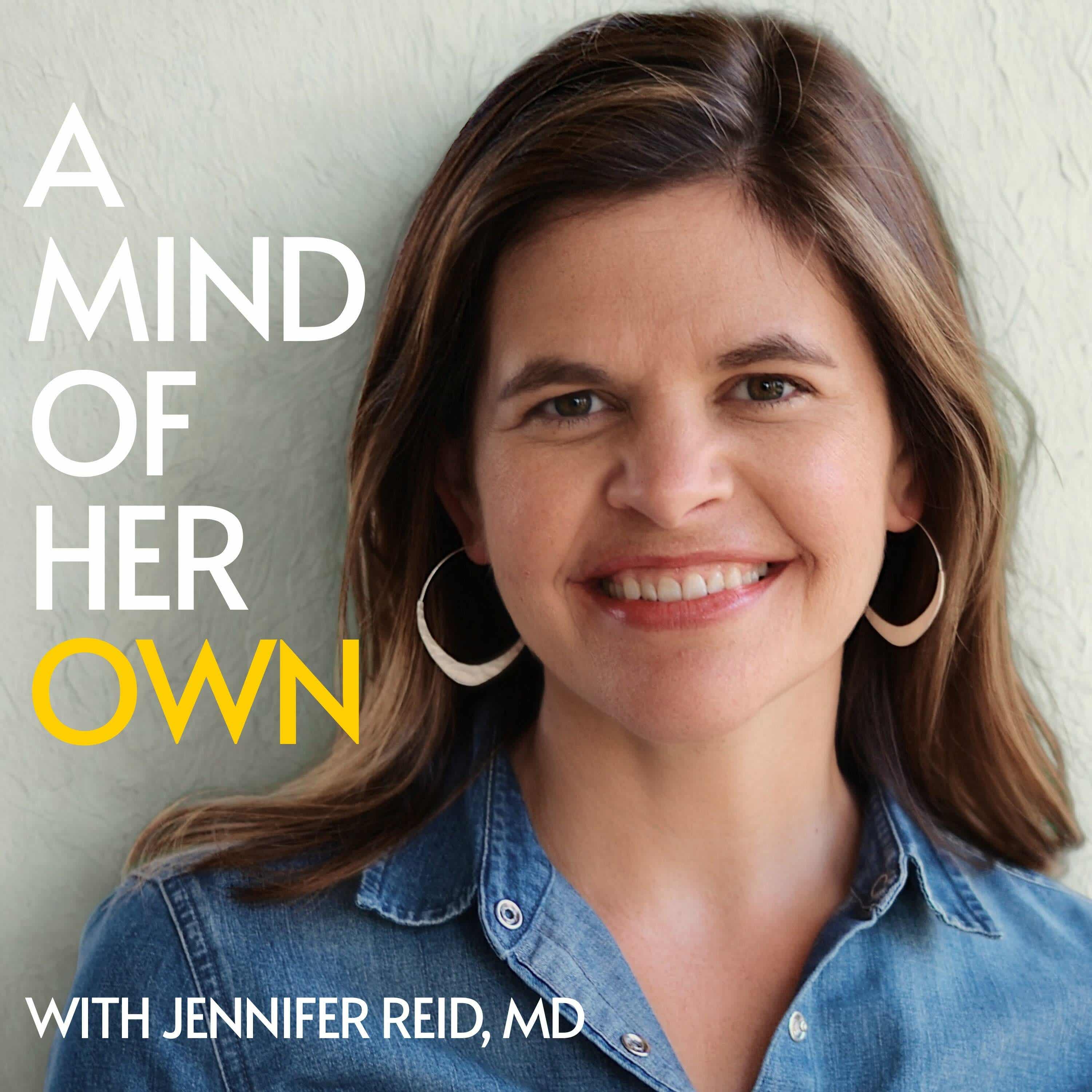
In this profound episode, Dr. Jennifer Reid speaks with renowned Jungian analyst Dr. James Hollis about personal growth, life transitions, and the journey of self-discovery. Dr. Hollis, a distinguished faculty member at the Jung Center of Houston and author of over 20 books, shares deep insights about finding one's authentic path and understanding the messages our psyche sends us. The Journey from Academia to Depth Psychology Dr. Hollis shares his personal story of transformation, beginning with a midlife depression while working as a humanities professor. This crisis led him to retrain as a Jungian analyst in Zurich, Switzerland, ultimately discovering that his true calling lay in helping others explore their psychological depths. Understanding the Soul's Journey Dr. Hollis explains how we often lose touch with our authentic selves in childhood and must work to recover this connection in adulthood. He emphasizes that this recovery isn't self-indulgent but rather essential for both personal growth and our relationships with others. The Two Halves of Life The conversation explores how life's first half focuses on adaptation and fitting in, while the second half calls us to deeper questions of meaning and authenticity. Dr. Hollis discusses how this transition often emerges during midlife or significant life changes. On the Soul's Journey: "The soul is intuited in childhood, pushed aside by the adaptive choices of consciousness and recovered in adulthood only when we are willing to open to it." On Childhood's Impact: "Jung said the greatest burden a child must bear is the unlived life of the parent. And what he meant by that was wherever the parent is stuck, the child sooner or later is going to internalize that as a roadmap and either repeat that, which is very common, or spend a lifetime trying to get away from it." On Finding Your Path: "You're not here to live someone else's pattern. That's already taken. You're here to learn yours, find your path." On Self-Understanding: "It's not so much what we do or think or feel or believe or desire. It's what that is in service to inside of us that makes a difference." On Personal Growth: "Something inside of each of us knows what's right for us. How do you access that? How do you pay attention to that?" Dr. Reid on Instagram: @jenreidmd and LinkedIn Also check out Dr. Reid's regular contributions to Psychology Today: Think Like a Shrink. Thanks for reading A Mind of Her Own and listening to The Reflective Mind! Subscribe for free to receive new posts and support my work.
Seeking a mental health provider? Try Psychology TodayNational Suicide Prevention Lifeline: 1-800-273-8255Dial 988 for mental health crisis supportSAMHSA's National Helpline - 1-800-662-HELP (4357)-a free, confidential, 24/7, 365-day-a-year treatment referral and information service (in English and Spanish) for individuals and families facing mental and/or substance use disorders.Disclaimer:The views expressed on this podcast reflect those of the host and guests, and are not associated with any organization or academic site.The information and other content provided on this podcast or in any linked materials, are not intended and should not be construed as medical advice, nor is the information a substitute for professional medical expertise or treatment. All content, including text, graphics, images and information, contained on or available through this website is for general information purposes only.If you or any other person has a medical concern, you should consult with your health care provider or seek other professional medical treatment. Never disregard professional medical advice or delay in seeking it because of something that have read on this website, blog or in any linked materials. If you think you may have a medical emergency, call your doctor or emergency services (911) immediately. You can also access the National Suicide Help Line at 1-800-273-8255 or call 988 for mental health emergencies.
This is
More from A Mind of Her Own
“When we talk about work-life balance... what about parenting? Is that the work or is that the life? It doesn’t fit in that equation.” -Dr. Debbie Raphael What does it really mean to raise a child, and to keep yourself whole while you do it? Dr. Jennifer Reid sits down with Dr. Debbie Raphael, a child, adolescent, and adult psychiatrist and author of the forthcoming Carry My Strength: A Parent’s Guide to Growing and Thriving Alongside Your Child (January 2027), whose title comes from something her own mother used to tell her before hard days. They talk about training in psychiatry while raising a newborn, using reflective functioning to stay steady when a teen is “crashing out,” and moving from manager to consultant as kids grow. They also take on the myth of work-life balance, the invisible labor of caregiving, and why “good enough” is the actual goal and not a consolation prize. Connect with your host, Jennifer Reid, MD Dr. Jennifer Reid is a physician, the host of A Mind of Her Own, and the author of Guilt Free: Reclaiming Your Life from Unreasonable Expectations — available at major retailers. 🌐 Website: jenniferreidmd.com If you enjoyed this episode, please follow A Mind of Her Own and leave a rating or review on Apple Podcasts — it makes a huge difference in helping other people find the show! 🎙️ About Today’s Guest Debbie Raphael, M.D. is a double board-certified child, adolescent, and adult psychiatrist and the author of Carry My Strength, coming out in January 2027 with Jossey-Bass/Wiley, available for pre-sale now. She earned her medical degree from UC San Diego and completed postgraduate training at UC San Francisco, where she served as Assistant Clinical Professor. Once a child advice columnist for her local newspaper, now a psychiatrist in clinical practice for over twenty years and parent to two boys, Dr. Raphael is honored to be living her dream of sharing her knowledge and experience with the broader community, aiming to prevent illness by promoting personal growth and healthy relationships. She lives with her husband and children in the San Francisco Bay Area. Thanks for checking out A Mind of Her Own! Subscribe (always for free) to receive new posts and support my work.
What if the years after menopause aren’t something to dread, but a life stage evolution built on purpose? Dr. Jennifer Reid, MD sits down with anthropologist Michael Gurven, PhD author of Seven Decades: How We Evolved to Live Longer, to explore why humans are one of the few species that keep thriving long after they stop reproducing. Even among hunter-gatherers, as much as a third of adult life is post-reproductive, and as Dr. Gurven puts it, “Evolution doesn’t make mistakes like that.” Drawing on two decades with the Tsimane and Ache in South America, he shares a surprise: when he asked women about menopause, they didn’t talk about symptoms. They talked about freedom. Long-standing taboos lifted, and women stepped into public life more boldly, speaking up in community meetings where, as he says, “people listen to them.” So how do we age well? Listen in for a hopeful look at what the second half of life is actually for, and how we can embrace the freedom of our later years (hint: community and social connections are crucial). ***Want to build community while lessening your guilt? Start your own Guilt Free Group here. (jenniferremd.com/guilt-free) Connect with your host, Jennifer Reid, MD Dr. Jennifer Reid is a physician, the host of A Mind of Her Own, and the author of Guilt Free: Reclaiming Your Life from Unreasonable Expectations — available at major retailers. 🌐 Website: jenniferreidmd.com If you enjoyed this episode, please follow A Mind of Her Own and leave a rating or review on Apple Podcasts — it makes a huge difference in helping other people find the show! 🎙️ About Today’s Guest Dr. Michael Gurven, PhD is a Distinguished Professor in Integrative Anthropological Sciences @ the University of California, Santa Barbara. He has conducted fieldwork for two decades with South American indigenous populations, and his work takes an evolutionary perspective on behavior, health, physiology and psychology. He’s the author of the recent book, Seven Decades, How We Evolved to Live Longer (Princeton University Press, 2025). 🎙️ Some Exciting News! A Mind of Her Own has recently joined the Learn At Pinnacle app, so if you work in health care, you can receive FREE CE credit just for listening! (This includes Category 1 AMA CME credit and many others.) Download the free app at the link above or at: https://learnatpinnacle.com/education Thanks for checking out A Mind of Her Own! I would be honored if you shared this episode with someone in your life. Seeking a mental health provider? Try Psychology TodayNational Suicide Prevention Lifeline: 1-800-273-8255Dial 988 for mental health crisis supportSAMHSA’s National Helpline - 1-800-662-HELP (4357)-a free, confidential, 24/7, 365-day-a-year treatment referral and information service (in English and Spanish) for individuals and families facing mental and/or substance use disorders. Disclaimer:The views expressed on this podcast reflect those of the host and guests, and are not associated with any organization or academic site. Also, AI may have been used to create the transcript and notes, based only on the specific discussion of the host and guest and reviewed for accuracy.The information and other content provided on this podcast or in any linked materials, are not intended and should not be construed as medical advice, nor is the information a substitute for professional medical expertise or treatment. All content, including text, graphics, images and information, contained on or available through this website is for general information purposes only.If you or any other person has a medical concern, you should consult with your health care provider or seek other professional medical treatment. Never disregard professional medical advice or delay in seeking it because of something that have read on this website, blog or in any linked materials. If you think you may have a medical emergency, call your doctor or emergency services (911) immediately. You can also access the National Suicide
“I’m only as insecure as the parts of myself I leave in the shadows.” - Marisa G. Franco, PhD Welcome to A Mind of Her Own! I’m Jennifer Reid, MD, a psychiatrist and the author of Guilt Free: Reclaiming Your Life from Unreasonable Expectations. Today I’m joined by Dr. Marisa G Franco, psychologist, professor at the University of Maryland and author of the New York Times bestselling book, Platonic. Her latest book, Worth: The New Science of Self-Esteem and Secure Attachment, arrives September 15th, 2026. Key Ideas 1. Self-Worth vs. Self-Esteem. Self-worth means treating your internal world, especially your feelings, as if it matters. It has two parts: sensitivity (noticing how you feel) and responsiveness (doing something about it). 2. Two Kinds of “High Self-Esteem”. Research shows people who report high self-esteem split into two very different groups: one is defensive, hostile, and takes feelings out on others; the other is compassionate, accountable, and has smooth relationships. The difference isn’t whether they feel insecure; it’s whether they can acknowledge it. 3. “Secure-ish,” not Secure. Franco pushes back on treating “secure attachment” as a fixed, all-or-nothing identity to perform. True security is being honest about when you’re anxious, avoidant, or want to withdraw, not hiding those parts. 4. Memories are the Database of Self-Esteem. Because memories don’t just record the past but predict the future, people with a history of neglect or harm may unconsciously expect rejection, so they resist fully internalizing love or praise, since believing in it now would make the eventual “fall” feel worse. “Tenderly tell the truth of your insecurities first to yourself and then to those who love you.” —Marisa G. Franco, PhD Thanks for reading and listening to A Mind of Her Own! Subscribe (always free) to receive new posts and share my work.
Hello, and welcome to A Mind of Her Own! I’m Jennifer Reid, a psychiatrist and the author of the book, Guilt Free, Reclaiming Your Life from Unreasonable Expectations. Today is Episode 4 in my series called Guilt Free, For Real. (Want to catch up? Here are the first three episodes: 1. Solving the Guilt Equation (Finally!) 2. The Guilt Divide: Women, Men and the Emotions We’re Taught to Feel 3. Why Can’t I Ditch this Awful Guilt? ) This episode today (corresponding with chapter three in the book, if you are following along), is all about the Four Furies of Unreasonable Expectations. If you’ve listened to prior episodes, and I encourage you to do so (see above)! you know about the Guilt Equation, which is that our guilt is based on our expectations of ourselves minus our perceived reality, meaning minus what we notice ourselves doing, which may not even reflect, in fact often doesn’t reflect, what we’re actually doing. But where do these sky high expectations come from? The Four Furies are: * Constant caretaking: “I feel like it’s selfish to take time for myself instead of being available to the people who need me.” * Hyper-accountability: “I adjust what I say or do to manage other people’s emotional reactions.” * Seeking perfection: “I have trouble resting because I believe I should be trying to improve myself.” * Having it all: “When I succeed in one area (work, parenting, health) I feel like I’m neglecting another.” Understanding these four big categories for expectations allows you to see that you are not alone. These categories exist because so many women have experienced them. But I’m here to tell you that there is a way forward. Recognizing that yes, these are expectations that you’ve been taught and expected to carry, but they don’t have to be the final answer. If you’re saying “should,” someone else is writing your story. When you take control of your expectations, what you want, what you need, and what makes sense for you will create the story you follow. You get to decide what those choices are and rewrite these expectations that you’re working through. In future episodes, you will learn how to adjust each of the Guilt Equation variables, both your expectations and our perceived reality. Guilt doesn’t have to be your full time job. You are already enough. ***Want to build community while lessening your guilt? Start your own Guilt Free Group here. (jenniferremd.com/guilt-free) Thanks for reading and listening to A Mind of Her Own! Subscribe for free to receive new posts and support my work.
Hello, I’m Jennifer Reid, MD. Welcome to this episode of A Mind of Her Own, the third in the series called Guilt Free, for Real. In today’s episode, I share 3 of the most common reasons guilt can be such a sticky emotion. (Hint: because it “helps” us in some ways.) When I’m working with individuals as a psychiatrist, there are often situations where someone says, “I know that this is not good for me, and yet I keep doing it. I keep going back to a relationship that isn’t healthy for me. I keep doing an activity that I know is not healthy for me.” What we need to understand in those situations “What is it doing to help us in some way, even though that seems counterintuitive?” It’s important to think about guilt the same way. Guilt actually can, in certain situations, help us, particularly in three key ways. * Motivation: Many of us, (myself included), feel like guilt can be motivating. In fact, when we’re feeling like we’ve already done something wrong, it can boost our motivation, but typically not for a long-term situation and at a high cost. We are starting from behind, assuming we’ve already done something wrong, that we’ve already made a mistake. We’ve already demonstrated that we are disorganized or lazy or uncaring or all these different ways that we convince ourselves and feel guilty in order to motivate ourselves.