Show Notes
What happens when the people building artificial intelligence quietly believe it might destroy us?
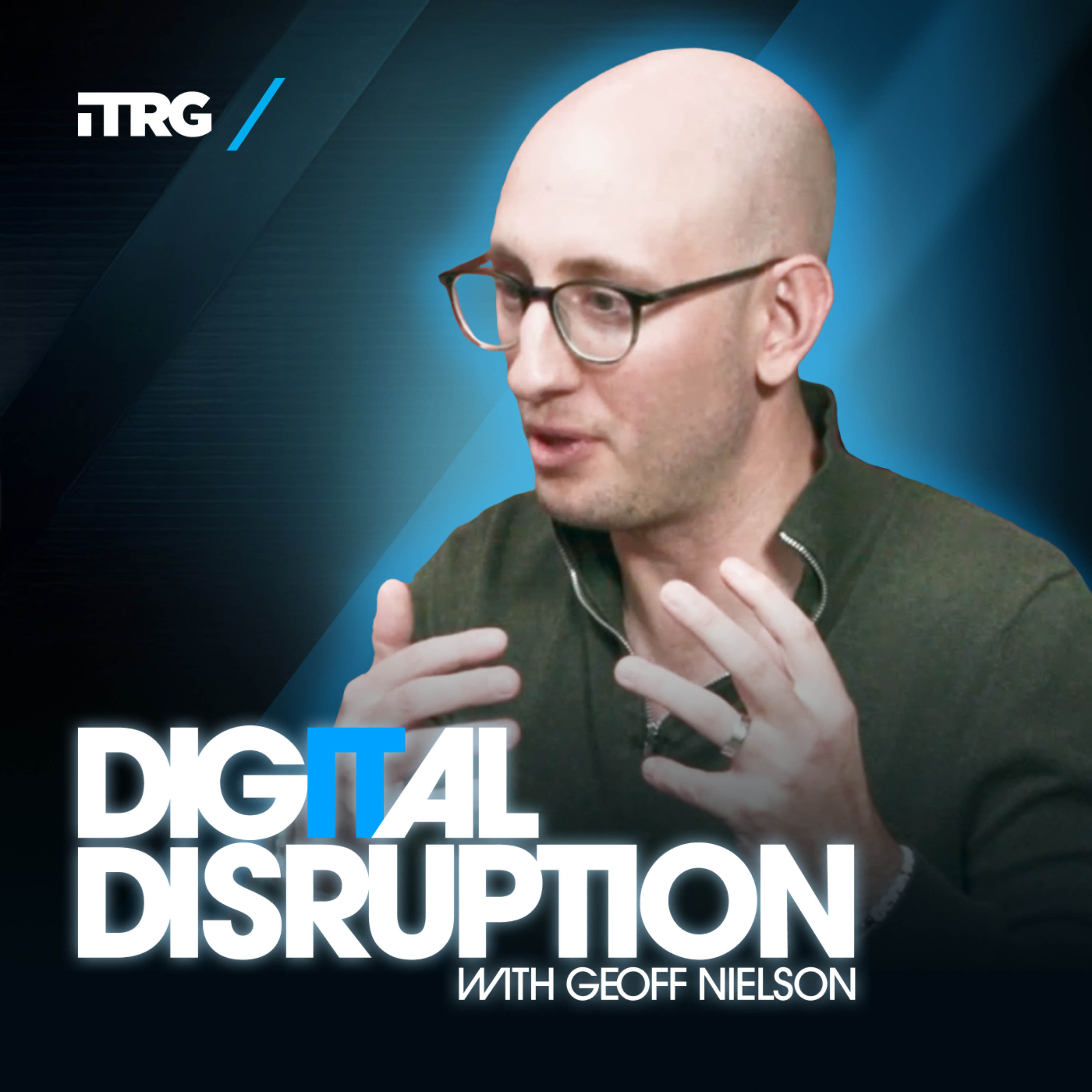
On this episode of Digital Disruption, we’re joined by Gregory Warner, Peabody Award–winning journalist, former NPR correspondent, and host of the hit AI podcast The Last Invention.
Gregory Warner is a versatile journalist and podcaster. He has been recognized with a Peabody Award and other awards from organizations like Edward R. Murrow, New York Festivals, AP, and PRNDI. Warner's career includes serving as an East Africa correspondent, where he covered the region's economic growth and terrorism threats. He has also worked as a senior reporter for American Public Media's Marketplace, focusing on the economics of American health care. His work has been recognized with a Best News Feature award from the Third Coast International Audio Festival.
Gregory sits down with Geoff for an honest conversation about the AI race unfolding today. After years spent interviewing the architects, skeptics, and true believers behind advanced AI systems, Gregory has come away with an unsettling insight: the same people racing to build more powerful models are often the most worried about where this technology is heading. This episode explores whether we’re already living inside the AI risk window, why AI safety may be even harder than nuclear safety, and why Silicon Valley’s “move fast and fix later” mindset may not apply to superintelligence. It also examines the growing philosophical divide between AI doomers and AI accelerationists. This conversation goes far beyond chatbots and job-loss headlines. It asks a deeper question few are willing to confront: are we building something we can’t control and, doing it anyway?
In this video: 00:00 Intro 03:00 AI models that already behave like elite hackers 05:00 Why the AI risk window may already be open 06:30 What AI safety actually means (and why it’s so hard) 12:00 Human-in-the-loop: safety feature or illusion? 15:00 AI as an alien intelligence, not a human one 19:00 The Silicon Valley AI arms race explained 21:00 OpenAI, DeepMind, Anthropic, xAI: who’s racing and why 25:00 The “Compressed Century” and radical AI optimism 27:00 Can AI actually solve humanity’s biggest problems? 33:00 Capital, competition, and the pressure to deploy 37:00 Is AI more dangerous than nuclear weapons? 39:00 The problem with comparing AI to past technologies 43:00 What happens to human agency in an AI-driven world? 45:00 How AI reshapes creativity, journalism, and truth 53:00 The quiet assumptions built into AI systems 55:00 Why optimism and fear both miss the full picture 59:00 What responsibility do users have? 01:01:00 The most important question we’re not asking about AI
Connect with Gregory:LinkedIn: https://www.linkedin.com/in/radiogrego/Instagram: https://www.instagram.com/radiogrego/
Visit our website: https://www.infotech.com/?utm_source=youtube&utm_medium=social&utm_campaign=podcastFollow us on YouTube: https://www.youtube.com/@InfoTechRG
More from Digital Disruption with Geoff Nielson
If AI can free up half a company’s labor capacity, what happens to the people doing the work?
Is AI consciousness already here and can we reclaim our technological optimism? Google’s Blaise Agüera y Arcas shares why he believes AGI has already arrived and what AI can teach us about consciousness, cooperation, and the human mind.
Predictive AI often gets ignored, yet it may hold the real key to business value in the current tech landscape.
The robot workforce is already here. AI-powered humanoid robots are entering factories and warehouses to address a growing labor gap, but are they filling jobs or replacing the people who do them?
What is PDoom, and why are the people building artificial intelligence willing to risk human extinction? Kevin Roose, a New York Times technology columnist, Hard Fork co-host, and author of The AGI Chronicles, shares what he learned from interviewing more than 150 people inside the world’s leading AI companies. Kevin joins us on Digital Disruption to talk about what artificial general intelligence really means and how fear, ego, rivalry, and mistrust are accelerating the race between OpenAI, Anthropic, and Google DeepMind. He also explains why AI leaders compare this moment to the Manhattan Project: if they don’t build AGI first, someone more dangerous might. Kevin also shares why he estimates a 10% chance of AI-caused extinction and discusses the private fears of AI researchers, government regulation, autonomous AI agents, and whether the AI boom is a bubble or the beginning of a profound transformation. This episode moves beyond the hype to ask an important question: If advanced AI is inevitable, how much control do we still have over what happens next? Subscribe and follow for more conversations about AI, technology, innovation, and digital transformation.