Show Notes
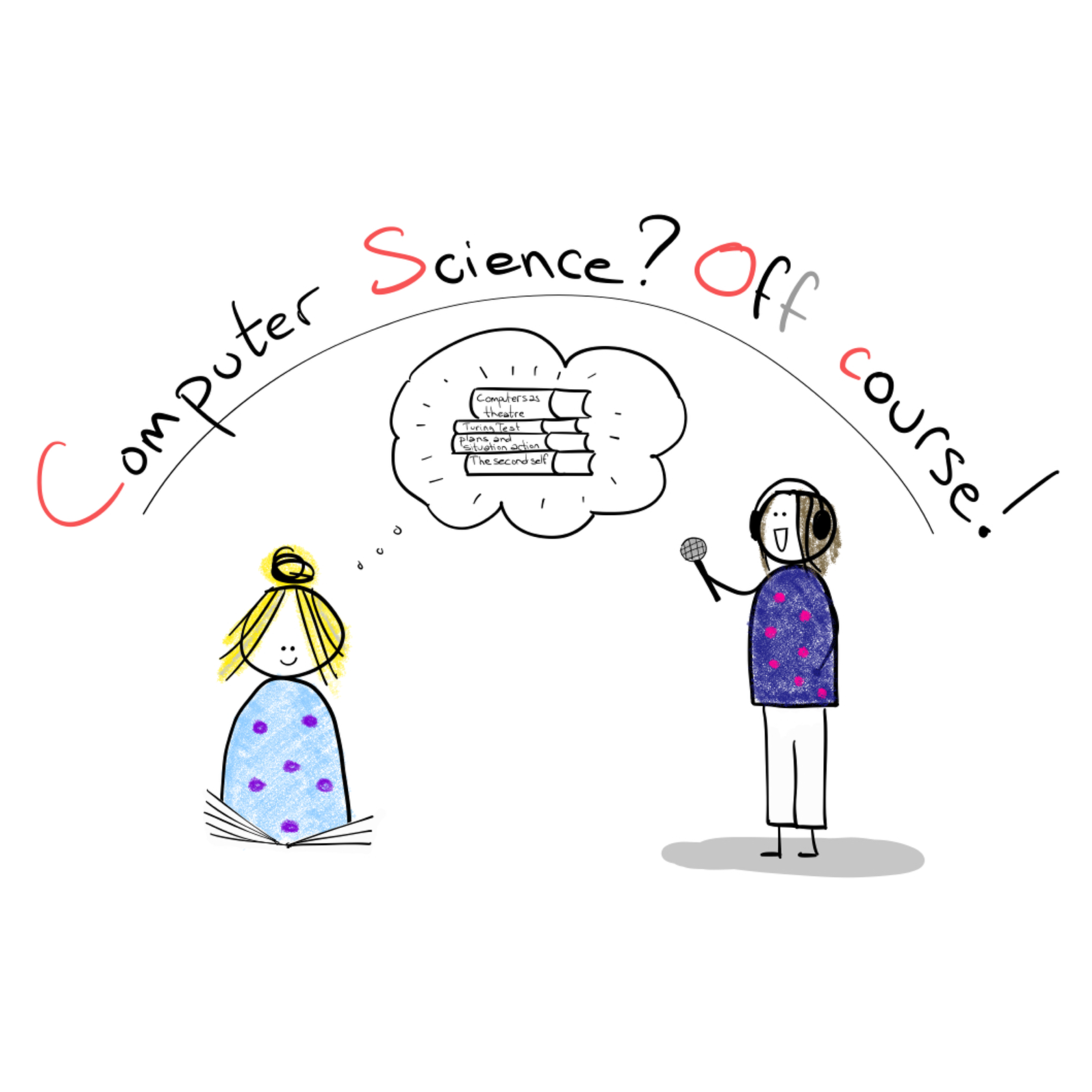
Are you playing a role when using a computer? We certainly are! In this episode, we connect the worlds of theatre and computers. We discuss Brenda Laurel's book "Computers as Theatre” (1991). Per usual, Felienne has read the book. And as it turns out, it gave her a new way to look at the world. Human-computer interfaces provide a stage for performances! Just like last week, Hanna is asking questions and is having trouble keeping her homework short. There is just so much to say about human-computer interaction, procrastination, slaying metaphorical dragons and the never-ending flow of emails. Links: Felienne's blog post and Hanna’s homework Mentions: Brenda Laurel’s book: Computers as Theatre (1991) Kathy Sierra’s book: Badass: Making Users Awesome (2015) Biped: A coop action adventure game Stair Climber: The best machine in the gym Audio and music credits: Song: "Curiosity Rag" (1910) by James E.C. Kelly (public domain) Sound effects and background sounds: Public domain/CC0 sounds from Freesound.org and self-recorded sounds Audio editing: Hanna at Earpolish.com
More from Computer Science Off Course
What topics are not talked about enough in Computer Science? Over the last 10 episodes, this podcast has identified quite some issues that deserve more attention. In today's bonus episode, we look back at season 1 and reflect on some recurring themes, such as the goals of programming, the value of vagueness, the notion of dominance and control, and, of course, issues around AI, AI, and more AI. Hanna requests Wittgenstein for season two, and Felienne brings a list of books and articles she'd like to read that could fill at least two more seasons. So yes, we will be back!
Does software have politics? Are LLMs like power plants? Do ships need captains? In this final episode of our first season, we discuss these questions and take a look at Langdon Winner's paper "Do Artifacts Have Politics?" (1980). Spoiler alert: the answer to the question in this paper's title is a big, bold YES! According to Winner, there are two ways in which artifacts can have political properties. In our episode, we illustrate these with examples and apply Winner's observations to current technologies such as LLMs. We explore how the political properties of software can be accounted for in Computer Science education and establish links to prior episodes. As always, Felienne considers new tattoos, and Hanna finally does the homework she's been assigned.
Imagine you're a scientist. What is it you are seeking: objectivity or truth? In this episode of Computer Science Off Course, we reflect on the aims of science in general and Computer Science in particular. We discuss the notion of objectivity and the role of emotion and fear in research. We take a look at Lorraine Daston and Peter Galison's book "Objectivity" (2021) and walk you through the three periods in the history of objectivity. Also, there is talk about the shape of splashes and the beauty of flowers. Felienne has plans for one or two new tattoos, and Hanna refuses to choose between objectivity and truth! Whether you are a scientist or not, if you are interested in knowledge, this episode is for you.
Are you a Luddite? No matter whether your answer is "yes," "no," or "maybe," this episode of Computer Science Off Course is for you. We discuss the book "Breaking Things at Work: The Luddites Are Right About Why You Hate Your Job" (2021) by Gavin Mueller. We talk about Luddism, both with a historical lens and from our current perspectives, and do not shy away from topics such as Marxism, Taylorism, and the question of whether computers can be good. Felienne brings various thought-provoking quotes and tells what she would love to break at work. Hanna, in contrast, ends up assembling T-shirts, confesses to being a hypocrite, and cites poetry for the homework.
What does using a computer do to you? If you use computers, laptops, phones, or play video games, this episode is for you! We discuss Sherry Turkle’s seminal book "The Second Self: Computers and the Human Spirit" (1984) and explore what happens while you are working with a computer. We also talk about the view of AI as a "colonizing discipline", people's obsession with programming, different meanings of transparency in computing, girls in computer science, and issues around creating an inclusive computer culture. As in earlier episodes, Felienne considers tattoo-worthy quotes, and Hanna goes off course in her homework!