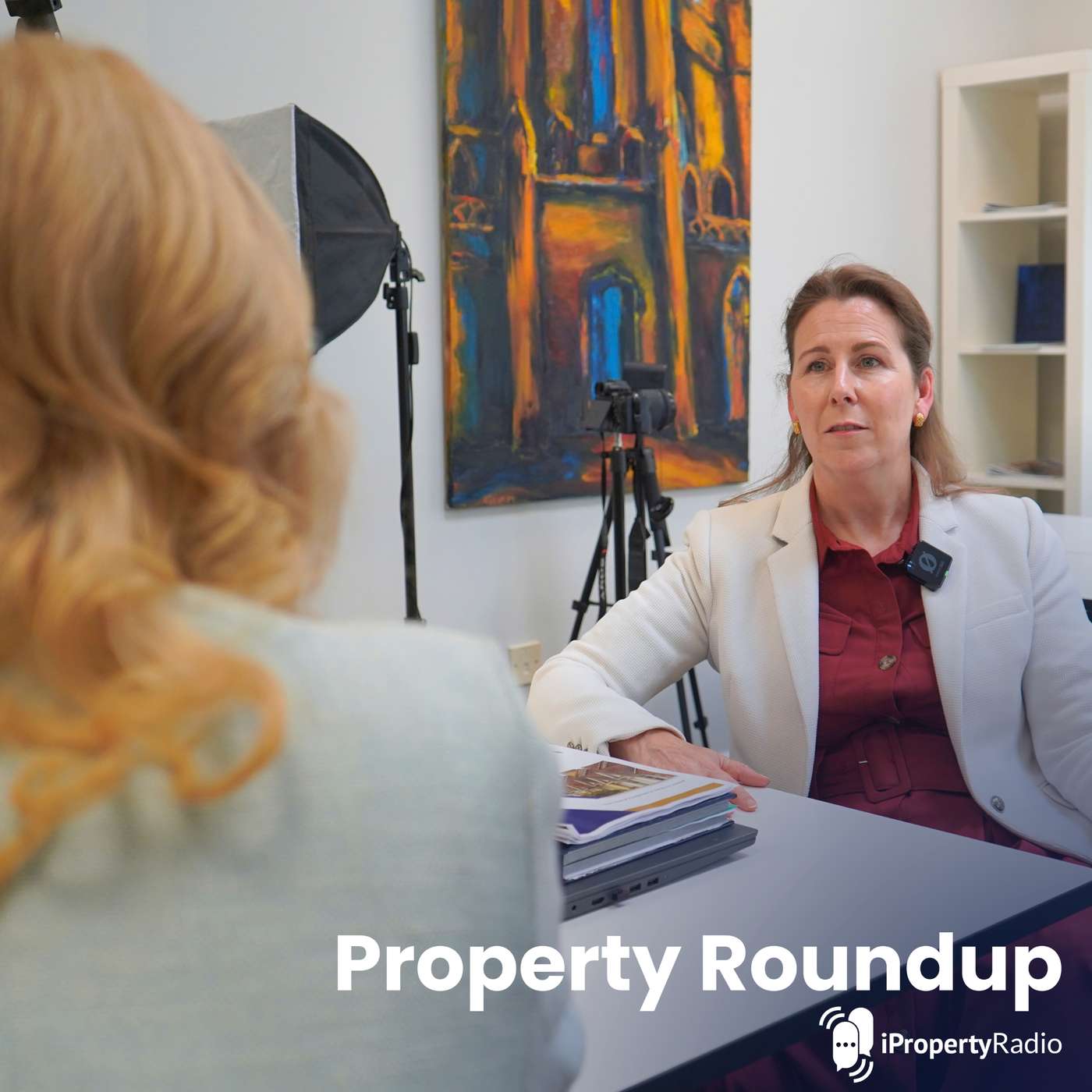
Sustainable Heritage: Balancing Conservation & Modernisation
Property Roundup on iPropertyRadio: The property conversation starts hereShow Notes
*Sustainable Heritage: Balancing Conservation & Modernisation *
This week on #PropertyRoundup on iProperty Radio.com we speak with Peter Cox, Managing Director of Carrig Conservation, about their holistic approach to conserving and protecting Ireland’s built heritage. Peter discusses Carrig's range of services, from architectural conservation to energy retrofitting, and the importance of balancing modern needs with heritage preservation.
Discover how Carrig Conservation is leading the way in sustainable heritage protection while ensuring that historic buildings are adapted to meet today’s energy demands.
Produced by Caoimhe Scully with Hear Me Roar Media.
Watch the full episode here - https://youtu.be/kJ1BOiqDW8s
Listen back on Spotify - https://open.spotify.com/show/5EyzgZSvR4hFk6umOWyDCv?si=1bd7b0fbee1147b7 Find more episodes…
All Property Roundup episodes - https://ipropertyradio.com/property-roundup/
Check out all other iProperty Radio podcasts - https://ipropertyradio.com/ *iPropertyRadio is part of Ireland’s Property District
#ipropertyradio #property #conservation #retrofit #heritage
More from Property Roundup on iPropertyRadio: The property conversation starts here
Week 8 of 26: Community Voices with Place Engage in County Meath — recorded in Kells with Alan Crawford, Senior Executive Planner with Meath County Council, and Hugh Morris of Alliance Auctioneers. Meath is the first county on this tour where the story is not dereliction. It has the lowest commercial vacancy rate of any county in Ireland — 10.0%, against a national 14.6% (GeoDirectory Commercial Vacancy Rates Report, Q4 2025, a commercial source). It also carries the longest average journey to work in the State at 35.2 minutes, and 13% population growth between 2016 and 2022 (CSO Census 2022). This conversation tests that baseline against what a planner and an agent see on the ground. We walked Kells first. Hugh Morris makes the case that the 2010 motorway — feared locally at the time, as bypasses had hollowed out retail elsewhere — did the opposite here, and that the HGV ban and public realm work that followed are what turned road access into footfall. Alan Crawford sets out what forward planning actually is, and why it stalls without data: a countywide settlement capacity audit, a social infrastructure audit, engagement with Uisce Éireann, ESB and EirGrid on where utility headroom exists, and a retail strategy built on granular fieldwork rather than county averages — because, as he puts it, a settlement can look healthy on paper when what it actually has is four pharmacies. Also in this episode: the variation extending the current county development plan to 2030 and the move towards a ten-year plan; the 400-plus submissions to the recent land-use zoning expression of interest; the argument for reviving public-private partnership for infrastructure; the Kells Printing Works conservation project and the Commons of Lloyd amenity plan; why buyers are asking for single-storey two- and three-bed homes the density model does not deliver; and what a four-bed semi is achieving in Kells today. Recorded in Kells, County Meath, August 2026. Full Placemaking Data Baseline for County Meath, with sources: placeengage.com Corrections and local knowledge are always welcome: [email protected] Photography: Katie Tallon MPRII
Place Engage · County Louth: Trevor Connolly, Love Drogheda BID As part of Place Engage's 26-county, 26-week placemaking tour, Carol Tallon sits down with Trevor Connolly, CEO of Love Drogheda Business Improvement District, in the heart of Ireland's largest town. Trevor represents around 1,500 businesses, and in this conversation he walks through what it takes to keep a town centre alive: the street-art murals bringing Boyne Valley mythology into Drogheda's laneways, the facade and planting projects brightening the streets, and the Love Drogheda gift card that has locked over €1 million of spend into local businesses. He and Carol also dig into the harder questions — commercial vacancy, the relentless rise of online retail, and how a town earns a visit rather than assuming one. The standout thread is the human one: how remote working is quietly deepening community life in a commuter town, giving parents back the time and energy to coach clubs and show up locally — and why a town centre's opening hours may need to catch up with where people now actually spend their week. A conversation about retail, resilience, and the everyday craft of placemaking.
OpenHouse Ai: Property development meets tech development – Next generation new homes handover