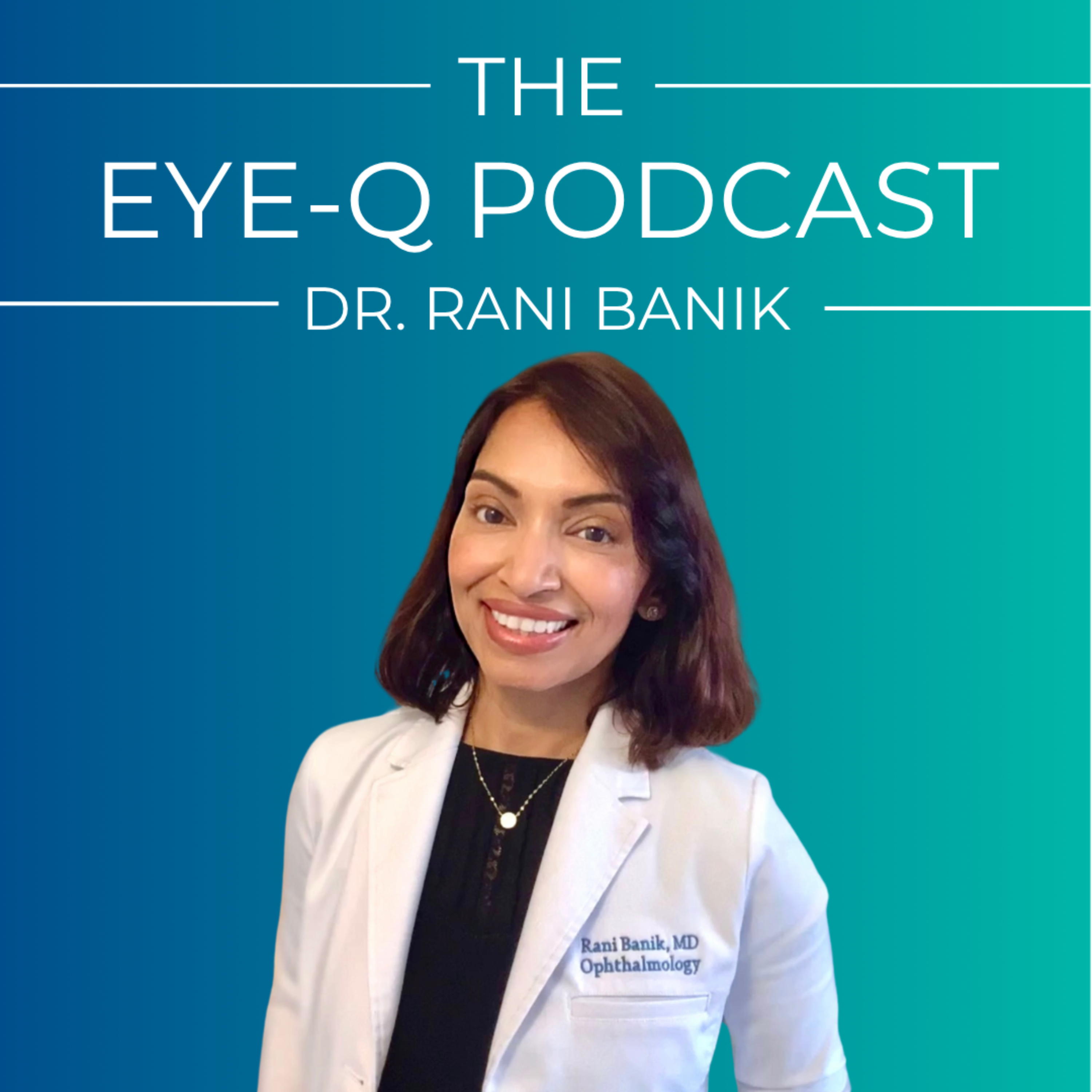
Show Notes
That tiny eyelid flutter can be incredibly irritating—and after a few days, sometimes a little scary. In this short Eye-Q Podcast Quick Take, neuro-ophthalmologist Dr. Rani Banik explains the five most common triggers for eyelid myokymia, what you can do to calm it down, and the signs that mean it’s time to get checked. Dr. Banik also shares her own experience with eyelid twitching and what her published long-term research on chronic eyelid myokymia found about prognosis. If you found this episode helpful, follow The Eye-Q Podcast™ on Spotify so you don’t miss future episodes—and please take a moment to leave a rating or review. It helps more people discover the show and learn how to protect their vision.
More from The Eye-Q Podcast
Do you need to become vegan to benefit from plant-based nutrition? Registered dietitian Nichole Dandrea-Russert, MS, RDN joins Dr. Rani Banik to break down what plant-based eating really means and how adding more whole plant foods can support gut health, brain health, mood, hormones, healthy aging, and overall wellness. They discuss: fiber and the microbiome short-chain fatty acids plant-based protein nutrients to pay attention to menopause and healthy aging eye-supportive foods carbohydrates and plant-based diets and simple ways to eat more plants without feeling overwhelmed
Could Ozempic, Wegovy, Mounjaro or Zepbound affect the optic nerve? In this special episode of The Eye-Q Podcast™, neuro-ophthalmologist Dr. Rani Banik examines the rapidly evolving evidence surrounding GLP-1–based medications and nonarteritic anterior ischemic optic neuropathy, or NAION. You’ll learn what NAION is, which patients may already be more susceptible, why optic disc anatomy and optic disc drusen matter, how diabetes and obstructive sleep apnea complicate the risk-benefit discussion, and what the major studies actually tell us. Dr. Banik also discusses proposed mechanisms, a real-world patient experience with bilateral sequential NAION, practical guidance for patients and physicians, and the recent litigation surrounding these medications. The key message: association is not the same as causation, and relative risk is not the same as absolute risk. Do not discontinue a prescribed GLP-1 medication without discussing the risks and benefits with your treating clinician. If this episode was helpful, follow The Eye-Q Podcast™, leave a rating or review, and share it with someone who takes—or prescribes—these medications.
Why do grocery stores, scrolling, crowds, or driving make some people feel dizzy or off-balance? Dr. Rani Banik explains the eye–inner ear–brain connection, visual motion sensitivity, vestibular migraine, PPPD, and the warning signs that deserve medical evaluation. She also discusses vestibular rehabilitation, lifestyle strategies, supportive migraine nutrition, OpticaMD's Neuro Tension supplement, and why vestibular migraine can occur even without a prominent headache. If you found this episode helpful, follow The Eye-Q Podcast™ and leave a rating or review—it helps more people discover the show.
Why do sunlight, fluorescent lights, headlights, screens, or even your phone sometimes feel painfully bright? In this Eye-Q Podcast Quick Take, neuro-ophthalmologist Dr. Rani Banik explains 7 causes of photophobia, from migraine and dry eye to corneal irritation, uveitis, concussion, and neurologic conditions. You’ll also learn why constantly wearing dark sunglasses indoors may backfire, when tinted lenses may be helpful, and what emerging evidence suggests about lutein and zeaxanthin for supporting glare tolerance and photostress recovery. Most light sensitivity is not an emergency—but certain combinations of pain, redness, vision loss, fever, neck stiffness, or neurologic symptoms should never be ignored.
Ever see dots, strings, cobwebs, or squiggly shapes drifting across your vision? They’re called floaters, and most of the time they’re harmless. But a sudden shower of new floaters—especially with flashing lights—can sometimes be a warning sign of a retinal tear or retinal detachment. In this Eye-Q Quick Take, neuro-ophthalmologist Dr. Rani Banik explains what floaters actually are, why they become more common with age, what happens during a posterior vitreous detachment, and the symptoms that mean you should seek urgent eye care. You’ll also learn why floaters don’t necessarily disappear completely, who is at higher risk for retinal problems, and how floaters differ from migraine aura. If you found this episode helpful, follow The Eye-Q Podcast™ on Spotify so you don’t miss future episodes—and please leave a rating or review. It helps more people discover the show and learn how to protect their vision.