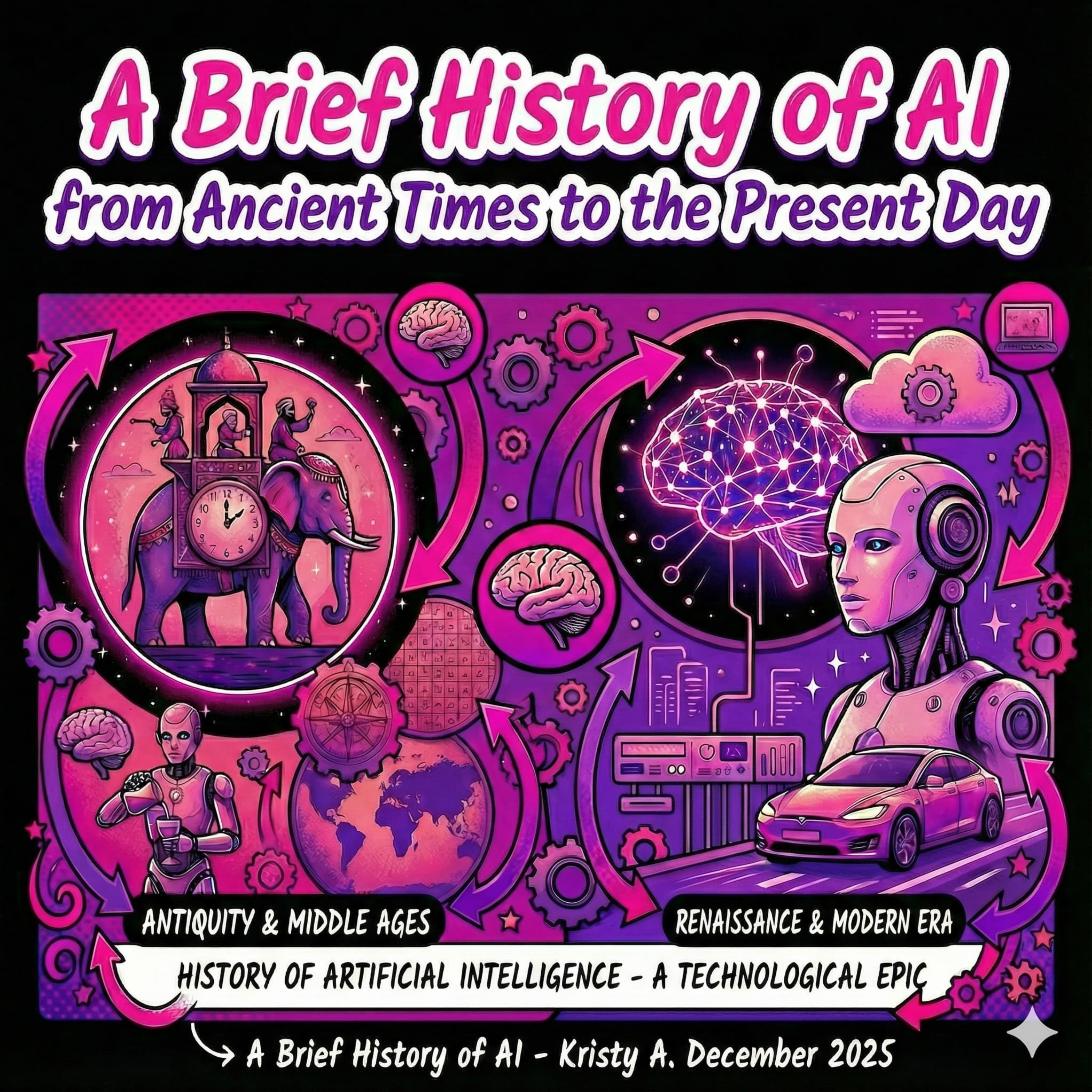
Show Notes
The Knots of Time: How Medieval Americas Wove the Future into Their Calculations
A knot can be an obstacle or a memory. In the medieval Andes, it was both at once — and much more. In this episode, we discover how American civilizations invented information systems of a sophistication we are only beginning to measure.
Around the year 1100, in the Yucatan, a Maya scribe finished painting the Dresden Codex — one of only four Maya manuscripts to survive the conquistadors' book burnings. Sixty-five percent of its pages contain astronomical tables. And among them, a masterpiece: an eclipse prediction algorithm valid for more than five centuries, with an accuracy of 0.0002 days per year — superior to Europe's Julian calendar.
You will visit El Caracol, the Chichen Itza observatory built around 906, with its twenty astronomical sight lines. And the Woodhenge of Cahokia, that circle of forty-eight red cedar posts where the sun appeared to emerge directly from Monks Mound at the equinoxes.
But the most striking discovery comes from the Andes. The quipu — from the Quechua for "knot" — was the nervous system of the Inca Empire. The largest contained up to fifteen hundred cords. Each cord could carry more than fifteen hundred distinct units of information. "They were like primitive computers," notes historian Kim MacQuarrie. The quipu stored; the yupana calculated. One was the memory, the other the processor. This architecture — separating calculation from storage — is precisely that of modern computers.
The ceque system of Cusco went even further. Forty-one imaginary lines radiated from the Temple of the Sun to three hundred and twenty-eight shrines. Space itself was a database. These systems foreshadow what computer scientists call distributed information systems. Knowledge was distributed among experts trained over decades, inscribed in portable objects, and materialized in the architecture of cities. When the empire fell, the experts continued to transmit their art.
Redundancy ensured survival. The network outlived its nodes. The conquistadors burned the codices. But the algorithms they contained had already crossed the centuries — knotted in the memory of those who knew how to read the sky.
Article is online here.
More from A brief history of AI from ancient times to the present day
What the Deep Learning Revolution Teaches Us: Conclusion and opening toward the future
Archipelago of Innovation: How Australia seeks its place in the AI revolution
Silicon Gardens: How the desert became an artificial intelligence laboratory
Rule and Exception: How Europe regulated AI and made Mistral emerge from the improbable
The New Center of Gravity: How Asia became the beating heart of global artificial intelligence