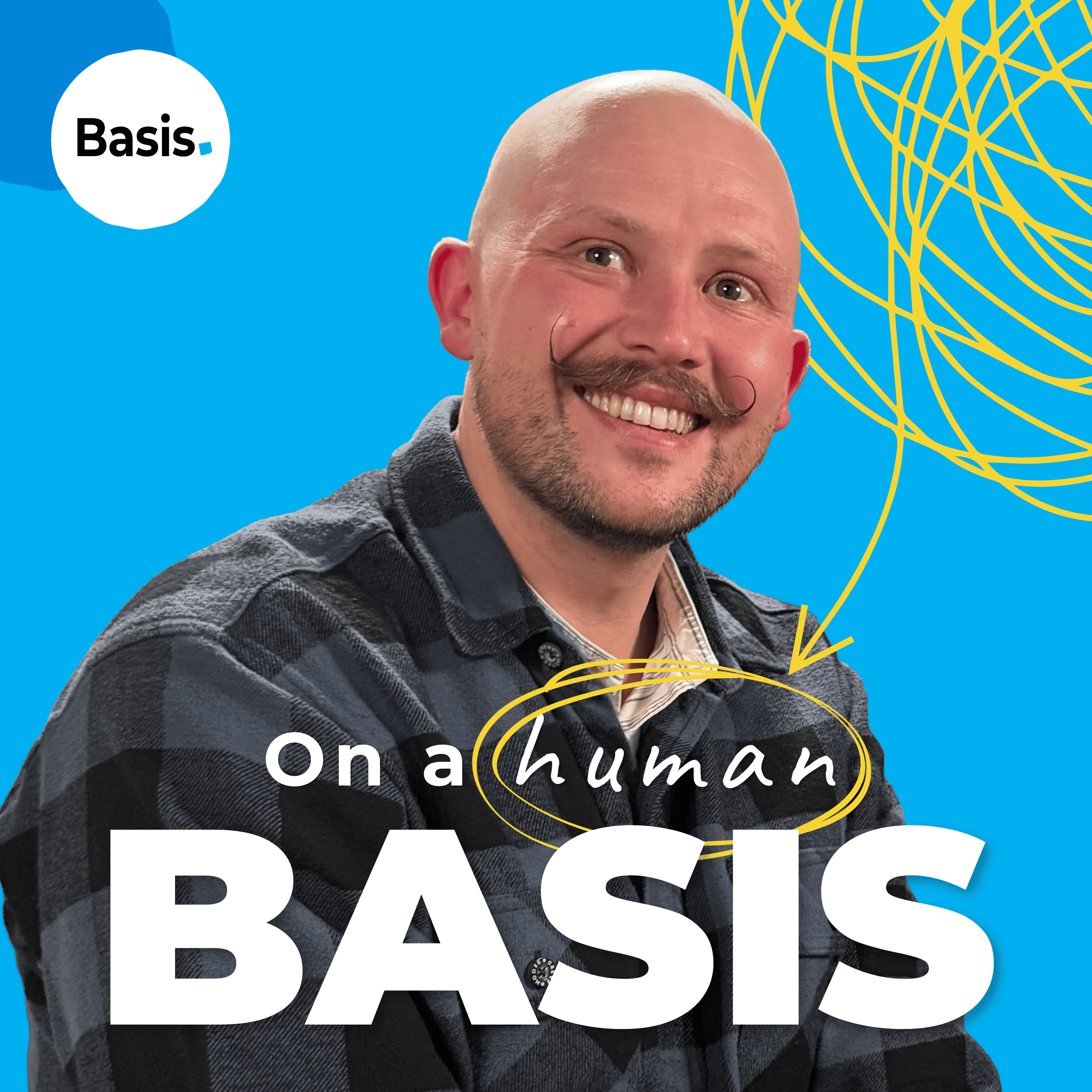
Human Learning Systems: a new paradigm for public services with Toby Lowe
On a Human Basis with Joe BadmanShow Notes
What if the obsession with tracking KPIs is actually preventing public services from delivering real outcomes? In this episode, Joe sits down with Toby Lowe, a leading academic and steward of the Human Learning Systems movement. Toby explains why the traditional model of setting targets and performance managing for outcomes is fundamentally broken, and how a Human Learning Systems approach can reshape public services around trust, complexity and continuous improvement. Drawing on decades of research and his own early frustrations as an arts charity chief executive, Toby argues that using outcomes as performance targets inevitably leads to data manipulation and systemic gaming rather than genuine impact. He shares striking examples from the VW Dieselgate scandal to an £80 million public service contract in Plymouth with zero KPIs to show how shifting the focus from "delivery" to "learning relationships" can drastically improve citizens' lives, even reducing avoidable deaths. This is a deep dive into complexity science, the libertarian roots of modern management theory, and how leaders can liberate their teams to do the work that actually matters. In this conversation, we explore: Why 40 years of research proves that outcomes-based performance management universally leads to data gaming and lying The moment of frustration in youth criminal justice that turned Toby away from traditional outcomes frameworks The VW Dieselgate scandal and the inherent danger of relying on proxy measures Why an obesity systems map proves that governments cannot "deliver" complex outcomes alone The libertarian origins of Public Choice Theory and how James Buchanan sought to delegitimise the welfare state How to build an alternative management paradigm centred on mastery, autonomy, and purpose How the Plymouth Alliance eliminated KPIs entirely and slashed avoidable deaths over a decade Why data becomes more important, not less, in a Human Learning Systems approach How Liverpool Combined Authority broke a low-trust cycle to transition into commissioning for learning Toby's secret life as a hobbyist DJ and the exact complexity book he recommends most
This episode is especially relevant for: Public sector leaders, commissioners, and chief executives Local government directors and policy professionals Systems-change practitioners and complexity theorists Service designers and voluntary sector managers trying to solve complex human problems
Stay connected: Follow Joe on LinkedIn: https://linkedin.com/in/joseph-badman Read the latest chapters from our upcoming book: https://relationalservicedesign.com Master the methodology: https://basistraining.co.uk/ Partner with us: https://basis.co.uk
More from On a Human Basis with Joe Badman
What if the key to leading outstanding public services wasn't control and rigour, but curiosity and kindness? In this episode, Ian Dodds shares hard-won lessons on running children's services with compassion, protecting prevention when budgets are under pressure, and building the kind of trust and psychological safety that lets teams do their best work. As joint Director of Children's Services for Richmond and Kingston - through Achieving for Children, one of the first shared children's services models in the country - Ian has spent his career proving that kindness and honesty aren't soft options but the foundation of consistently outstanding services. We talk about the origin story of Achieving for Children, how both boroughs reached an outstanding Ofsted judgement, why co-production is worth the time it takes, shifting money into early help to keep families out of crisis, the real role of AI in freeing practitioners to be more relational, and what it takes to stay calm when everything is "everything everywhere all at once." If you work in or care about children's services, local government, or leading with compassion under pressure, this one is full of practical, generous, no-nonsense wisdom. You'll learn about: Why there's nothing kind about letting someone fail - and what real kindness looks like at work How to proportion your time and energy across competing priorities without spreading yourself too thin Building a mature approach to data and insight so it becomes an early warning system, not a stick to beat people with Why co-production feels slow but produces stronger, more durable solutions Protecting early help and prevention when it's the easiest thing to cut The role of AI in creating capacity for more relational work with families Creating psychological safety so people raise problems early, when you can still do something about them
What if the secret to transforming local government isn’t better business cases, but a culture of rapid prototyping and building genuine trust? In this episode of On a Human Basis, Joe sits down with Peter Gadsdon, who recently retired after an extraordinary 46-year career in public service and local government. Starting out at 16 repairing televisions in East London, Peter rose through the ranks to become a Corporate Director, pioneering human-centred design, digital transformation, and agile service delivery across Redbridge, Lewisham, and Brent councils. Drawing on decades of frontline and executive experience, Peter shares why real transformation requires leaders to create cover and psychological safety so teams feel safe to test, learn and grow. He details how Brent Council prototyped community hubs in church halls and libraries for two weeks before committing long-term funding, and explains why securing solid financial foundations and building high-trust relationships with elected members are essential to cutting through bureaucracy. This is a pragmatic, inspiring deep dive into service design, relational leadership, and what it really takes to leave public services in a better place than you found them. In this conversation, we explore: How fixing televisions in East London provided the logical blueprint for unpicking complex council processes Why effective leadership is about creating cover and psychological safety for teams to innovate The practice of rapid service prototyping: testing community hubs in a church hall for two weeks before scaling borough-wide How to navigate local government finance to turn short-term experimental funding into core revenue services Applying the Pareto rule in public management to focus on the 20% of effort that delivers 80% of the value Building strong, honest working relationships with elected politicians and local council leaders Why "board fatigue" kills momentum and how to recognize when it's time to adapt or stop a failing project Ethical data governance, cybersecurity strategies and maintaining service agility in times of crisis
What if we organised an entire council around building social connection? In this episode, Joe sits down with Tony Clements, Chief Executive of Ealing Council. Tony explains why he's placed social connection at the heart of the council's purpose, and how a Connected Communities approach is reshaping everything from children's services to emergency management. Drawing on the evidence that loneliness can be worse for health than smoking, Tony argues that local government has a unique locus to build the relationships and community resilience that transactional services alone can't deliver. He shares how Ealing achieved its lowest-ever number of children in care by investing in kinship networks, why emergency management teams are treating the community as the real first responder, and what it takes to shift thousands of daily interactions toward building connection. This is a deep dive into relational leadership, complexity and why the language of KPIs and "clarity" often gets in the way of the work that matters most. In this conversation, we explore: Why the evidence on social connection rarely reaches public policy How kinship networks are reducing the number of children in care Why emergency response depends on community resilience first The limits of KPIs in relational, complex work How to balance short-term savings with long-term transformation Why the bar for change is higher than the bar for the status quo The bravery it takes to stop doing good things What AI tools are actually changing inside a council The chief executive as "rewilder" of the system
What happens when a consultant surgeon embeds agile ways of working into the messy reality of an NHS operating theatre? In this episode, Joe sits down with Rob McAdam, a Consultant Upper GI and Bariatric Surgeon who also happens to be a qualified Scrum Master. Rob is a rare example of a practitioner who hasn't just read the theory - he has spent years embedding agile ways of working into the heart of the NHS. For Rob, the "stable team", the "prioritised backlog" and the "retrospective" aren't just agile buzzwords - they directly map onto the most important parts of surgical practice. In this deep dive, we explore how he moved his department away from rigid, linear planning and toward a model that values human collaboration over top-down protocols. Rather than asking clinicians to work harder inside a rigid system, this work asks a different question: What if we trusted teams to redesign how the work gets done? In this conversation, we explore: Why the pandemic forced a shift to 24-hour sprints - and what was lost when things "returned to normal" How a theatre list already resembles a Scrum team, and what that unlocks Why traditional list planning produces garbage-in, garbage-out results What surgical story points look like in practice, and how they've increased capacity without burning people out How proper retrospectives surface the invisible frictions a debrief never catches A real example of a tiny AI-assisted fix that's now spreading across an NHS trust Why "the HIPPO effect" still shapes medicine - and how Agile challenges it How psychological safety and team-led improvement could transform frontline NHS delivery
Is your local authority missing its "hidden cohort" for free school meals? In this episode, Joe sits down with Myles Bremner (Bremner & Co.) who has spent over a decade at the heart of school food policy. They confront the "crazy bureaucracy" standing between children and free school meals, and share how working with teams in Devon and Tower Hamlets has already put £12 million in pupil premium funding back into schools across the UK. What you’ll learn: The Hidden Cohort: How to identify the thousands of eligible pupils currently missing out on vital support. The £12 Million Impact: Why fixing the registration process for free school meals is the fastest way to secure pupil premium funding. The September Deadline: Navigating upcoming changes to transitional protection and what they mean for your Local Authority. Data as a Force for Good: How local data officers are cutting through red tape to automate enrolment. Partnership Wins: Why honest conversations between councils and schools deliver more than working in silos.