Show Notes
Before the bombs fell, the machine was already being assembled.
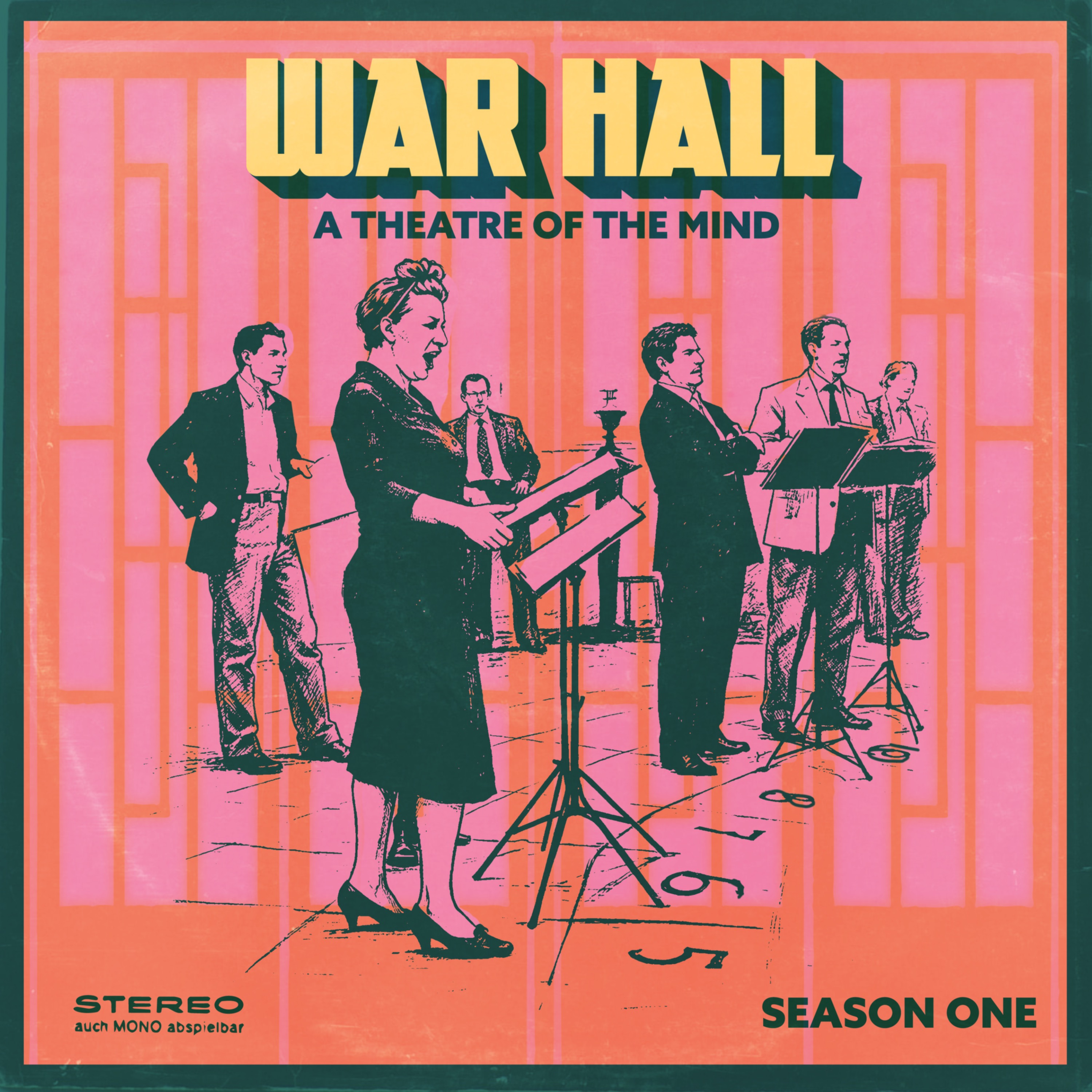
In this episode of WAR HALL: A Theatre of the Mind, we step inside Walthamstow Town Hall as it transforms into the operational heart of a borough preparing for war.
Council meeting minutes record debates about the Town Hall clock, dance floors and lighting, an electric rotating glass ball... At the same time, a far more urgent system is taking shape — Air Raid Precautions, control rooms, wardens, signals.
This is the story of assembly: of people, procedures and infrastructure wired together under growing pressure, just before the Blitz. Ross Wylde, head of Walthamstow’s ARP, pushes through a radical, decentralised system — a machine designed to survive chaos — even as doubts, delays and government complacency loom large.
As the summer of 1940 approaches, lights are dimmed, bells silenced, lookouts posted. The town listens differently. Watches the sky. Prepares for something not yet fully imaginable.
The Assembly follows how Walthamstow Town Hall was reorganised for war — before the war arrived.
Selected audio excerpts featured in this episode: 'The war over Walthamstow: the story of Civil Defence 1939 1945' by Ross Wylde Benjamin Britten, Peter Grimes (1945), Four Sea Interludes — “Storm” Decca All other music by Simon Mills
Audio excerpts are used under UK fair dealing provisions for the purposes of criticism, review, and historical illustration. Full rights remain with the respective rights holders. War Hall is an independent production. If we ever make a profit, half will go to War Child, with the rest supporting our small team. If you’d like to help us make future episodes, you can join our Patreon — even the smallest contribution helps us pay artists fairly.
Follow War Hall: A Theatre of the Mind wherever you get your podcasts, and please leave a review to help others find the show.
Some clips are used under fair dealing and fair use for historical illustration. All rights remain with the original rights holders. Used with permission where required.
Music and sound design by Simon Mills.
Produced by Alison Williams, Professor John Thomas, and Susie Williams. Hosted on Acast. See acast.com/privacy for more information.
More from War Hall
Meet the voice of War Hall. In this special bonus episode, Professor John Thomas interviews the indomitable Angela Allen – legendary script supervisor and voice of War Hall: A Theatre of the Mind. Angela reflects on an extraordinary life in cinema, from sheltering in the London Underground during the Second World War to working on The Third Man in post-war Vienna, travelling through the African jungle with Humphrey Bogart and Lauren Bacall, and becoming the trusted right hand of director John Huston. Along the way, she worked with Marilyn Monroe, Clark Gable, Arthur Miller, Truman Capote, Ava Gardner and many of the twentieth century's greatest creative figures, helping shape some of cinema's most iconic films. Now in her nineties, Angela looks back on a remarkable career spent breaking barriers in an industry dominated by men—and on the dream she was never able to fulfil - becoming a director. In this second part of our interview, Angela takes us on a journey from Paris to Reno, to the set of The Misfits... The voice you hear in War Hall has been shaped by a lifetime spent reading scripts alongside cinema legends. It is a voice of gravitas - and beauty - a voice straight from the golden age of cinema and sound. War Hall is an independent production. If we ever make a profit, half will go to War Child, with the rest supporting our small team. If you’d like to help us make future episodes, you can join our Patreon — even the smallest contribution helps us pay artists fairly.
Discover War Hall: A Theatre of the Mind—an immersive documentary podcast uncovering the extraordinary true story behind Walthamstow Assembly Hall, a concert venue built during the Blitz that became one of Britain’s most significant recording spaces.
When we began War Hall – A Theatre of the Mind, the political climate felt uncomfortably close to the 1930s. Nationalism was rising. Division was deepening. We found ourselves asking why we were tracing where the bombs fell during the Second World War while the present felt increasingly unstable.
As Walthamstow Assembly Hall opens in March 1943, culture, ceremony and civic pride take centre stage. Concerts, fairs and beauty contests unfold beneath glitter, blackout restrictions, anti-aircraft fire and a war that is still very much alive.