Show Notes
This paramount chapter involves Tolstoy using Andrei to grasp the transcendence of the Almighty God which the author revered. More particularly, when Andrei takes in the vastness of the sky, Tolstoy conveys the vulgarity of this earth compared with His infinite nature. Further, Tolstoy lays bare the senselessness of war for most of the men shooting and hacking each other. There will be a depiction of opposing soldiers in a tug-of-war over the most insignificant object – a broomstick, highlighting the meaninglessness many sacrifice themselves for.
The chapter begins with the battle intensifying while Kutuzov was riding near the rear of a column down a hill. He stops at a deserted house on a majestic hell, symbolic of war interrupting civility. Fog was clearing as some of the French became more visible, at first over a mile away. However, additional forces were quickly found to be ascending toward them. Upon noticing, the expressions on most of the Russian officers changed to Holy terror.
Andrei embraces the moment, thinking “Here it is! The decisive moment! My turn has come!” Soon a cloud of smoke from a blast of artillery spread all round. A voice of naïve terror shouted, “Brothers! All is lost!” There was an instantaneous break of morale and the men ran in different directions.
Andrei took in bewildering sights as Kutuzov was encouraged to leave and avoid being taken prisoner. With stoicism, Kutuzov wiped away blood flowing from his cheek and noted the true damage was to his army by reason of their humiliating performance. He vainly called for the soldiers to maintain discipline. Kutuzov rode toward the sound of artillery – where one of the batteries was under attack. The French noticed Kutuzov and fired at him. There were many casualties, including an officer carrying the Battle Flag.
Kutuzov called out to Andrei with a trembling voice. Andrei, feeling shame and rage leapt from his horse and picked up the fallen Standard. He called to his men, in a piercing scream: “Forward, lads!” He was not physically powerful and was challenged in carrying the flag. Yet he proceeded with full confidence his army would follow him, which they did and soon overtook him.
A burly sergeant assisted with the swaying flag, but was killed. Undaunted, Andrei stumbled along. He embraced being the primary target and essentially dared the enemy to hit him. He reached within 20 paces of French soldiers seizing horses and canons as prizes. Through the whistle of bullets and men dropping, he focused on reaching the seized Battery. However, he became distracted by the most unusual but symbolic confrontation -- a red-haired gunner from his army in a tall cylindrical hat comically askew pulling one end of a cleaning mop while a French soldier tugged at the other. He took in their contorted faces filled with venom. Andrei realized the absurdity and that the gunner should have retreated, as there were other Frenchmen nearby. His comrade won the broom but Tolstoy notes the man’s fate was about to be decided when Andrei lost the moment though taking a heavy blow. He felt as if hit on the head with the full swing of a bludgeon. The pain was disorienting but he felt worse about not seeing how the fracas over the broom ended. The Comment is that all such efforts, for the men doing the hacking and dying, are as useless as fighting over a broom.
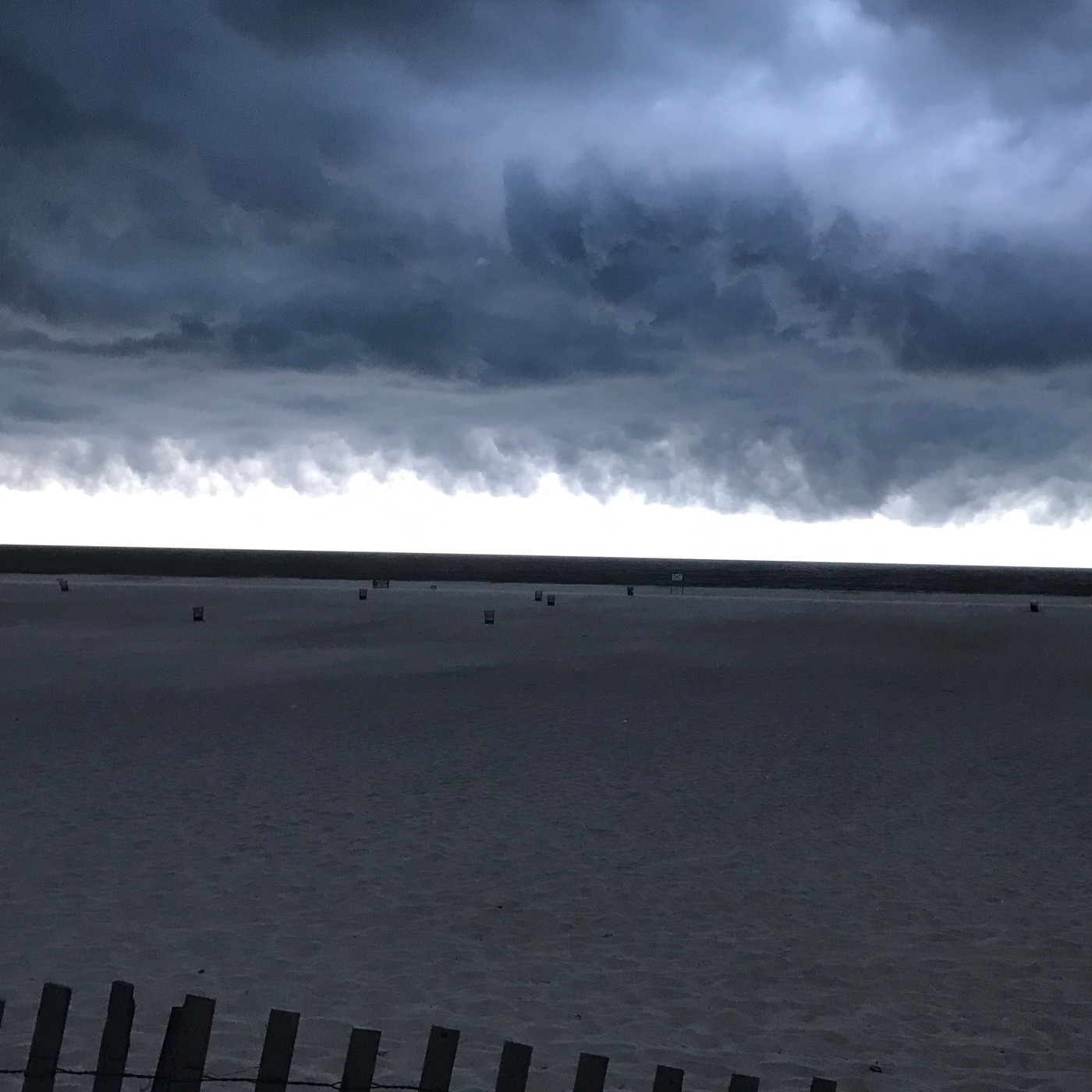
Andrei’s perception slows down and as he falls on his back. “What’s this? Am I falling? My legs are giving way…” He opens his eyes, hoping to see the struggle for the mop. However, he absorbed what couldn’t be more opposite -- something vast and Godly, Above him there was only the sky—the lofty sky, not clear yet immeasurably lofty, with gray clouds gliding.
“How quiet, peaceful, and solemn; not as it was as I ran. No, not as we ran, shouting and fighting, not at all as the gunner and the Frenchman with terrified faces struggling for the mop. How differently do those clouds glide across that lofty infinite s
More from War & Peace Podnotes, A Study Guide
As War & Peace delves into to fiction to a much greater degree than the previous section, exploring the Rostov family dynamic throughout 1806, there is a great deal that historically transpired which Tolstoy does not bring you through. In this stretch, Bonaparte was a continental Behemoth, who sets his sights on Prussia, then an industrial power with a highly organized military. The centers that made up the Prussian Kingdom were: Berlin, Potsdam, Königsberg and Danzig. You should recall that based on the battle of Austerlitz, Napoleon replaced the Habsburg Family as the principal authority in Central Europe. Austria never again reached such heights of power. Over the next 70 years Austria would lose influence over the dozens of German states while Prussia gained in this regard. It was Prussia, under Otto Von Bismarck, who in 1871 established the nation we know as Germany. In the start of 1806, France remained in a state of war against Russia, England and even Sweden. It was a busy and productive year for "the man of destiny." In February, Napoleon sent General André Messéna to Naples to overthrow the Bourbon King, Ferdinand IV, and install his brother, Joseph. Messéna was successful though fighting continued for months. In the Summer, Napoleon consolidated control of Holland and placed a crown on another brother, Louis. By mid-July, Napoleon created the Confederation of the Rhine of mostly southern German states, where he compelled alliances. The expanded territory gave the French 60,000 more troops. Napoleon was reshaping Central Europe to assure French influence and limit that of Austria, Prussia, Russia and Great Britain. Napoleon’s desire was to marginalize Britain economically after the Brtis won control of the seas at the Battle of Trafalgar, which preceded Austerlitz by a month. Just off the Southwest coast of France, the French Navy was decimated. The English controlled the water, but Napoleon was dominant on land and wanted to implement the Continental Commerce System. He had success in spreading French administrative, legal and social reforms—including the Napoleonic Code. When possible and practical, he moved to end the remnants of feudalism. The Code abolished a plethora feudal privileges, dismantled manorial courts and freed some peasants, granting basic civil rights and a semblance of equality before the law. To continue to foster his ambitions, Napoleon set his sights on Prussia, which included former Polish territory. Poland was a former Kingdom cut up (partitioned) by Russia, Prussia, and Austria, where many Polish nobles committed allegiance to the Czar or King of Prussia. While the Czar worked with much of the nobility of Poland, the peasants filled the ranks and endured. Czar Alexander was 27 in 1806. Despite the historic loss at Austerlitz, Alexander, would rule for nearly two more decades. He was fortunate that his population was forgiving. Alexander did not enter into serious peace negotiations nor publicly concede the loss. Many among the Russian nobility blamed the result on the Austrians. There are memoirs from Phillip Vigel, then a 20 year-old Russian diplomat, who detailed his observations of the mood in Moscow and Petersburg. The Muscovites were more vocal in castigating the Czar. Some would even laud Napoleon. There, Bonaparte earned nickname befitting a Russian Conqueror, Napoleoskha. In Petersburg, the population shared the humiliation. They would explain the result as a turn of luck. Vigel expressed that Petersburg society felt the desire to get themselves off the floor and prove themselves. He sensed a general optimism of youth. He also notes how the English desired Russia as allies against the French and Czar was their lifeline from French domination. Consequently, Russia spent the summer of 1806 preparing for a new war -- reorganizing and refilling their ranks. General Kutuzov fades into obscurity for a time. Just prior to Austerlitz, in the Fall of 1805, Alexander made a notable a
We now get taken from March of 1806, through the warmer months and then to the end of the year. Quite the fast-forward!
We have reached the pivotal chapter involving the death of the Little Princess and birth of the Andrei’s son.
We move further into March of 1806 and return to Bald Hills, the estate of Andrei’s father. Despite letters and official inquiries, Andrei’s body had not been found nor was he on the list of prisoners.
This episode examines some likely influences in Tolstoy’s writing of the Duel between Pierre & Dolokhov.