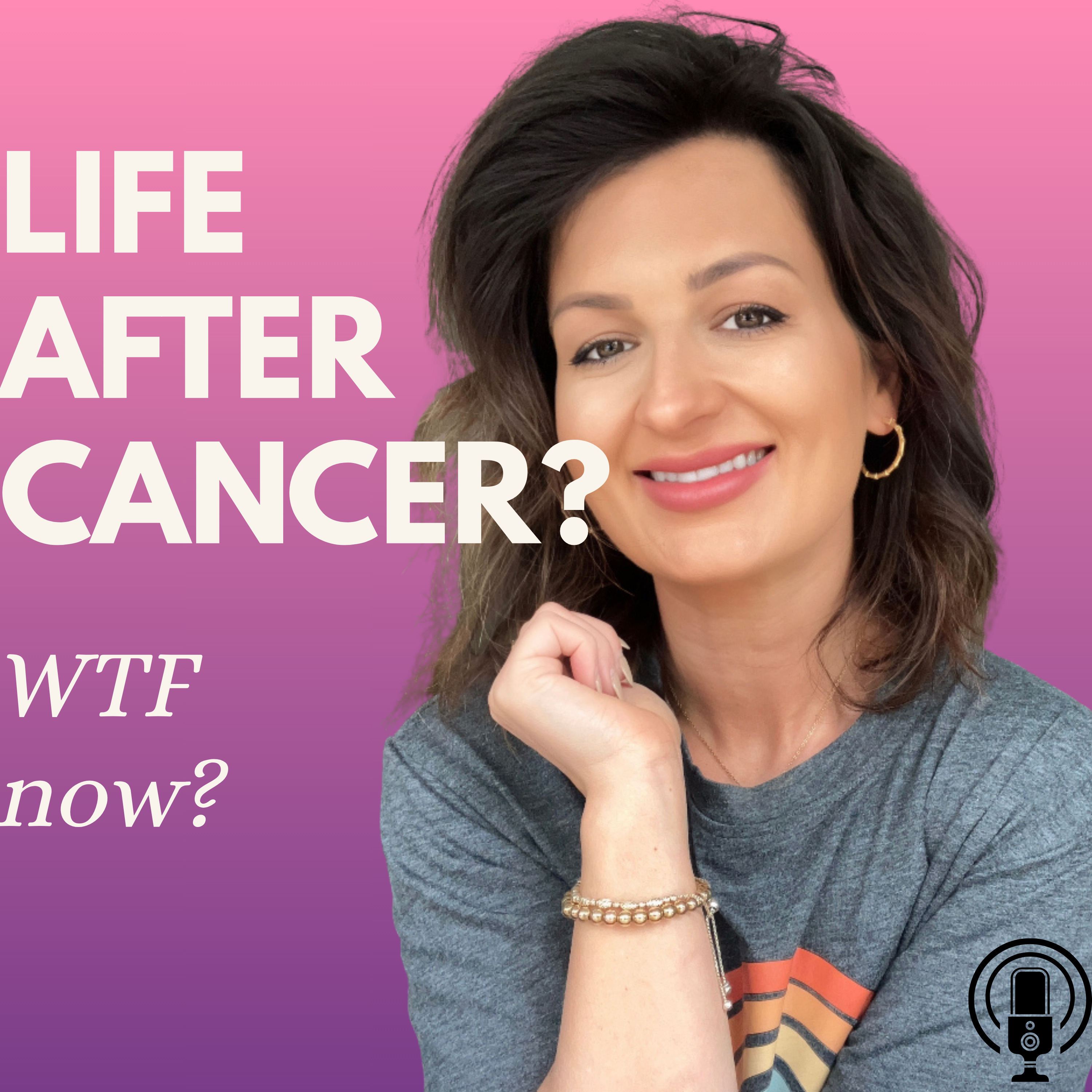
The Reality of Life After Cancer: The Bit Nobody Prepares You For | Claire's Story
Life After Cancer? WTF Now?Show Notes
You finish cancer treatment, everyone expects you to celebrate, get back to normal and crack on with life. But what happens when you don't feel normal? When your body's changed, your head's all over the place and suddenly every ache and pain has you convinced the cancer's back? This week I'm joined by Claire, who's right in the thick of that messy, confusing stage of life after cancer. After discovering she carried an ATM gene mutation, Claire was diagnosed with breast cancer at 40. Now, having finished chemotherapy and radiotherapy, she's navigating the reality of what comes next. We talk about the fear of recurrence, scan anxiety, treatment-induced menopause, the pressure to bounce back, and the strange realisation that maybe we don't actually want our old lives back. Because surviving cancer and figuring out how to live afterwards are two very different things. If you've just finished treatment and you're wondering why you don't feel how you thought you would, this one's for you. No blueprint. No pretending we've got it all figured out. Just two women having an honest conversation about the messy bit nobody really prepares you for.
@lifeaftercancer_wtf @clairevsboobiecancer
More from Life After Cancer? WTF Now?
Cancer treatment can change a hell of a lot about our bodies, but one thing we don't talk about nearly enough is what happens to our sex lives. Vaginal dryness, painful sex, disappearing libidos, changes in body confidence and feeling like a complete stranger in your own body. And the advice we're often given? Just use some lube. Brilliant. Thanks for that! This week I'm joined by Sam Evans, former nurse and co-founder of Jo Divine, who's spent nearly 20 years helping women reclaim their sexual health and pleasure. I asked Sam what the biggest issues were that women were coming to her with after cancer treatment, and we worked our way through them one by one, exploring why they happen and, more importantly, what we can actually do about them. We're talking lubricants, vaginal oestrogen, dilators, vibrators, low libido, painful sex, body confidence and how to navigate intimacy when your body doesn't feel like yours anymore.
After a cancer diagnosis your suddenly you’re supposed to shit rainbows and unicorns, radiate gratitude and live your best lifeThis week, I’m talking about the difference between toxic positivity and a positive mindset that actually helps. The pressure to be grateful, the Instagram “living my best life” posts, and why finishing treatment didn’t magically leave me farting unicorns and rainbows. Through my own experiences of anxiety, fear of recurrence and inappropriate jokes, I explore how a helpful mindset makes room for the difficult days and helps us work through them. You can be grateful AND scared. Hopeful AND having a shit day. There’s room for all of it here.
People say some truly wild shit when you have cancer. “At least you kept your hair.” “Everything happens for a reason.” “You’ve just got to stay positive.” “Well, at least it hasn’t spread.” “If I was going to get cancer, that’s the one I’d want.” And, of course, the absolute classic… “Well, at least you’re still alive.” In this solo episode, I’m counting down 10 things you really shouldn’t say to someone with cancer from toxic positivity and cancer comparisons to the well-meaning comments that can make you want to scream. Most people aren’t trying to be insensitive. They just don’t know what to say. So here’s a revolutionary idea: you don’t need to find the silver lining, fix it or tell someone why it could be worse. Sometimes “Are you okay?” is more than enough. Funny, sweary, honest and probably one to send to that person who keeps saying “at least…”.
Why do we feel the need to rank cancer? At least you didn’t lose your hair. At least you caught it early. At least you didn’t need chemo. Other people have it worse. In this solo episode, I’m talking about the Cancer Comparison Olympics —that weird habit we have of comparing diagnoses, treatments, side effects and even how well we’re coping. I talk about the comments people make (usually with the best intentions), the guilt that can come with feeling like your cancer “wasn’t bad enough” to justify struggling, and why somebody else having it worse doesn’t make what happened to you any less bloody hard. Because cancer isn’t a competition. There’s no podium, no medal for suffering the most, and no minimum amount of trauma required before you’re allowed to find it difficult. Your experience is your experience. And it counts.
Cancer is expensive. And I don’t just mean emotionally.