Atlanta's Airport Corridor: Where Competition Becomes Collaboration
The Commercial Builders’ Network (TCBN)Show Notes
What does it take to transform an entire region?
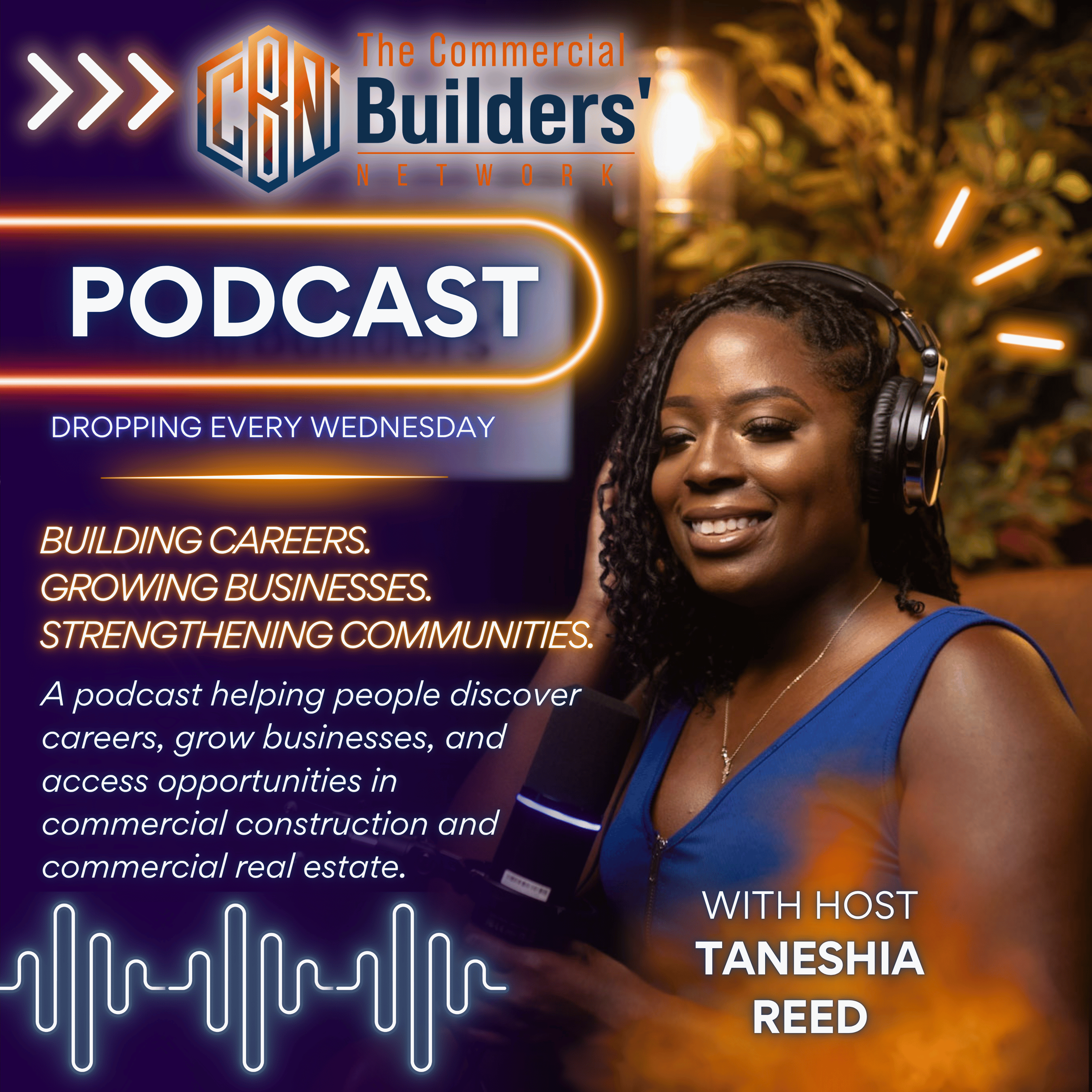
In this episode of The Commercial Builders' Network, host TaNeshia Reed sits down with Shannon James Sr., President & CEO of Aerotropolis Atlanta Alliance, to discuss how workforce development, economic development, commercial real estate, and public-private partnerships are reshaping the communities surrounding the world's busiest airport.
From helping residents land careers to attracting major employers like Porsche, Delta, Chick-fil-A, Microsoft, and Prologis, Shannon explains how collaboration—not competition—is creating opportunities for both businesses and communities.
You'll also learn why banks evaluate more than just your business, how personal credit impacts commercial financing, why partnerships matter, and how workforce training is creating pathways into high-paying construction and infrastructure careers.
In this episode we discuss: ✔ Economic Development ✔ Workforce Development ✔ Commercial Real Estate ✔ Construction Careers ✔ Small Business Growth ✔ Access to Capital ✔ Commercial Lending ✔ Public-Private Partnerships ✔ Infrastructure Development ✔ Entrepreneurship ✔ Community Development ✔ Atlanta Business Opportunities
Whether you're a contractor, developer, entrepreneur, investor, workforce professional, student, or public official, this conversation provides a roadmap for creating stronger businesses, stronger communities, and stronger careers.
Subscribe for weekly conversations connecting people to careers, businesses, and opportunities in commercial construction and commercial real estate.
More from The Commercial Builders’ Network (TCBN)
🏗️ What if students could graduate from high school with more than just a diploma? Imagine leaving high school with real work experience, industry connections, career direction, and even money earned while attending school! In this episode of The Commercial Builders' Network, I'm joined by Dr. Saecilia Jackson, Youth Apprenticeship and Work-Based Learning Program Specialist for Clayton County Public Schools, to explore how students can access career training, work-based learning, and youth apprenticeship opportunities before graduation. Dr. Jackson explains how Georgia's Career, Technical and Agricultural Education (CTAE) programs help students discover career pathways, build professional skills, and prepare for life after high school. 🎓 IN THIS EPISODE:💰 Paid Youth Apprenticeships: How students can gain industry experience and potentially earn money while attending school. 📋 Work-Based Learning vs. Apprenticeships: Understanding the difference and how each connects students with employers. 🏗️ Career Pathways: Opportunities in construction, engineering, aviation, healthcare, business, marketing, and more. 👨👩👧 Resources for Parents: How to connect with school counselors and CTAE teachers to explore available programs. 🏫 Middle School Opportunities: How early career exploration can help students prepare for high school pathways. 🎓 Perry Career Academy: How students may access pathways unavailable at their home school. 🤝 Business Partnerships: How construction companies, HVAC contractors, electricians, and other employers can partner with schools. 💼 Career Readiness: Résumé writing, mock interviews, professional presentation, and employability skills. ❤️ Building Trust: Why students need employers and educators who follow through on their commitments. 📌 HOW STUDENTS & PARENTS CAN GET STARTEDContact your school's guidance counselor. Ask which CTAE pathways are available. Connect with CTAE teachers for program details. Ask about work-based learning and youth apprenticeship opportunities. Explore additional pathways through Perry Career Academy when applicable. Program availability and eligibility vary by school and pathway. 🏢 BUSINESS OWNERS: YOU CAN HELP BUILD THE FUTURE WORKFORCE!Clayton County Public Schools welcomes conversations with industry professionals interested in supporting students through paid apprenticeship opportunities, career presentations, mentorship, and other partnerships. To connect, contact Clayton County Public Schools and ask for the CTAE department or search for Dr. Saecilia Jackson, Clayton County Public Schools. At The Commercial Builders' Network, we're building a library of opportunity that connects people to careers, contracts, business ownership, and economic mobility. 🎥 Subscribe for more conversations about commercial construction, workforce development, and building stronger communities. Don't just watch these conversations. Use them. #YouthApprenticeships #WorkBasedLearning #CTAE #ClaytonCountyPublicSchools #CareerTechnicalEducation #WorkforceDevelopment #SkilledTrades #ConstructionCareers #CareerReadiness #CommercialConstruction #TheCommercialBuildersNetwork
🏗️ Want to win construction contracts with Holder Construction? Here's how to get started! How do small contractors get their foot in the door with a major general contractor? What does prequalification involve? And how do you position your business to receive invitations to bid? In this episode of The Commercial Builders' Network, I'm joined by Erica Pirtle, Senior Manager at Holder Construction, to explain how subcontractors, suppliers, and emerging construction businesses can pursue opportunities with Holder. Erica shares practical strategies for completing prequalification, building relationships, preparing competitive bids, and growing into larger commercial construction projects. 🏗️ IN THIS EPISODE:📋 Prequalification: Holder's two-step process and why completing your application matters. 🤝 Relationships: How consistent follow-up and outreach events help keep your company top of mind. 🎯 Bid Opportunities: How Holder uses SmartBid to identify qualified trade partners. 💰 Business Readiness: Understanding your bonding capacity, project experience, financial capabilities, and scopes of work. 🏢 Holder Builds: Programs designed to help emerging contractors improve bidding skills and project readiness. 🔗 Joint Ventures: How partnerships and second-tier subcontracting can help smaller firms pursue larger projects. 📈 Business Growth: How performing well on smaller scopes can lead to additional opportunities. 💳 Cash Flow: Understanding payment terms, pay applications, and financial planning. 🏗️ Project Markets: Data centers, aviation, higher education, and mission-critical construction. 👷 Workforce Development: Construction career opportunities and introducing young people to the industry. 📌 HOW TO WORK WITH HOLDER CONSTRUCTIONVisit https://www.holderconstruction.com Select Trade Partners. Complete the prequalification process. Attend outreach events and connect with project teams. Keep qualifications updated and communicate your capabilities. 📩 Contact shared during the interview: [email protected] Erica also explains how to receive updates about upcoming projects, outreach events, and Holder Builds programming. Prequalification does not guarantee a bid invitation or contract. Requirements vary by project. 🤝 DON'T JUST NETWORK. BUILD RELATIONSHIPS.One of Erica's biggest messages is that transparency matters. Know your numbers, communicate your capabilities, ask questions, and don't disqualify yourself before having the conversation. Getting your foot in the door is just the beginning. Building trust, demonstrating performance, and maintaining relationships can create opportunities for long-term growth. At The Commercial Builders' Network, we're building a library of opportunity to help people access careers, contracts, capital, and commercial development. 🎥 Subscribe for more actionable conversations about commercial construction, real estate, workforce development, and business ownership. Don't just watch these conversations. Use them. #HolderConstruction #CommercialConstruction #ConstructionContracts #ConstructionBidding #SmallBusiness #GeneralContractor #Subcontractors #ConstructionBusiness #SupplierDevelopment #TheCommercialBuildersNetwork
⚡ Where can learning one skilled trade actually take you? For Craig Harris, Founder and CEO of New Beginnings Electrical Services, the answer has included the field, purchasing, warehouse management, project management, estimating, executive leadership—and ultimately business ownership. Craig has spent 35 years in the electrical industry, but his path didn't begin traditionally. After becoming incarcerated as a teenager, Craig was assigned to a maintenance detail where he worked alongside a master electrician. That's where electrical work began to stick. After returning home, he entered a four-year apprenticeship program and started building a career that would eventually take him far beyond the field. In this episode of The Commercial Builders' Network, we're talking about what a career in the skilled trades can actually become. We discuss:⚡ How Craig discovered the electrical trade 🛠️ Apprenticeships and hands-on training 🔄 Creating a new career after incarceration 💼 Moving from the field into project management, estimating and leadership 💰 Six-figure earning potential in the skilled trades 🏗️ The shortage of electricians and other skilled tradespeople 🎓 Why college doesn't have to be the only successful path 👷 Why hands-on experience matters 📈 Moving from skilled tradesperson to entrepreneur 💵 The difference between revenue and profit 🏫 What construction education could look like in high school 🤝 Why today's contractors need to expose the next generation to the trades Craig also explains one of the biggest lessons he learned when transitioning into entrepreneurship: There's a difference between a business and a hustle. Making enough money to pay yourself isn't necessarily the same as building a profitable company with money on its balance sheet. And for anyone looking for a career pivot or second chance, his advice is simple: Decide what you want. Do the research. Start walking toward it. A skilled trade doesn't have to be your backup plan. It can become your career, your livelihood, your business—and your new beginning. 🎥 Subscribe for conversations about construction careers, skilled trades, contracts, business ownership, development and economic opportunity. Construction can change your life—and it's starting to look a lot like you. #SkilledTrades #ElectricalCareers #ConstructionCareers #Electrician #Apprenticeship #ConstructionJobs #WorkforceDevelopment #SecondChances #ConstructionBusiness #TheCommercialBuildersNetwork
🏗️ Want to grow your construction company and compete for larger contracts? Getting the opportunity is only part of the equation. Your business has to be prepared to handle it. In this episode of The Commercial Builders' Network, I'm joined by Claudette Freeman, Managing Partner of F&F General Construction, a Black woman-owned full-service construction firm providing design-build, general construction, construction management and turnkey project delivery. Pasted text Claudette's journey began in architectural engineering before taking her into project management, consulting and eventually business ownership. Along the way, she saw a recurring problem: many contractors knew how to perform the work, but struggled with the administrative and business infrastructure needed to maintain a pipeline and grow. Pasted text In this conversation, we're breaking down what it actually takes to build and scale a construction company. We discuss:💰 Managing cash flow through construction's feast-and-famine cycles 📑 Why a strong contract can protect your company 🏗️ Moving from smaller projects into larger contracts 💳 Lines of credit and preparing for project expenses 🤝 Strategic partnerships and joint ventures 📋 Using certifications to access opportunities 👷 Building relationships with quality subcontractors 📈 Helping smaller trade partners build financial capacity 🎯 Why you shouldn't bid every opportunity ⚠️ Protecting your company when costs unexpectedly increase 👩🏾💼 Building credibility as a Black woman in general contracting 🤝 Accountability, quality and rebuilding trust Claudette's first F&F project started as approximately a $350,000 contract, grew to $800,000 and ultimately finished around $1 million—all during COVID. Pasted text When material costs skyrocketed, one provision in her contract became critical: increases above the agreed inflation threshold became the client's responsibility. Claudette says that protection may have saved her business during its first year. Pasted text Her message to growing contractors is clear: Know your numbers. Protect your business. Don't be afraid to ask questions. And don't be afraid to partner. 🎥 Subscribe for conversations about commercial construction, contracts, careers, business growth, development and building wealth. Don't just watch these conversations. Use them. #CommercialConstruction #ConstructionBusiness #GeneralContractor #ConstructionContracts #SmallBusiness #ConstructionManagement #WomenInConstruction #BlackWomenInConstruction #Contractor #TheCommercialBuildersNetwork
👷 Construction companies say they need workers. Skilled trades programs are training people. So why are so many people still struggling to make the connection between training and employment?