Show Notes
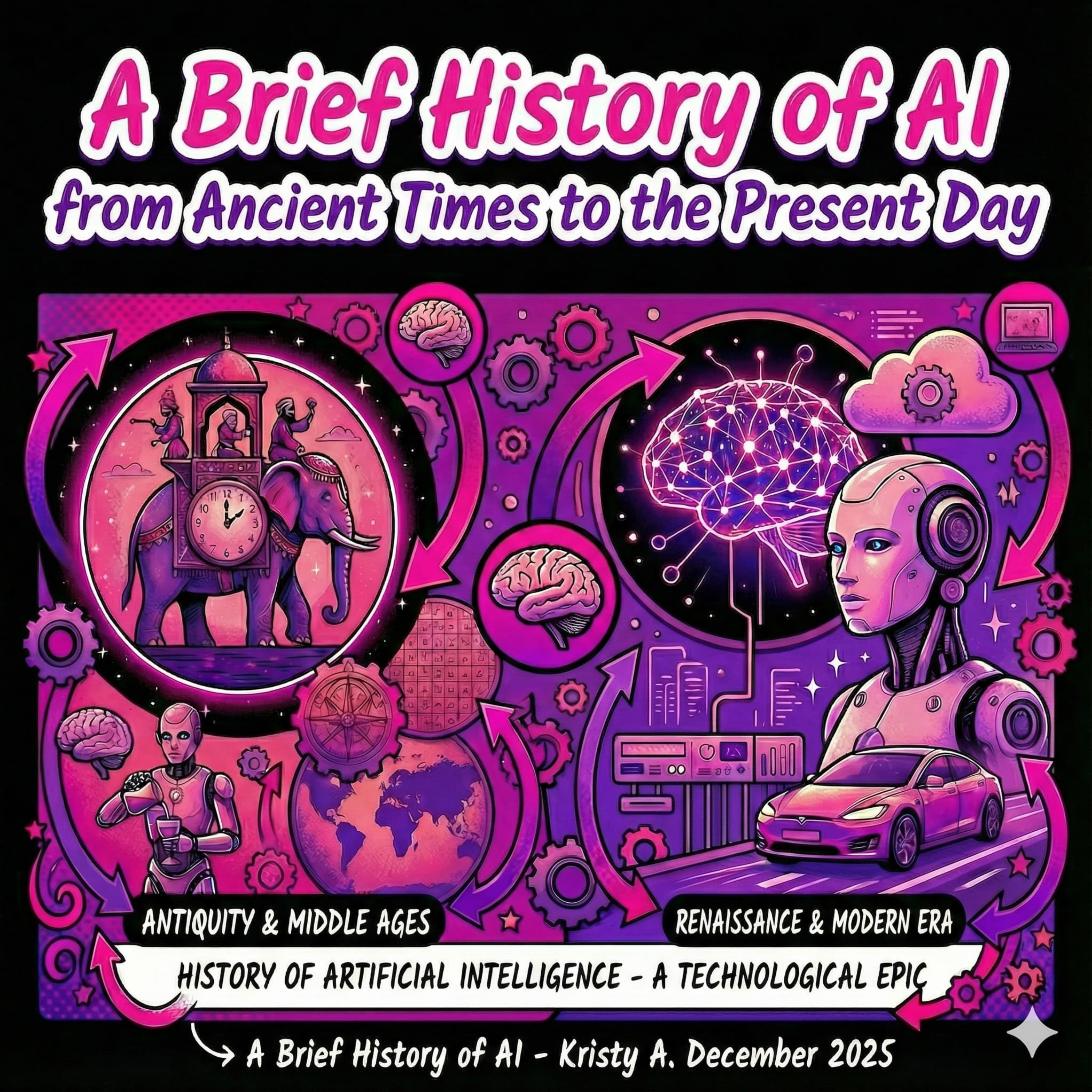
The temples of illusion: When the ancient Middle East invented the first thinking machines There was a time when the gods spoke. In the temples of Thebes, statues bowed their heads to designate the future pharaoh. In Babylon, superhuman guardians watched over the sacred forests. In Alexandria, the doors of the sanctuaries opened of their own accord when the faithful approached. Pilgrims marveled, prostrated themselves, and believed. They could not imagine that behind every miracle lay a mechanism. In this episode, we discover the forgotten cradle of artificial intelligence. Four thousand years ago, the scribes of Babylon engraved the first systematic procedures for solving problems in clay. Computer scientist Donald Knuth recognized this as a kind of “machine language” — an algorithm before the term existed. The sexagesimal system they invented still gives us our minutes, seconds, and hours. And a discovery in 2016 revealed that they had calculated Jupiter's trajectory using the area of a trapezoid—the beginnings of integral calculus, fourteen centuries before Europe.
Meanwhile, in Egypt, priests were inventing something else: the interface. As early as 2500 BCE, statues could talk and move. Lever systems in hollow bases tilted their heads. Hidden tubes transmitted the priests' modified voices to the mouths of the idols. These statues “chose” the next ruler. They prophesied wars. The priest had become a programmer—not of code, but of belief.
The Colossi of Memnon began to “sing” at sunrise after an earthquake. Centuries of pilgrims came to consult the oracle. When Emperor Septimius Severus had the cracks repaired, the singing ceased forever.
It was in Alexandria that these traditions converged. Ctesibius built water clocks of unmatched accuracy for two millennia, and the first keyboard organ in history. Philo of Byzantium created a mechanical servant capable of automatically pouring wine and then water. Heron of Alexandria brought the art to its peak: the aeolipile—the first heat engine—temple doors operated by the heat of a fire, a holy water dispenser triggered by a coin—humanity's first transaction machine—and a fully programmed ten-minute mechanical theater. The Babylonians taught us that calculation can be proceduralized. The Egyptians showed us that the interface is as important as the mechanism. The Alexandrians bequeathed us automation. The next time a virtual assistant springs a response, think of the priests hidden behind the statues of Thebes. Four thousand years separate us from them. And yet we still ask the same question: what is answering me, does it think?
More from A brief history of AI from ancient times to the present day
What the Deep Learning Revolution Teaches Us: Conclusion and opening toward the future
Archipelago of Innovation: How Australia seeks its place in the AI revolution
Silicon Gardens: How the desert became an artificial intelligence laboratory
Rule and Exception: How Europe regulated AI and made Mistral emerge from the improbable
The New Center of Gravity: How Asia became the beating heart of global artificial intelligence