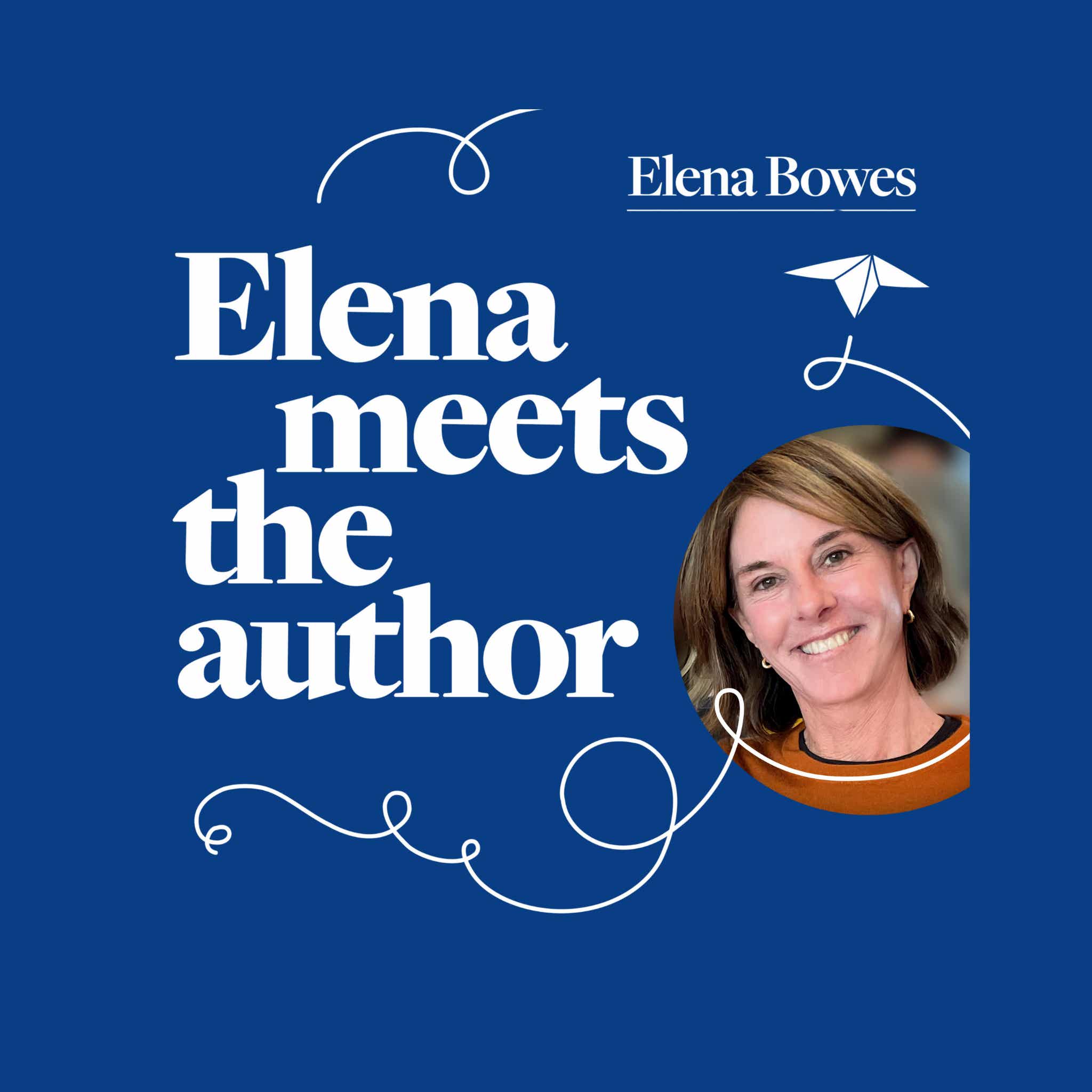
Show Notes
Today I’m speaking to the remarkable author and journalist Haley Cohen Gilliland, whose nonfiction book A Flower Traveled in My Blood reads like a novel, but is entirely true. Haley’s book - which The New York Times and The Washington Post among others named one of the best books of 2025 - tells the story of the Argentine grandmothers who fought to find a stolen generation of grandchildren. Haley’s account weaves together a family saga, a forensic detective story and a sweeping human rights history. At its heart are the grandmothers who used their perceived status as harmless “little old ladies” to move beneath the radar of Argentina’s military and police, organising quietly but relentlessly in search of the truth. A bit of background. During Argentina’s military coup of 1976, the junta launched what it called the National Reorganization Process, a chillingly bland name for a brutal dictatorship. Over the years that followed, thousands of Argentines forcibly disappeared. Human rights groups estimate the number could be as high as 30,000. Among the regime’s most horrific crimes was the systematic abduction of pregnant mothers. Women were held in clandestine detention centres, gave birth in appalling conditions, and were then murdered. Many were drugged and thrown from planes into the Río de la Plata or the sea to erase evidence. Their babies were taken and placed with families connected to or sympathetic with the regime, often under false identities. The distraught mothers of these young women began gathering in Buenos Aires’ Plaza de Mayo. From this movement emerged the Abuelas de Plaza de Mayo, the Grandmothers of the Plaza de Mayo, who realised they would have far greater power working together than searching alone. Haley’s compelling and deeply moving book follows these women over decades, their courage, their strategy, their painstaking documentation, and eventually the scientific breakthroughs that allowed them to identify stolen grandchildren through genetic testing. We talk about the extraordinary reunions, moments of joy and relief, but also about the pain and identity confusion experienced by many of the grandchildren when they learned the truth. We reflect on how Argentina, as a nation, continues to grapple with this dark chapter in its history. This is a conversation about memory, justice, science, motherhood, and collective love that proved stronger than fear. Click here to learn more about my paid newsletter Behind the stories.
00:00 Meet Haley Cohen Gilliland and the true story behind A Flower Traveled in My Blood01:05 Argentina’s dictatorship and the Dirty War, disappearances, stolen babies, and state terror02:43 How Haley came to the Abuelas story and why it still feels underknown outside Argentina05:56 The lead-up to the 1976 coup and Argentina’s political instability08:38 Rosa Tarlovsky de Roisinblit’s family story and the beginnings of the Grandmothers’ movement15:58 The science breakthrough, Dr. Mary-Claire King, and the Index of Grandpaternity21:24 The title’s meaning, Juan Gelman’s poem, and mitochondrial DNA25:07 Reporting the book, endnotes, archives, and writing nonfiction with narrative drive27:12 The “what to leave out” decisions that kept the story centred27:36 Finding the right agent and the question of whether American readers would care29:24 Choosing a publisher and building trust with an editor30:03 The behind-the-scenes team: fact checking, outside edits, and accountability31:45 Shifting from magazine writing to a book-length voice33:38 Researching detention centres and survivor testimony, including ESMA36:14 The Grandmothers’ documentation, archives, and paper trail38:15 A high-stakes smuggling story involving chocolate truffles41:03 Haley’s advice for aspiring nonfiction writers44:19 What she hopes readers take away about collective power, truth, and love over fear46:56 What’s next, current reads, future ideas, and closing thanks
Get full access to Elena Meets the Author at elenabowes.subst
More from Elena Meets the Author
It’s Christmas Eve in Mamaroneck, New York. Ninety-six-year-old Graziella has prepared the Feast of the Seven Fishes, as she does every year, for her daughter Grace and her granddaughter Ella. But Ella, a twenty-something idealist vegan, refuses to eat a bite. So the outspoken four foot two nonna serves her granddaughter a can of cat food instead. Ella throws the tin at a life-size plaster baby Jesus and storms out, promising she won’t be back until there’s a funeral. That’s the first scene. Elizabeth Wellington Rollins’s debut novel is about three generations of Italian American women, all named for the Roman myth of the Three Graces, forced to live together under one roof. They’re in each other’s business, they take care of each other, they fight, and they say almost everything through food. Reading it, I felt like I was there. In this episode of Elena Meets the Author, Elizabeth talks about the Three Graces myth as a cycle of giving, accepting and giving back, and how that idea of reciprocity shaped the whole book. We get into the generosity Elizabeth grew up around, the real neighbourhood behind Pearl Street, and why food carries so much of what these women can’t say out loud. We also talk craft. Elizabeth describes her draft zero process, writing through a genuinely hard period in her own life, and what changed when she started writing about what she knew and where she wanted to be, which was her nonna’s kitchen. If you’re writing something of your own, that part is worth the listen on its own. The Three Graces of Pearl Street is blurbed by authors Adriana Trigiani and Annabel Monaghan, who has been a guest on this show. Books mentioned in this episode The Three Graces of Pearl Street by Elizabeth Wellington RollinsUS Links support independent bookshops. As a Bookshop.org affiliate, the show earns a small commission on any sale. More on www.elenameetstheauthor.com
Eileen O’Malley’s brother Lenny is killed in Vietnam while she’s a sophomore in college. Overnight her life changes. She drops out, moves home to Charleston, and takes a job in the men’s department of a local shop to help pay the bills. Then a handsome naval officer asks her advice about a pair of trousers. Next thing she knows, she’s a young bride on La Maddalena, a small Mediterranean island off the coast of Sardinia where the US Navy keeps its submarines. When Italian activists, nuclear scientists and a handsome journalist start warning her about contamination in the water, Eileen has to question everything she thought she knew. Rachel Beanland’s third novel is a coming of age story about a young woman working out who she is inside a marriage, a military community, and a country, all three of which expect her to toe the line. In this episode of Elena Meets the Author, Rachel talks about the childhood years she spent on La Maddalena, the 2019 return visit that sparked the book, and her mother’s detailed letters home that gave her the 1970s period detail. We talk about the island as a locked room, Eileen’s retrospective second person narration, the dual meaning of the title, and the research she did with Navy veterans and their wives. Rachel Beanland is also the author of Florence Adler Swims Forever, which won the National Jewish Book Award for Debut Fiction, and The House Is on Fire. More episodes and writing at elenameetstheauthor.com. Books mentioned in this episode The Half Life by Rachel BeanlandUS Links support independent bookshops. As a Bookshop.org affiliate, the show earns a small commission on any sale. 00:00 Welcome to the Podcast 01:04 Meet Rachel Beanland 02:59 La Maddalena Origins 06:48 Why the 1970s 10:33 Navy Wives Community 13:48 Isolation and Research 17:02 Soap Opera Letter Clubs 22:20 Second Person Narration 26:33 Outlining and True Events 28:20 Bending The Timeline 30:08 Why Historical Fiction 35:07 Balancing Facts And Drama 38:59 Meaning Of The Half Life 40:56 Mary Magdalene Parallels 43:21 Travel Tips La Maddalena 45:07 Wrap Up And Final Pitch
Priya Parmar’s The Original covers eighteen years of Katharine Hepburn’s life, from the age of 13, the year her brother Tom died, to the age of 32. Not the icon in the polo neck, but the young woman before all that. The failures, the self-invention, the loss she never really recovered from. It’s been praised by The New York Times, The Independent, BBC Radio, People and Oprah. In this episode of Elena Meets the Author, Priya explains why she chose a period defined by self-discovery and failure rather than the years everyone already knows. We talk about Hepburn’s unusually progressive family in Hartford and Fenwick, Connecticut, how the Hollywood studios manufactured star personas before the Production Code came in, and the decade of research behind the novel. Priya also talks about the omniscient Greek chorus structure she built the book around. Priya Parmar is also the author of Vanessa and Her Sister, a New York Times Notable Book about Virginia Woolf and her sister Vanessa Bell, and Exit the Actress. She co-wrote the musical Sylvia, staged at the Old Vic and nominated for an Olivier Award. Books mentioned in this episode The Original by Priya ParmarUK | US Vanessa and Her Sister by Priya ParmarUS Exit the Actress by Priya ParmarUS Links support independent bookshops. As a Bookshop.org affiliate, the show earns a small commission on any sale. 00:20 Podcast Intro and Guest 01:37 Why These Years 03:07 Hepburn Family Roots 04:47 Epigraph and Persona 06:54 Hollywood Image Machine 09:12 Cary Grant Parallels 10:37 Defining Hepburn Boldness 13:34 Opening Pages Reading 15:46 Ten Years Research 19:22 Hidden Discoveries and Letters 23:09 Finding the Narrative Voice 26:41 Los Angeles as Character 27:35 Hepburn Home Base 28:18 Los Angeles Greek Chorus 28:53 Box Office Poison Escape 29:17 Dick Cavett Tape Gold 30:20 Crafting the Hepburn Persona 33:48 Favorite Films Shift 35:24 Wardrobe and Chanel Clash 38:38 Howard Hughes and Deafness 40:13 Cut Scenes and Europe 43:26 Next Book and Homesick This Substack is reader-supported. To receive new posts and support my work, consider becoming a free or paid subscriber.
Alan Anderson is a visionary ad man. That is, up until the morning he isn’t. He blows the biggest account of his career, comes apart, and moves out to live off the land, the land being his backyard in suburban Greenwich, Connecticut. He sets up in the children’s playhouse. He goes barefoot. He uses the woods as a bathroom. His timing couldn’t be worse. His wife Vivian is in the middle of a campaign to join the Queen Anne’s, Greenwich’s most selective women’s social group. Their two daughters are similarly going off the rails. One prefers drama to sports, which is not done in Greenwich. The other has started talking to animals. And Alan is emerging unshowered from the playhouse just as Vivian’s trying to make the best possible impression. Alan Opts Out is a comedy about what it costs to keep up, and what’s left of a man and a family when they stop trying. It’s a New York Times best book of the summer, blurbed by Elizabeth Gilbert and Carl Hiaasen, and currently in development as an HBO series. In this episode of Elena Meets the Author, Courtney talks about the luxury playhouse that sparked the whole idea, her frustration with overconsumption and the Stanley cup trend, and what it was like growing up around extreme wealth in Greenwich. We get into her past life as a brand strategist, how she developed compassion for Vivian over eleven drafts, and the unexpected joy of Alan’s lobster sidekick Lenny. She also talks about the Werner Herzog epigraph, taken from his 1982 film Fitzcarraldo, and what she wanted it to signal about the book’s tone. And she mentions Into the Wild by Jon Krakauer as a book she returned to just before publication, and why Christopher McCandless was on her mind throughout the writing. Courtney’s previous novel Touch also comes up in conversation. She describes it as the book she would have written next, except it’s already written, and thinks it will resonate just as much now as Alan Opts Out. She’s also the author of the publishing guidebook Before and After the Book Deal and runs writing classes and resources at courtneymaum.com. Behind the Stories on Substack is where the conversation goes deeper. Subscribers get writing insights from each episode, early access to upcoming guests, and the chance to help shape the show. Find it at elenabowes.substack.com.
Twenty-two rib eye steaks go missing from Aunt Orsa’s, an upscale Italian restaurant in a fictional Midwestern college town. They vanish on the same day that celebrity author John Grisham is due to dine there. Someone on the staff took them. But who? That’s the whodunit. What Rebecca Kauffman’s sixth novel actually is, is something deeper and more complex than that. A who are they? The table of contents is renamed Menu, and each chapter, each course, dips into the life of one of the suspects. No one at Aunt Orsa’s is above suspicion. And as it turns out, no one’s life is boring. Kauffman has a real talent for believable dialogue and for telling us just enough about a person that we feel like we know them and want to know more. Publishers Weekly gave it a starred review, Emma Straub named it one of the standout books of 2026, and it’s been described as a pitch-perfect mash-up of Clue and The Bear. In this episode of Elena Meets the Author, Rebecca talks about drawing on years of working in restaurants, how John Grisham ended up in the book, the menu-style chapter structure, and her approach to revision by subtraction. We also talk about leaving some mysteries unresolved, how motherhood changed her writing, and why noticing is at the core of everything she does. Behind the Stories on Substack is where the conversation goes deeper. Subscribers get writing insights from each episode, early access to upcoming guests, and the chance to help shape the show. Find it at elenabowes.substack.com. https://pods.to/4zv3l7o.ODL