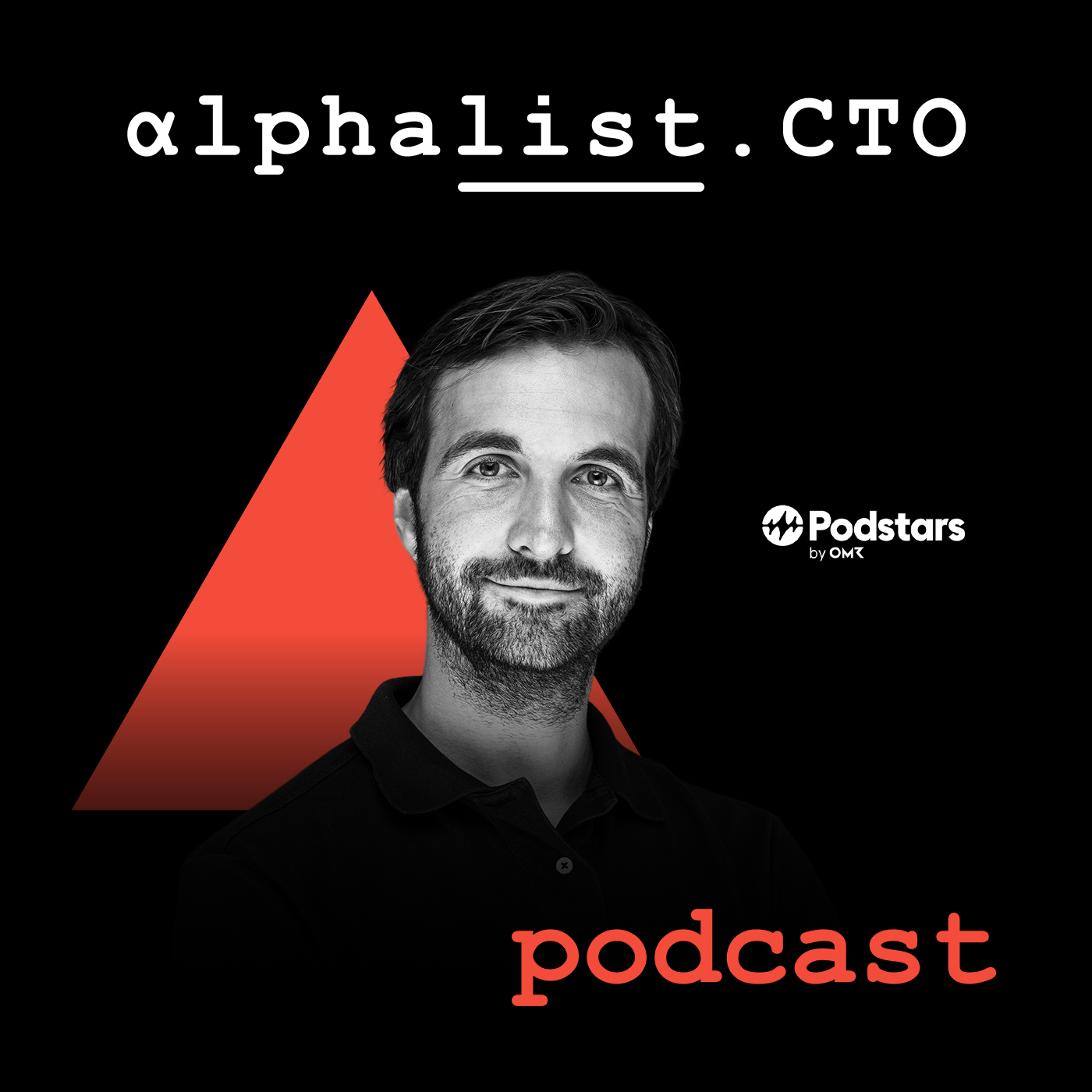
#145 "Harness Writing Is Not Hard": Build to Learn, Not to Run with David Soria Parra // Member of Technical Staff @ Anthropic
alphalist.CTO Podcast - For CTOs and Technical LeadersShow Notes
Sponsored by Blocks: Save at least 20% on your AWS costs with AI-powered optimization and enterprise discounts. Get your free Cloud Check at https://blocks.cloud/alphalist?utm_source=alphalist&utm_medium=podcast&utm_campaign=blocks-podcast-2026
David Soria Parra co-created the Model Context Protocol (MCP), the standard that now underpins most AI agent integrations, and, before that, spent years as a core contributor to Mercurial and on Meta's internal source control team. He got into programming at 13, writing a PHP guestbook for a gaming website with friends, and hasn't really stopped building since.
This conversation goes straight to the thing every CTO is quietly building right now: their own agent harness. David makes a surprisingly blunt case that harness writing itself isn't the hard part: "give it a bunch of tools, a bunch of execution steps, be a little smarter about context selection, and go," and that most companies would be better off configuring a strong existing harness than building their own from scratch. He and Tobi also dig into why the "MCP vs. CLI" debate is largely manufactured, how Meta and Anthropic both run on almost no prescribed process, and how David's own workflow has quietly shifted from local Claude Code sessions to Slack threads over the past six months.
CTOs will walk away with a clear-eyed, unhyped view of harness-building from the person who literally created the interoperability standard. Everyone argues about when building your own is worth it, what to check for in a vendor contract, and where to actually put your attention instead of endlessly optimizing your setup.
What's covered:
- David's path from a PHP guestbook at 13 to Mercurial core contributor to Meta's source control team - Biggest lessons from Meta, and how Anthropic runs on even less internal process - His personal setup: a handful of skills, a few MCP connectors, and why he's a "vanilla" tool user - Why his day-to-day workflow moved from Claude Code sessions into Slack threads with Claude - The real MCP-vs-CLI debate — and why it was never actually a debate - Should every CTO or engineer build their own agent harness? - What's still defensible in software engineering as agents get stronger
More from alphalist.CTO Podcast - For CTOs and Technical Leaders
Raffi Krikorian has built teams at scale: platform engineering at Twitter, Uber's self-driving center, and the Democratic National Committee, where he was its first CTO. Today he's CTO of Mozilla, working to make AI as open as the web, and on the side he runs three rotating Claude Max subscriptions and a GPU in his closet.
Chris Wysopal was one of the first hackers to go public. As "Weld Pond" at the L0pht hacker collective in Boston, he testified before the US Senate in 1998, where the group delivered the soundbite that they could take down the internet in 30 minutes. He also wrote the Windows version of Netcat. In 2006 he co-founded Veracode, which by his account has now analysed trillions of lines of code. Today he's the company's Chief Security Evangelist.
Charles Guillemet has spent nine years building Ledger's security organization from scratch — first as the founder of The Donjon, Ledger's in-house offensive security research team, then as CTO overseeing security for a company safeguarding roughly 20% of the world's crypto (per Tobi's intro framing).
Sponsored by Blocks: Save at least 20% on your AWS costs with AI-powered optimization and enterprise discounts. Get your free Cloud Check at https://blocks.cloud/alphalist?utm_source=alphalist&utm_medium=podcast&utm_campaign=blocks-podcast-2026
Sponsored by Blocks: Save at least 20% on your AWS costs with AI-powered optimization and enterprise discounts. Get your free Cloud Check at https://blocks.cloud/alphalist?utm_source=alphalist&utm_medium=podcast&utm_campaign=blocks-podcast-2026