Show Notes
Clive Lewis sits down with Grenada's Prime Minister Dickon Mitchell for a wide-ranging conversation on the local and international politics of reparatory justice.
From Grenada's own history to their relationship with China, what an agreement could mean for the NHS, to how money is loaned on the international stage, PM Mitchell gives frank and thoughtful answers to the themes that have cropped up throughout Heirs of Enslavement.
Producer: Rosie Stopher Production support: Edwin Frank Production Manager: Flick Heath Original music: Andre Greenidge Score and artwork: Sena Verdi Sound design: Airaphon
This is a Persephonica Production. Hosted on Acast. See acast.com/privacy for more information.
More from Heirs of Enslavement
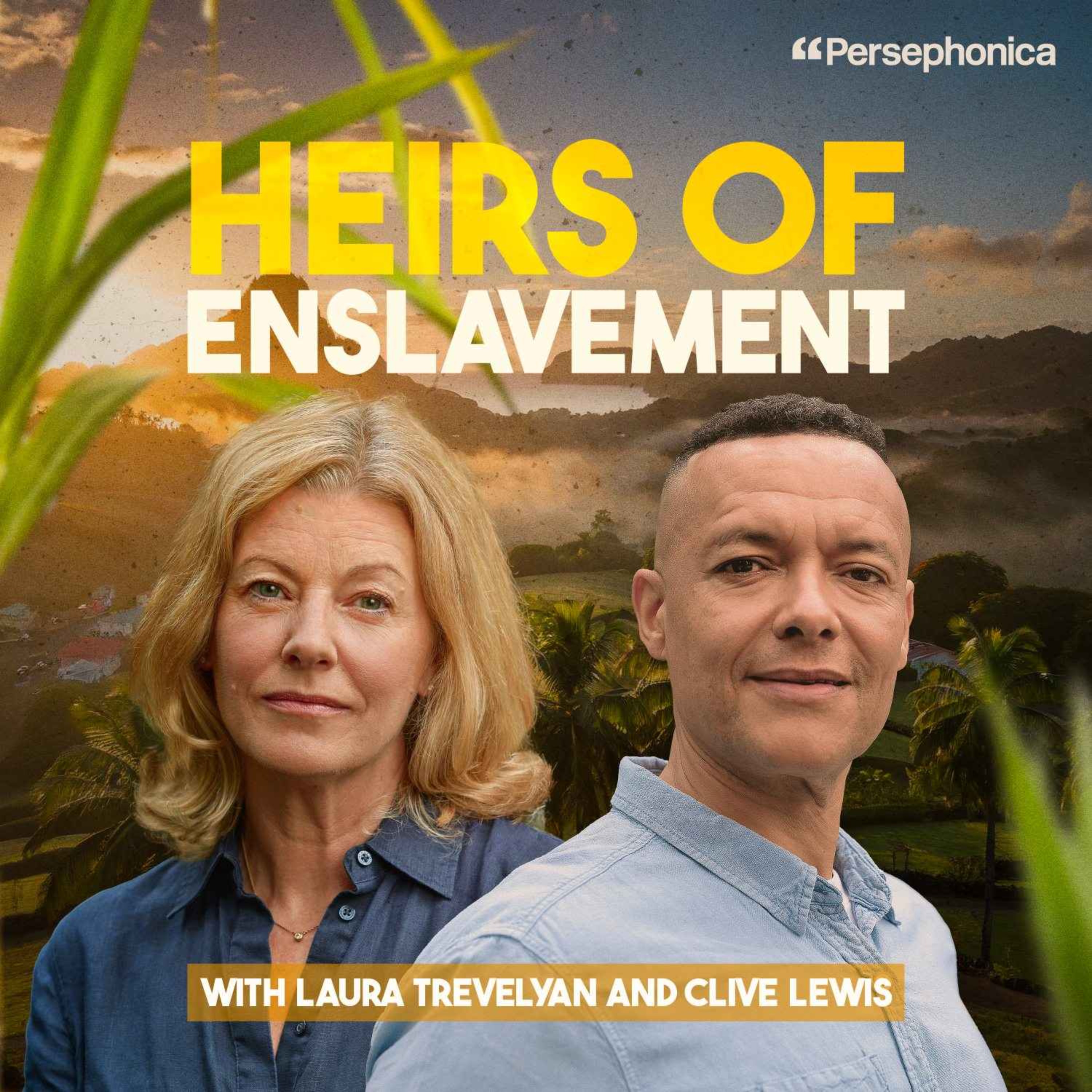
This is the story of how two Heirs of Enslavement - Clive Lewis MP, a descendent of the enslaved, and Laura Trevelyan, of the enslaver - can come together to right the wrongs of the past.
In this final episode of Heirs of Enslavement, Clive Lewis and Laura Trevelyan are reflecting on everything they’ve learned, and asking, what will happen next? Will a British government face up to the case for reparations? And if not, what could happen instead?
The West Indies is looking to the UK government for reparations, so this week, Clive Lewis and Laura Trevelyan are heading back to London, to understand the link between the Caribbean and Britain. It’s time to revisit the history of the Windrush generation - the men and women who travelled to Britain for work and to help rebuild after World War Two. Clive talks to his dad about his experience, and Professor Olivette Otele explains how the treatment of the Windrush generation adds to the call for reparations.
Clive Lewis and Laura Trevelyan have heard what Grenada and the Caribbean islands want reparatory justice to address, but now it’s time to find out whether any of those issues are moving forward.
Clive Lewis and Laura Trevelyan have heard about the legacies left behind by enslavement in the Caribbean - but what do people in the West Indies actually want reparatory justice to address?