Show Notes
You stepped out of a big, air-conditioned silver bird, out into the kind of heat, sunlight and humidity that even Americans raised in the Deep South could not believe. You would wander around, wondering where your ground transport was, and what your barracks might be like, and once the immensity of the new reality fully hit, someone with more time in-country might notice your expression and mutter, "Hey man. Welcome to the suck." When USS Maddox came under attack from North Vietnamese torpedo boats while in international waters in 1964, President Lyndon Johnson uses the incident to open the throttle on the war to contain communism in Vietnam. Advising him is a Madison Avenue Wonder Boy, using computer formulas to triangulate on an elusive victory. And a dangerous, potentially fatal fossilization of politics and military doctrine slowly but inexorably plunges the United States into its darkest years of the Cold War. Watch "Apollo 11: What We Saw" on YouTube: https://www.youtube.com/watch?v=k9BmufbVf2E Listen to "Apollo 11: What We Saw" on iTunes: https://podcasts.apple.com/us/podcast/we-choose-to-go-to-the-moon-part-1/id1471188269?i=1000444360842 Listen to "Apollo 11: What We Saw" on Spotify: https://open.spotify.com/episode/5nZzb7bUOltWKss5hY4K8U
Learn more about your ad choices. Visit podcastchoices.com/adchoices
Learn more about your ad choices. Visit podcastchoices.com/adchoices
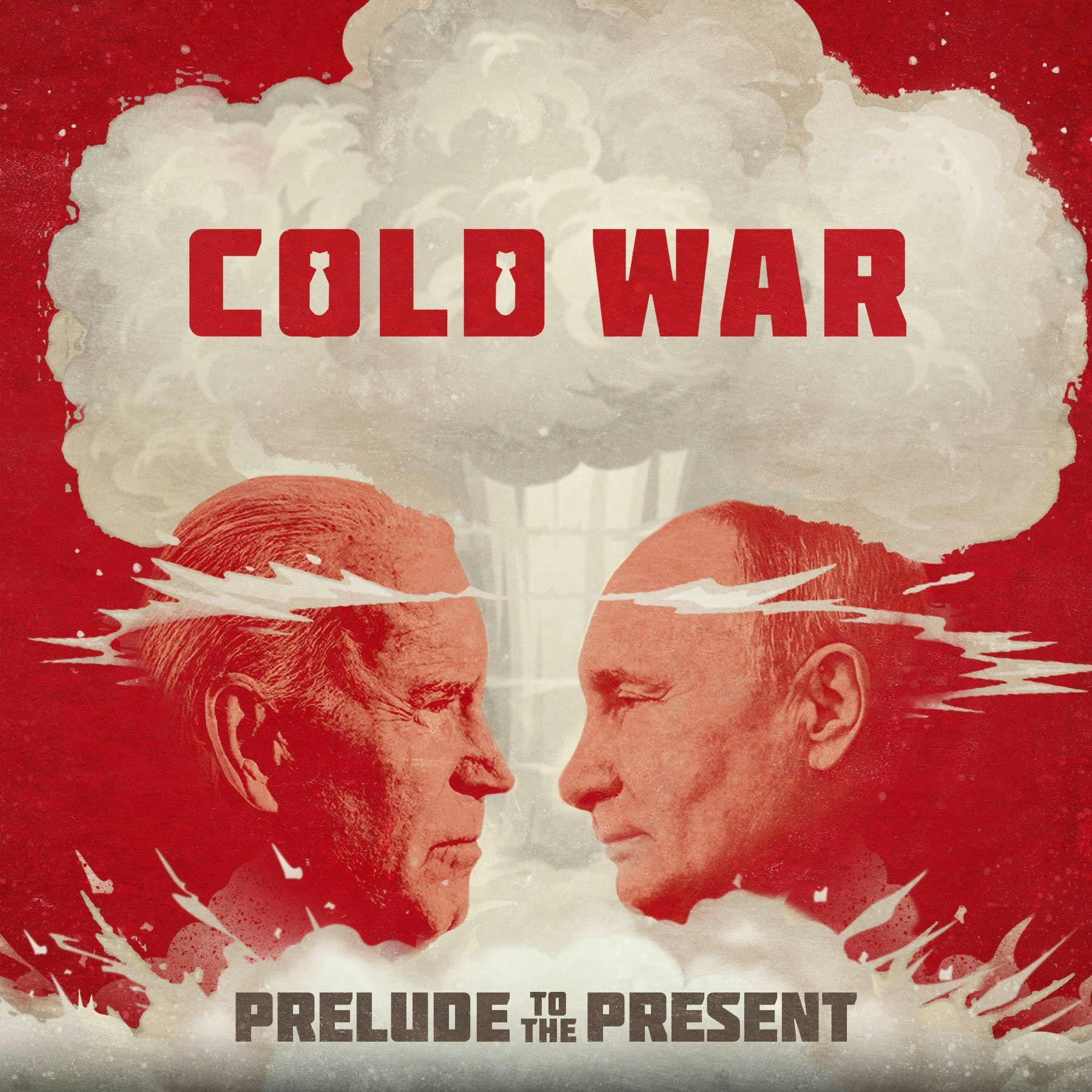
More from The Cold War: Prelude To The Present
Get ready to unpack the exciting untold history of heroes who saved America in some of its darkest hours. Subscribe NOW to America’s Forgotten Heroes on Apple Podcast, Spotify, and everywhere you listen to podcasts so you don’t miss an episode!
Nixon goes to China and in a masterstroke of diplomacy turns a two-power Cold War into three-power triangular diplomacy, giving the United States the leverage for Détente, a chance for a soft landing for the Cold War in the 1970s. But Watergate destroys not only the Nixon administration; it reduces American morale and determination to its lowest point during the entire conflict. The Soviet perception of American weakness leads to their invasion of Afghanistan, and the likelihood of nuclear Armageddon unleashed in a picturesque German town named Fulda.
A change of commanders comes too late to reverse the situation in Southeast Asia as Richard Nixon's program of 'Vietnamization' eases America out of its worst-directed war. But long before the last American serviceman leaves Vietnam, a new generation of liberators rise to the challenge of saving American tactics, weaponry and doctrine from themselves.
Mired not only in the jungles of Southeast Asia but, worse, mired in outdated, rigid doctrine, fossilized tactics, and declining morale, a light can be made out in the middle of America's darkest night. A swaggering fighter jock, married to a movie star, turns a demoralized, undertrained and under-led group of dispirited American flyers into a snarling Wolfpack that pulls off a supersonic ambush in one of the greatest military operations of all time.
With the mechanisms of apocalypse firmly in place, both sides accelerate their efforts to determine the actual capabilities of the other. No detail is too insignificant: attempts are made to recover Soviet test warheads from the bottom of the ocean. By the time USS Triton circumnavigates the globe underwater, the full potential of the nuclear submarine as the preeminent weapon of the Cold War becomes apparent. And so the ever-increasing pressure to discover how many warheads the other side has, and how they work, and most importantly, where they are, the United States and the Soviet Union diverge in regard to intelligence gathering. The massive US lead in technology leads to spy satellites, hypersonic reconnaissance planes and the most ambitious intelligence operation in human history. The Soviets, on the other hand, play to their strengths as well: the ability to turn individual human assets. One of these paths will lead to the biggest intel haul of the Cold War.