Show Notes
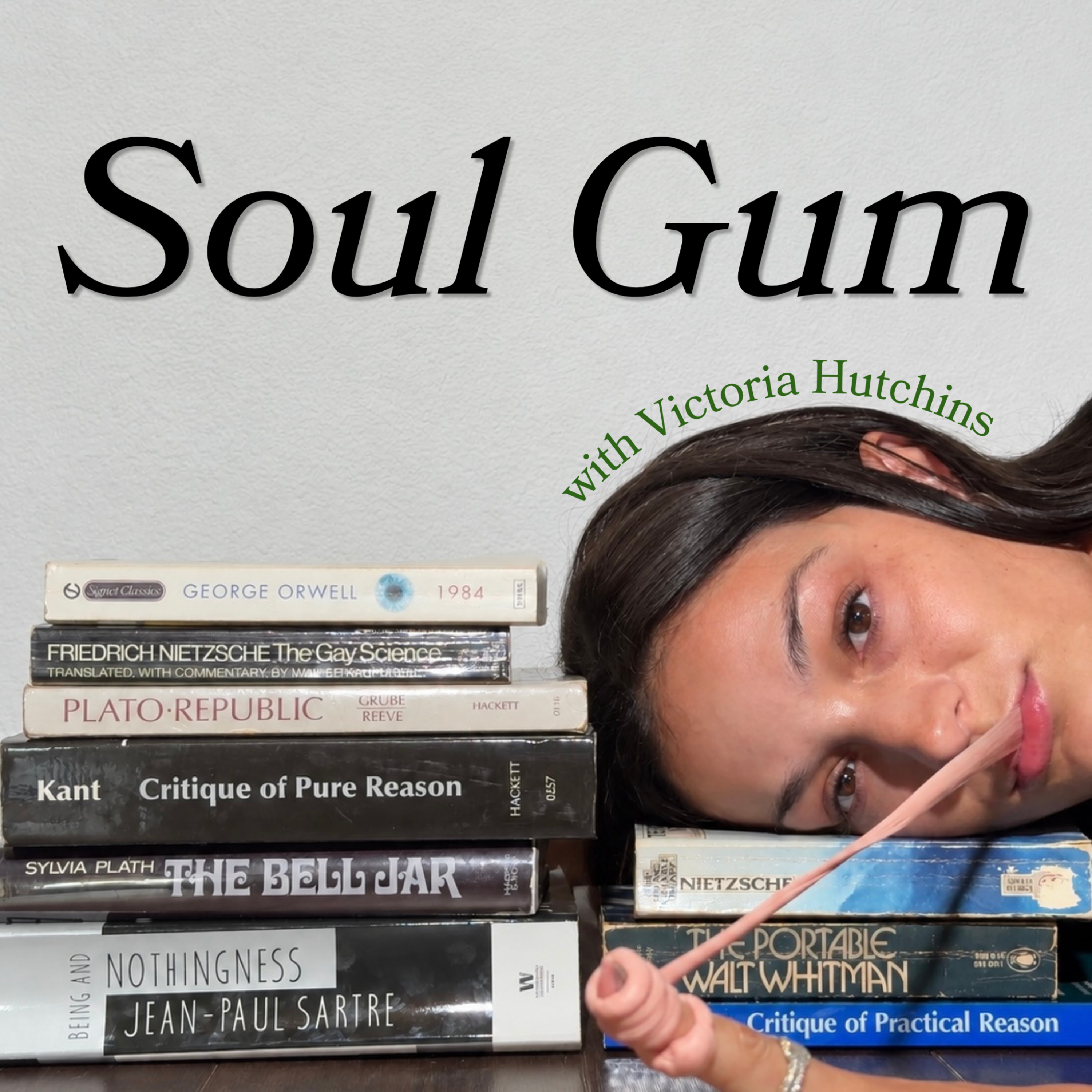
Feeling stuck, numb, or overwhelmed? Crashing out for the third time this week? Good news! Philosophy, the sad girl discipline of academia, has lots of advice for you. This episode breaks down 5 reasons why we get stuck according to philosophical greats like Franz Kafka, Soren Kierkegaard, Jean Paul Sartre, Albert Camus and more. We’ll talk about practical strategies to climb out of your spiral and start feeling like yourself again. If your search history includes ‘why am I like this’ and ‘how to feel okay again,’ press play.
EPISODE OUTLINE
00:00 Intro 04:53 You’re stuck because… 05:00 1. You’re free 05:18 The dizziness of freedom (Kierkegaard) 06:04 We’re condemned to be free (Sartre) 07:13 The fig tree allegory (Sylvia Plath) 13:21 2. You’re choosing information over experience 13:35 Mary’s Room hypothetical (Jackson) 22:49 3. You’ve outgrown a version of yourself 23:02 The Metamorphosis (Kafka) 26:54 4. You’re expecting sense in senseless places 27:04 The Trial (Kafka) 35:14 5. You think nothing matters 35:24 Mechanical life (Camus) 36:34 The moment of the absurd (Camus) 37:13 The myth of Sisyphus (Camus) 40:08 Lightning round recap
MENTIONED IN THIS EPISODE:
On Anxiety, Soren Kierkegaard (1844) Being and Nothingness, Jean Paul Sartre (1943) The Bell Jar, Sylvia Plath (1963) The Big Secret, Deepak Chopra (2008) Epiphenomenal Qualia, Frank Jackson (1982) The Metamorphosis, Franz Kafka (1915) The Trial, Franz Kafka (1925) The Myth of Sisyphus, Albert Camus (1942)
More from Soul Gum
We all have that one person who can ruin our day in less than 30 seconds. Why is it so hard to stay in our values around certain people? And how do we stop giving them so much power? In this episode, we're turning to the 19th-century philosopher Friedrich Nietzsche for five lessons on dealing with difficult people, navigating conflict, and becoming unbotherable. If you've ever let a five-minute interaction ruin your entire week, this episode is for you.
According to the existentialists, the core problem of being human is this: we are meaning-seeking creatures in a universe that is silent on meaning. But somehow, we're supposed to figure out what to major in, who to marry, and what to do with the approximately 30,000 days we get to be alive. In this episode, we walk through six levels of living a meaningful life as described by Simone de Beauvoir in her 1947 work The Ethics of Ambiguity, moving from brainrotten aimlesness to a life driven by purpose. If you want to live a life that feels meaningful but have no idea what you’re supposed to be doing with it, this episode is for you.
The manosphere wants you to think charisma is all about dominance and control. But what if it’s actually about deep presence and social courage? I don’t want to be like the guy who uses scarce communication to hide his lack of depth and fear of commitment. I want to be like the people who make you feel cool just by talking to them, while radiating charisma themselves. If you’ve ever wondered why some people can have fun talking to literally anyone, struggled to know what to say when someone asks you a question, or wished you were more comfortable saying what you actually think, this episode is for you. In today’s episode, we unpack 5 habits of highly charismatic people, from what they say when they’re getting to know someone to how they navigate disagreements. Along the way, we’ll talk about what we can learn from Socrates about swag, dive into the science of answering any question well, and use Byung-Chul Han’s concept of “the smooth” to investigate how we can stay raw and real in a world that tries to sand our edges.
Pumpkin spice apologists wya? It’s the great lock in Charlie Brown!!!!! In this episode, I’m walking you through the exact five-step seasonal planning system that dramatically changed my life a few years back. Along the way, we’ll dive into the philosophy and psychology behind why it works. We’ll talk through Nietzsche’s philosophy on habits, Simone de Beauvoir’s ideas on how to reconcile your past and future selves, the planning fallacy, and more. Whether you want to change the trajectory of your life this fall or just set up some systems to make life a little less chaotic, this episode is for you.
If your early twenties are for your Sylvia Plath fig tree allegory crisis, then your late twenties are for your Joan Didion Goodbye to All That crisis. In her famous 1967 essay, Didion writes, “That was the year, my twenty-eighth, when I was discovering that not all of the promises would be kept, that some things are in fact irrevocable and that it had counted after all, every evasion and every procrastination, every mistake, every word, all of it.”