Show Notes
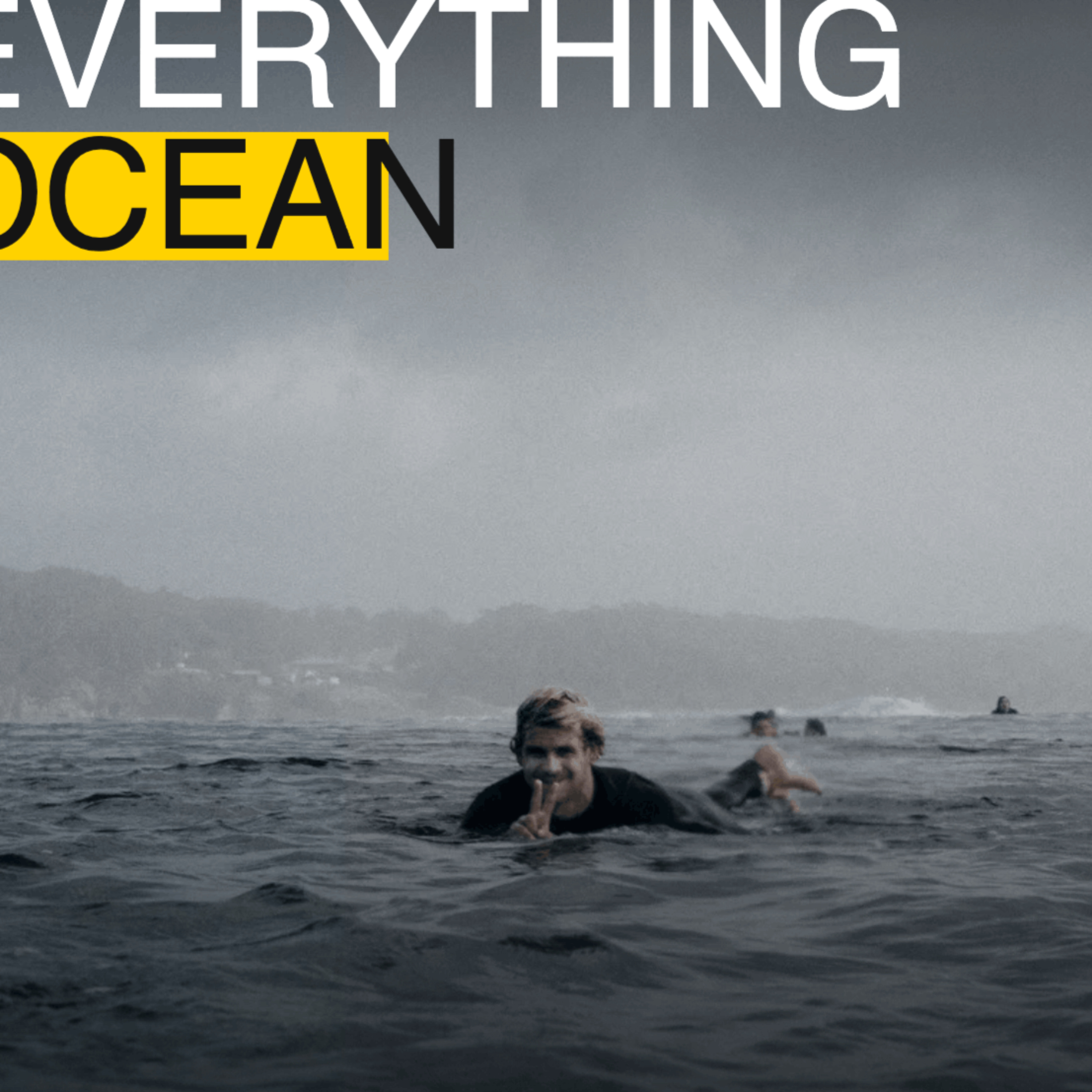
We sit down with one of Australia's most core underground watermen, Josh Ku. He recently scored wave of the day at a historic XL surf session at the central location of Deadman's surf break and we delve into the wave and moments leading to it in great detail. We also discuss growing up in Maroubra and Josh's other ocean-based specialties spearfishing and foiling.
More from Everything Ocean Podcast
In this bonus live episode of the Everything Ocean Podcast, two-time world surfing champion and former Pipeline Master Tom Carroll sits down for a Q&A recorded at DY Salty Surf School's SurfAid "Make a Wave" fundraiser. Tom opens up about the surfboard his dying mother gave him, losing a world title on a technicality, discovering breathwork through Quiksilver in 1989, overcoming addiction through daily meditation, and his longevity secrets at 64. He closes by leading the whole room through a live guided breathwork and meditation session. All proceeds from this event supported SurfAid's Make a Wave Challenge, raising funds for clean water and sanitation in remote Indonesian communities. Chapters: 00:00 Intro — SurfAid Make a Wave Challenge 01:38 How Tom got into surfing 06:20 The surfboard from his dying mother 08:40 Becoming a two-time world champion 12:10 The dream of Pipeline and Jerry Lopez 14:30 Hawaii at 16 — the raw power of the North Shore 17:40 Losing a world title on a technicality 19:00 Discovering breathwork and yoga in 1989 28:40 Overcoming addiction through meditation 31:55 Longevity tips at 64 35:50 Live guided breathwork & meditation with the room
This week on Everything Ocean, I sit down with Shanan, who grew up fishing, diving, surfing and shell collecting around Esperance, WA, before becoming a commercial abalone diver as a teenager. We talk about growing up in that remote pocket of Australia, buying a 21-foot boat with twin 85s at 16 without a licence, learning to tow surf and spending years diving in shark-heavy waters. Shanan then recounts the 2013 day fellow abalone diver Greg Pickering was attacked by a great white near Esperance, including the hours-long rescue mission to get him help. Greg survived and still dives today. Shanan also opens up about the mental-health toll of the attack, another close encounter and the later death of his friend Chris Boyd. Those experiences led him to create Shark Eyes—a low-cost, non-invasive shark deterrent using eye-spot stickers and the principle that predators rely on surprise. We discuss the theory behind it, the Botswana “eye-cow” study and Shanan’s views on drone programs, drum lines, shark tagging and changing white shark behaviour. Content note: This episode includes a graphic account of a shark-attack injury. The person involved survived and is doing well today. Shark Eyes: https://www.sharkeyesglobal.com/ https://www.instagram.com/sharkeyesglobal/ Boardsox: https://www.boardsox.com.au/ https://www.instagram.com/boardsox/ Surf coaching and tours: https://www.deewhysaltysurfschool.com.au/ https://www.saltysafaris.com.au/ Got a guest we should talk to? Drop them in the comments. Timestamps: 0:00 — Intro 0:20 — Growing up in Esperance 1:50 — Leaving school at 15 and buying a boat at 16 4:40 — Spearfishing, scuba and the Esperance Archipelago 7:00 — Discovering big-wave and tow surfing 11:00 — Learning to tow in Tasmania and King Island 16:00 — Starting commercial abalone diving 19:20 — First great white encounter at 15 20:00 — Why white shark encounters feel different 20:15 — Greg Pickering’s 2013 shark attack (graphic detail) 25:00 — The improvised, hours-long rescue 28:30 — Greg’s survival and return to commercial diving 30:00 — The mental-health toll and Chris Boyd’s fatal attack 34:00 — Heather finds Shanan gluing eyes onto a wetsuit 38:30 — Eye spots, biomimicry and the element of surprise 39:00 — Professor Neil Jordan’s “eye-cow” study 43:00 — Building Shark Eyes into a business 47:00 — Testing, formal proof and government pushback 50:00 — The upcoming Shark Eyes documentary 53:00 — Shark drones, alerts and public complacency 55:30 — WA’s lethal and “smart” drum-line programs 58:00 — Do great whites learn to target people? 60:00 — Shark tagging and possible behavioural changes 63:30 — Don’t live in fear: get educated and prepared 65:00 — Where to find Shark Eyes and outro
Grant Williams (@surfingwithgrant) is a surf coach, retreat host and one of the most relatable surf content creators going around. In this episode we break down the real progression path from beginner to advanced — why almost everyone drops to a smaller board too early, the one paddling "cheat code" that fixes half your surfing, and how to actually manage fear when the waves get bigger. Grant also opens up on the early, cringe-worthy days of building an audience and why he stopped caring what the haters think.
Mike Psillakis is a Northern Beaches surfboard shaper whose twin brother Mercury was killed by a white shark at Dee Why, the first fatal shark attack on Sydney's northern beaches in around 80 years. I was working at Dee Why Beach that day. We talk about growing up together, the connection twins share, the day everything changed, and how Mike and his family turned grief into action, becoming a driving force behind the NSW drone shark-spotting program with Surfing NSW and the state government. We also get into why shark activity along the coast has shifted, bull sharks vs great whites, what's actually working to keep people safer, and Mike's take on where shark mitigation should go next. Content note: this episode discusses a fatal shark attack and grief. Boardsox: ocean-first apparel and boardsox. https://boardsox.com.au/ Surf coaching: Dee Why Salty Surf School / Salty Safaris. https://www.deewhysaltysurfschool.com.au/ https://www.saltysafaris.com.au/
Sydney has had a run of shark bites over the past six months, and the headlines — and social media — have been loud about it. So we sat down with someone who actually has the data. Dr. Robert Harcourt is an Emeritus Professor at Macquarie University and leads Australia's Integrated Marine Observing System (IMOS) animal tracking facility — a federally funded program that has tagged and tracked 180 species of fish, including every dangerous shark species in Australian waters, for the past 20 years. He's also a lifelong surfer and diver who's in the water most days. In this episode we cover: Why the "bull sharks are exploding in numbers" narrative doesn't hold up against 20 years of tagging data The vested interests behind some of the loudest voices in the shark conversation Why you're statistically far more likely to drown than to be bitten by a shark — and why that doesn't make the fear irrational The dawn-and-dusk hunting myth (it's wrong) Bull sharks vs. tiger sharks vs. white sharks — how to tell them apart by behaviour and season Shark nets vs. smart drumlines vs. AI-powered drones — what actually works, and what doesn't The real history behind Sydney's shark net program (Coogee and Malabar in the 1930s) Why the ocean is warming faster than models predicted, and what that means for the East Coast A genuinely hopeful stat: humpback whale numbers off Australia's East Coast have gone from ~500 to ~50,000 since whaling was banned Rob's rule of thumb after 40 years in and around the ocean: "If it feels sharky, get out. You can always surf another day." 🎙️ Follow Everything Ocean for more conversations on the science, stories, and people behind our relationship with the sea. 🏄 Boardsox — boardsox.com 🏄 Surf coaching — DIY Salty Surf School / Salty Safari Surf Tours