Show Notes
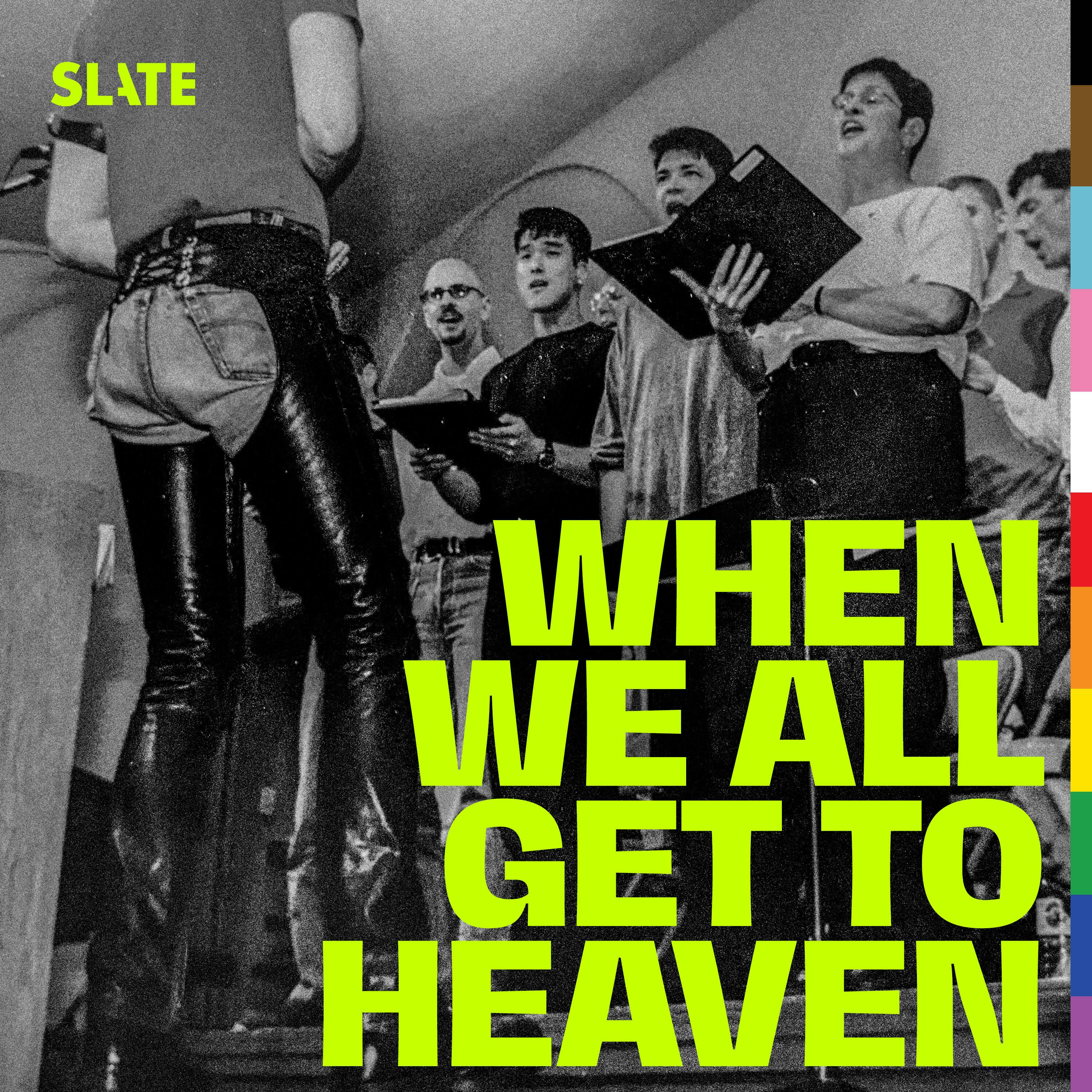
Slate and the team at Eureka Street Productions are so honored by this award and want to thank everyone who has listened to and supported the show. This series tells the story of the Metropolitan Community Church of San Francisco, one of the first gay-positive churches in America, and how its congregation faced the AIDS epidemic, including the deaths of hundreds of its members.
At the heart of the series is a remarkable discovery: 1,200 cassette tapes of sermons, memorials, and music recorded inside the church during the worst years of the crisis. A church member rescued them after they'd been thrown away. What you hear isn't people reconstructing the past from memory, it's the actual voices from inside the crisis, preserved on tape and brought to life across 10 episodes. It's a story about resilience, the strength of community, and finding beauty and hope even in the darkest of times—a message with powerful resonances decades later.
To celebrate this award, Lynne Gerber, the host of the show, recorded a special note to listeners, and we are bringing back the trailer to introduce new listeners—who are just finding When We All Get to Heaven from the Peabody Award—to the show. Hosted on Acast. See acast.com/privacy for more information.
More from When We All Get To Heaven
If you’d like to support our podcast and show everyone how important and impactful this story is, we hope you will take a moment to vote for us for The Signal Listener’s Choice Award by going to vote.signalaward.com/publicvoting.
As When We All Get to Heaven wraps up, Christina sits down with series host Lynne Gerber and producer Siri Colom. They discuss how the church has changed, the value of fleeting queer spaces, and what a decade or more spent working on this story has meant to—and taught—them. Get more Outward with Slate Plus! Join for weekly bonus episodes of Outward and ad-free listening on all your favorite Slate podcasts. Subscribe from the Outward show page on Apple Podcasts or Spotify, or visit slate.com/outwardplus for access wherever you listen. Produced by Palace Shaw and Merritt Jacob. Hosted on Acast. See acast.com/privacy for more information.
In the final episode of When We All Get to Heaven, we catch up on what’s happened in the many years between the emergence of effective treatment for AIDS in the late ‘90s and the fall of 2025, when we recorded this episode. We linger on a moment back in June 1999, when Jim was still pastor and called on the church to remember that AIDS wasn’t over. Because—advances notwithstanding—it still isn’t over. For more on Gilbert Baker and the history of the rainbow flag see the Gilbert Baker Foundation. For more on Prep see San Francisco AIDS Foundation, What is PrEP? “The Path that Ends AIDS: 2023 UNAIDS Global Update” outlines a possible end to the AIDS epidemic.
In 1996 everything changed. With the introduction of antiretroviral medications called the “AIDS cocktail,” people started getting better – some dramatically – and surviving AIDS became a real possibility. In the wake of these changes, MCC found itself taking stock of what they lost to AIDS and using what they learned to address larger social issues– from medical marijuana to homelessness. Sometimes these political stances felt heroic and a way to use that collective energy, and other times it made the church very unpopular with the changing Castro neighborhood.
In 1995 Rev. Jim Mitulski became HIV positive -- what's known as seroconversion. It was 14 years into the epidemic and people knew what HIV/AIDS was, how you got it, and how you could prevent it. And when Jim got sick, he got very sick. What was it like to become ill so publicly? How would the church and the community respond? And what could Jim possibly preach about on his first Sunday back? “My Soul Doth Magnify” is from Camille Saint-Saens’ Christmas Oratorio, Op. 12, 1858. “The 23rd Psalm (Dedicated to My Mother)” is by Bobby McFerrin. The biblical story of the death of the prophet Elijah is in Second Kings, chapter 2.