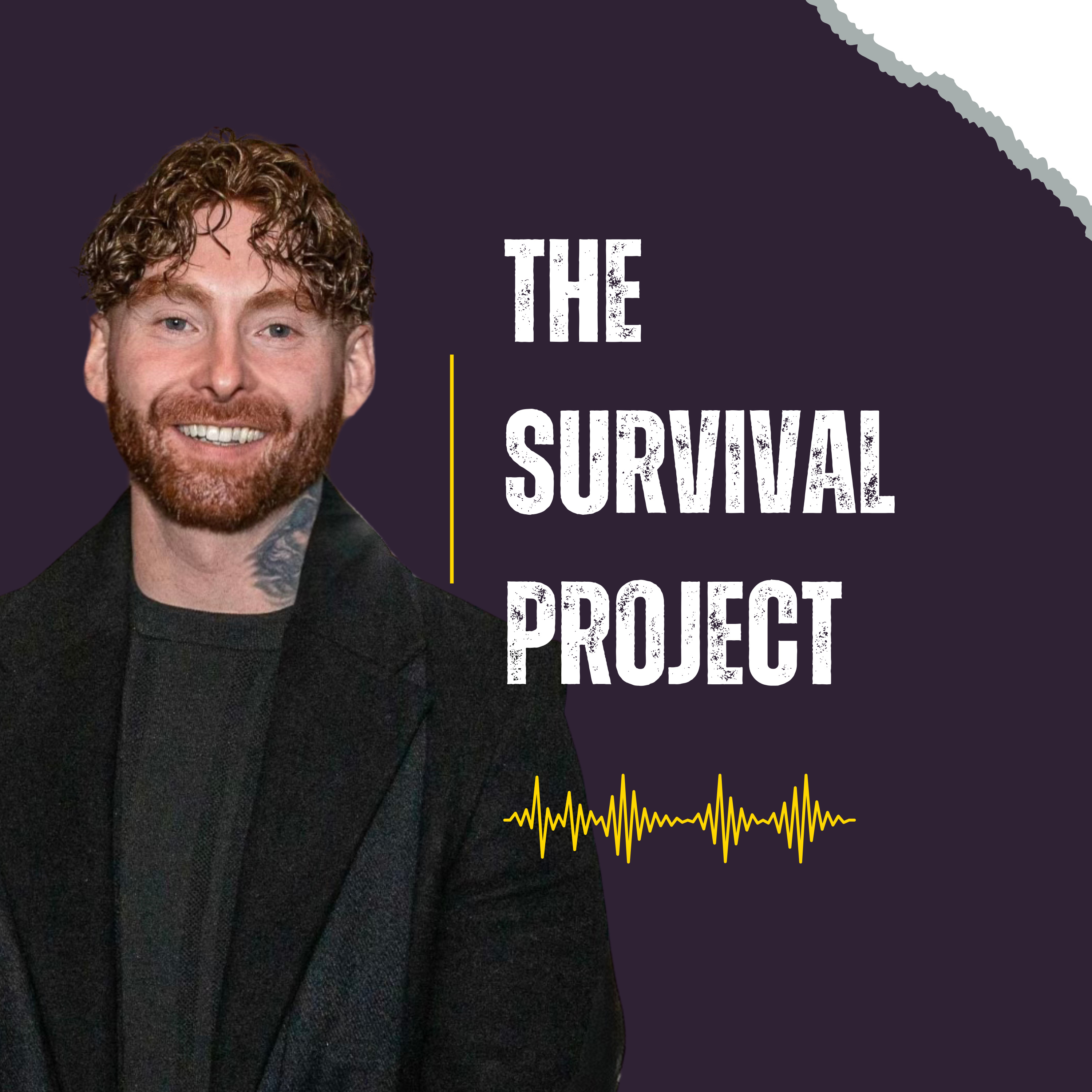
030 - “I Turned My Chronic Illness Into A Career”, Turning Pain Into Purpose - Oliver Achard Ravn
The Survival ProjectShow Notes
In Episode 30 I sit down with Oliver for a powerful and honest conversation about chronic illness, identity, isolation, and purpose. Oliver shares his journey of first developing psoriasis as a teenager before later being diagnosed with IBD during the chaos of 2020. He speaks openly about the long and frustrating road to diagnosis, the fear and trauma of hospitalisation, and the mental strain of trying to make sense of a body that suddenly feels unpredictable. We also go deep into the ripple effect of chronic illness, not just on the person living with it, but on parents, partners, friends, and the people trying their best to understand what they cannot fully see. A major part of this episode is Oliver’s work with Chronicare, a platform he created to help people living with Crohn’s disease, ulcerative colitis, and IBD feel less alone, track symptoms more clearly, and take more control in the time between hospital appointments. It is a brilliant example of turning pain into purpose. This episode touches on: Psoriasis and IBD
Crohn’s disease vs ulcerative colitis
Delayed diagnosis and medical frustration
Hospital trauma and mental health
Communication with family and loved ones
Living with flare-ups and uncertainty
Building purpose through chronic illness
Creating a better support system for people with IBD
This is a conversation about patience, perspective, and slowly learning how to build a life around something you never asked for. If this episode resonates with you, please share it with someone who might need it. Search "Chronicare" in the app store or google play.
More from The Survival Project
At just nine weeks old, Luke's heart was failing, and his parents were told he might not survive. This week on The Survival Project, I'm joined by longtime friend Cillian Myles, who shares the extraordinary story of his son Luke's fight for life. What began as a hospital visit in Galway quickly escalated into a medical emergency, leading to a transfer to Crumlin Children's Hospital and eventually Newcastle, where Luke would spend ten months waiting for a donor heart. Cillian opens up about the unimaginable decisions he and his wife Leisha faced, the emotional toll of living in a hospital, losing his own father during Luke's fight for survival, and the incredible support of a community that rallied around their family. We also explore the realities of childhood heart transplantation, the importance of advocating for your loved ones, and the extraordinary generosity of organ donation. Today, Luke is nearly five years old and thriving, a little boy whose story is a powerful reminder of the importance of hope, community and never giving up. Above all, this episode is a tribute to the donor family whose selfless decision, made during unimaginable grief, gave Luke a second chance at life. Your story could be someone else's survival guide.
The Forgotten Children: Trafficking, War & the Fight for Human Rights What happens to the world's most vulnerable children when war breaks out? And who is fighting to protect them? In this episode of The Survival Project, I'm joined by Kirsten Larson, a PhD researcher at the Irish Centre for Human Rights at the University of Galway, specialising in child trafficking and armed conflict. Kirsten's research focuses on northeast Syria and northeast Nigeria, exploring how children are recruited, exploited and trafficked by armed groups, and the international laws designed to protect them. We explore the realities of child trafficking beyond what we see in films and the media, from child soldiers and forced marriage to the exploitation of children who have lost the safety and protection of their communities. We also discuss the challenges facing humanitarian organisations, the impact of funding cuts, the treatment of refugees and the extraordinary people dedicating their lives to protecting human rights. But beyond the difficult realities of Kirsten's work, we ask a much deeper question: After spending years studying some of the darkest sides of humanity, does she still believe that people are inherently good? This is a conversation about the people too often forgotten in conflict, the importance of understanding lives different from our own, and why there is still reason to believe in humanity. 🎙️ The Survival Project Your story could be someone’s survival guide. For more conversations about international human rights, check out The Human Rights Podcast, produced by Kirsten at the Irish Centre for Human Rights. https://open.spotify.com/show/72JjYJeiyphvH7ynaJTUHd?si=75176655a9474eafhttps://www.universityofgalway.ie/irish-centre-human-rights/https://ichrgalway.org/2024/10/04/un-special-representative-of-the-secretary-general-for-children-and-armed-conflict-and-un-special-rapporteur-on-trafficking-in-persons-especially-women-and-children-launch-study-on-child-traffickin/
Coma to Comeback: Everything Feels Impossible Until It’s Done On October 11th, 2024, Vincent Van den Broeck was struck by a car while riding his e-scooter in Brussels. He suffered multiple fractures and major brain trauma, spent three weeks in a coma and was given very little chance of survival. But surviving was only the beginning. In this episode of The Survival Project, Vincent takes us through the long road back. From being unable to walk and depending on his wife for the most basic parts of everyday life, to rebuilding his confidence, independence and identity. We talk about the extraordinary role his wife played throughout his recovery, why Vincent believes “resilience is a muscle,” learning to speak louder than the voice telling you to quit, and why he describes the accident not as life-changing, but life-affirming. Vincent also shares the philosophy behind his new book, Everything Feels Impossible Until It’s Done, and why the word “feels” might be the most important part of that sentence. Because something feeling impossible doesn't mean that it is. Sometimes, the only thing you can control is whether you keep doing. 📖 Everything Feels Impossible Until It’s Done launches October 11th, exactly two years after Vincent's accident. Pre-order: https://linktr.ee/vincentinthekitchen?utm_source=linktree_profile_share<sid=a021ff2b-11de-4e02-a1aa-882d42e4f852 Follow Vincent: @vincentinthekitchen 🎙️ The Survival Project Your story could be someone’s survival guide. IG: @thesurvivalprojectpod @jonathanjhealy
What does good stoma care actually look like, and why does it still matter whether you’ve had your stoma for three weeks or thirty years? In Episode 53 of The Survival Project, I’m joined by experienced stoma care nurse Anna Bergin for a conversation about the journey from life-changing surgery to life-changing independence. Anna takes us inside the role of a stoma nurse, from those overwhelming first days after surgery to rebuilding confidence, becoming independent with your care and getting back to living your life. We discuss skin health, leaks, pouch fit, changing products, why annual stoma reviews matter and some of the simple mistakes that can cause problems even years after surgery. But this conversation also takes us far beyond everyday stoma care. Anna shares the heartbreaking story of a Ukrainian woman who lived with a stoma for more than 30 years without access to appropriate products or specialist support, and the simple moment she finally realised she could say: “I can close the window at night.” We also discuss the inequalities that still exist in stoma care around the world, Anna’s upcoming charity work in Kenya, donating unused stoma supplies and why access to the right products and support can mean far more than simply managing a stoma. It can mean dignity, confidence and independence. Whether you’re new to stoma life, have lived with one for decades, support someone with a stoma or work within stoma care, there is so much to take from this conversation. This episode is proudly supported by Hollister. A massive thank you to Hollister for supporting these conversations and helping me continue to share honest stories about the realities of life with a stoma. To check out the Cera Plus range mentioned, follow the link below https://link.hollister.com/4ygS1SM
At just 17 years old, Sophia Haden was diagnosed with ulcerative colitis. Only a few months later, she underwent life-changing surgery and found herself learning to live with a stoma. In Episode 52 of The Survival Project, Sophia joins me for an incredibly honest conversation about illness, body image, mental health and what happens when your life changes before you've really had the chance to figure out who you are. We talk about going from diagnosis to surgery within months, missing the milestones her friends were experiencing, learning to care for a stoma and the complicated emotions that followed. Because Sophia was grateful. Her stoma saved her life. But that didn't mean she had to be happy about what happened to her. We explore the pressure ostomates can feel to constantly be positive, the grief that can exist alongside gratitude, and why accepting your stoma doesn't mean you have to love it every single day. Sophia also shares how finding other ostomates online helped change her perspective and ultimately inspired her to start sharing her own story. Today, three years after her first surgery, she has graduated from university, qualified as a physiotherapist and is learning to approach her stoma as simply another part of her life rather than something that defines her. As Sophia puts it: “Don't let it define you, but be proud of it.” SUPPORTED BY HOLLISTER This episode of The Survival Project is proudly supported by Hollister. A massive thank you to Hollister for supporting these conversations and helping me continue to share honest stories about the realities of life with a stoma. https://link.hollister.com/4ygS1SM