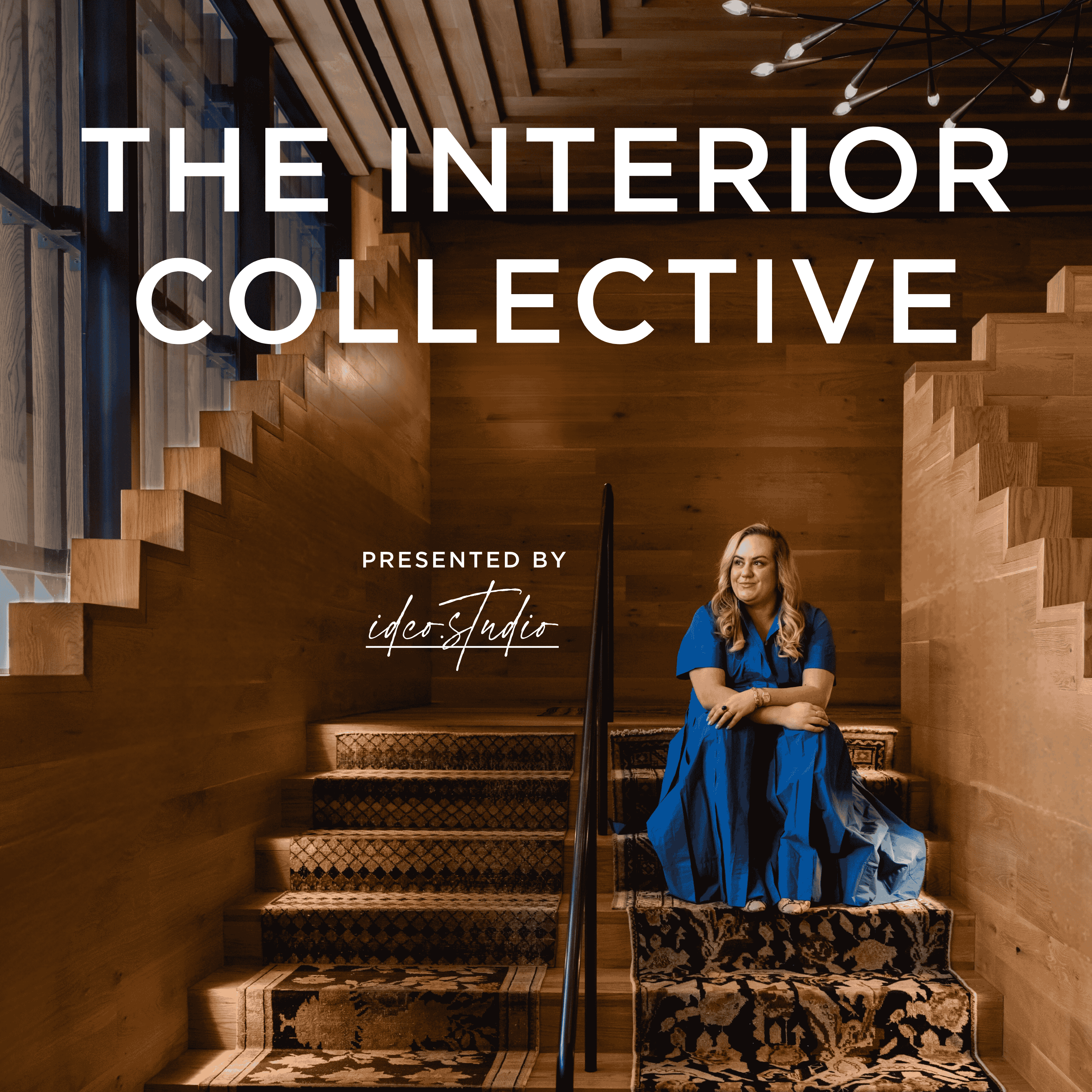
Designing for the Long Game: Scaling Without Starting Over with Imparfait Design Studio
The Interior CollectiveShow Notes
Season 7 of The Interior Collective Podcast is brought to you by Materio.This episode is brought to you in partnership with Loloi.An operating system built specifically for design projects—from start to finish. That’s what Materio is.From concept to handoff, client billing to procurement—it’s one connected workflow. Try it for free.It’s intuitive. It’s fast. The Interior Collective listeners get 50% off their first month. Just head to getmaterio.com to claim the offer. Subscribe now at patreon.com/theinteriorcollective Today on The Interior Collective, I’m joined by husband and wife team Rebekah Zaveloff and Nick Nichols, the founders of KitchenLab Interiors and Imparfait Design Studio. With a shared background in hospitality and a deep appreciation for art, culture, and design, their work is soulful, layered, and rooted in storytelling. Rebekah’s foundation in fine arts and set design has shaped her process-driven approach, while Nick’s early career in the restaurant world—and later, in real estate and renovation—fueled their shared passion for creating spaces where people truly want to linger. Together, they launched KitchenLab Interiors more than 20 years ago before expanding into full-service interiors with Imparfait. In this conversation, we’re diving into what it’s really taken to build and sustain two successful design studios, including their pivotal decision not to rebrand—and why that choice paid off in the long run. We’ll also explore how they’ve scaled through economic shifts, refined their client experience, and marketed their work for lasting growth. If you’ve ever wondered how to evolve your business without losing your momentum, this episode is for you.
More from The Interior Collective
Season 9 of The Interior Collective Podcast is brought to you by Materio. This episode is brought to you in partnership with Loloi. Hi, welcome back to The Interior Collective. I'm your host, Anastasia Casey and I'm once again joined by Amber Lewis, founder of Amber Interiors, a studio that has grown from a small residential practice into a brand with hundreds of employees and a footprint that spans design, retail, and media. What's notable about Amber's path isn't just the scale, it's her signature design work has remained central to the business even as the company around it has expanded well beyond it. In this conversation, we're getting into the mechanics of staying close to the creative product at that size: how she protects her point of view on projects, what design still contributes to the business financially, and whether taking on more design work remains a priority as the brand diversifies. We'll also talk about her own home renovation, working with brand partners inside her own space, her newly launched third book “Interiors”, and what her team structure looks like day to day to make room for all of it. This is a conversation about staying hands-on without doing it all yourself.
Season 9 of The Interior Collective Podcast is brought to you by Materio. This episode is brought to you in partnership with Loloi. Welcome back to The Interior Collective. I'm your host, Anastasia Casey, and today someone very special is back for another conversation. Marie Flanigan has been a part of this show since the very beginning. She was our first-ever guest on Season 1 of the podcast, has been on again since, and is someone whose work and industry leadership I deeply admire. For anyone new to Marie, she is the founder of Marie Flanigan Interiors, a Houston-based full-service residential design studio with projects spanning the country. Originally trained as an architect, her work is known for its soulful restraint, its mastery of light, and a layered warmth that feels deeply personal to every client. She has been featured in countless shelter publications and has published two books, and has brand collaborations with Visual Comfort and Annie Selke. All of that requires an enormous amount of photography, videography, and content. And today we are getting into exactly how she manages and delegates content creation of this scale. How her team plans a shoot, coordinates a photographer and videographer on the same project, how she thinks about licensing and rights, how brand partners factor into the production, and more. If photography has ever felt like the last thing you figure out on a project, this conversation is going to reframe things entirely.
Season 9 of The Interior Collective Podcast is brought to you by Materio. This episode is brought to you in partnership with Loloi. Hi everyone, and welcome back to The Interior Collective. I'm your host, Anastasia Casey, and today I'm sitting down with Ali Henrie, founder of Ali Henrie Interiors, based in Utah. Most designers think about builders as a logistical relationship. Someone to coordinate with, someone to negotiate around, someone to manage. Ali Henrie thinks about builders as one of the most valuable business relationships a designer can have, and she has the pipeline to prove it. Before Ali launched her own studio, she worked directly for a builder as their in-house designer. That experience gave her a genuine understanding of how builders think, what they need, what slows them down, and what makes a designer genuinely easy and valuable to work with. When she eventually launched her own firm, she took everything she learned on that side of the table and built a system around it. Today, builders are one of Ali's biggest drivers of new clients. She has cultivated deep relationships with luxury builders across Utah, serves on the Utah Valley Homebuilders Association, and has chaired the Parade of Homes Committee, which means she is not just working alongside this community, she is embedded in it. In this episode, we are getting into exactly how she did it. What builders actually need from a designer, what designers often get wrong about that relationship, how Ali has built a system that makes her easy to work with, and how those relationships have compounded into a client pipeline. If you have ever wanted to crack the builder market, or if you have builder relationships that have never quite turned into the business you hoped, this conversation is going to give you a completely different way of thinking about it.
Season 9 of The Interior Collective Podcast is brought to you by Materio. This episode is brought to you in partnership with Loloi. Welcome back to The Interior Collective. I'm your host, Anastasia Casey, and today Melissa Oholendt of Oho Interiors is back for her second conversation on this show. Melissa launched Oho Interiors in 2019 after a career that moved from corporate finance to wedding photography to interior photography to design. She has been featured in Architectural Digest, House Beautiful, Rue, Homes and Gardens, and the Wall Street Journal. She runs a nine-person studio spread across offices in Minneapolis and Black Forest, Colorado. We have covered trade vendor relationships and procurement with Melissa before, and I encourage you to go back and listen to that episode. But today we are talking about how she has grown this firm, the strategy behind it, what she has done well, what she has gotten wrong, and most importantly, the philosophy that underpins all of it: the idea that the best sales process is one the client never feels is happening. From her social media and marketing all the way through to the final client experience, Melissa has built a system that creates trust and buy-in at every touchpoint. Today she is going to walk us through exactly how that works.
Season 9 of The Interior Collective Podcast is brought to you by Materio. This episode is brought to you in partnership with Loloi. Welcome back to The Interior Collective. I'm your host, Anastasia Casey, and today's guest needs absolutely no introduction - Shea McGee is back. For those of you who were with us in Season 1, you know we had Shea on back in 2022, and that episode remains one of the most listened-to conversations in the show's history. A lot has happened since then. McGee & Co. has grown into one of the most recognizable home furnishings brands in the country. There have been books, major brand collaborations with Kohler, Ann Sacks, Target, The Shade Store, and more. And her debut cookbook, Around the Table, just released this spring. But what I find most fascinating about Shea's story is not the scale of what she has built, it’s how she built it. Before there was a team, a Netflix show, or a product line, there was a blog with a consistent and deliberate way of showing up that made people feel like they knew her before they ever reached out. That instinct didn’t just build an audience, it built a brand where the right clients arrive already sold. That is exactly what we are unpacking today. What it means to build a brand-led studio, the editorial decisions that create authority before anyone picks up the phone, how the client conversation changes as your brand grows, and what Shea's return to writing on Substack says about the staying power of long-form content. There are lessons in Shea's evolution that apply to designers at every stage.