Show Notes
Windows That Close: How the Early Modern Middle East Warns Us of the Dangers of Institutional Choices
A window can open onto the world. It can also close—sometimes for centuries.
In this episode, we discover what happens when a civilization that had been at the forefront of scientific thought decides to turn its back on its own inventions.
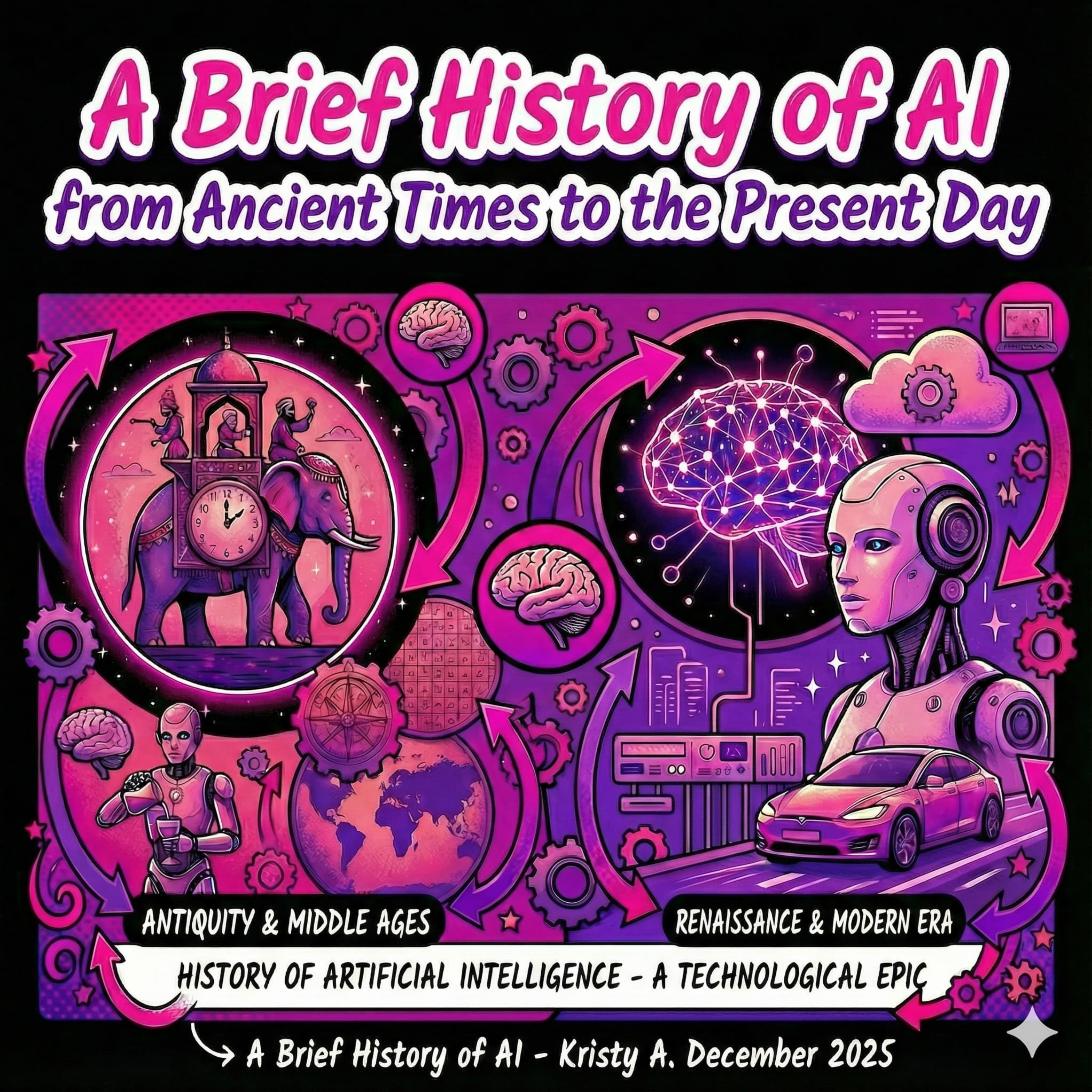
In 1577, Ottoman astronomer Taqi al-Din completed in Istanbul an observatory comparable to that of Tycho Brahe in Denmark. He was no ordinary man. He had invented an observation clock with three dials—hours, minutes, seconds—a revolutionary precision. He was the first to use decimal notation rather than the sexagesimal fractions inherited from the Babylonians. And he had designed a rudimentary steam turbine—two centuries before the Industrial Revolution.
Then a comet appeared. Taqi al-Din predicted it heralded glorious conquests. A plague struck the empire instead. The religious leader—the şeyhülislam—issued a decree: countries possessing observatories were struck by catastrophes. In 1580, three years after its completion, the Istanbul observatory was demolished.
You will discover the history of Ottoman printing. In 1493, Jewish refugees from Spain established a Hebrew press in Istanbul. But for Muslims, printing in Arabic characters remained forbidden for two hundred fifty years—until Ibrahim Muteferrika in 1729. While printing transformed Europe, the Ottoman world remained apart from this information revolution.
And yet, innovation continued elsewhere. Persian astrolabes of the Safavid era were judged "better and more precise" than their European equivalents. Mughal celestial globes, cast using lost-wax without welding, still astonish experts. Talent had not disappeared. What was lacking was an environment to protect it.
The Early Modern Middle East bequeaths us a warning: governance matters more than individual talent. Institutional choices determine civilizational trajectories. Windows closed at the wrong moment can have consequences lasting centuries.
More from A brief history of AI from ancient times to the present day
What the Deep Learning Revolution Teaches Us: Conclusion and opening toward the future
Archipelago of Innovation: How Australia seeks its place in the AI revolution
Silicon Gardens: How the desert became an artificial intelligence laboratory
Rule and Exception: How Europe regulated AI and made Mistral emerge from the improbable
The New Center of Gravity: How Asia became the beating heart of global artificial intelligence