Show Notes
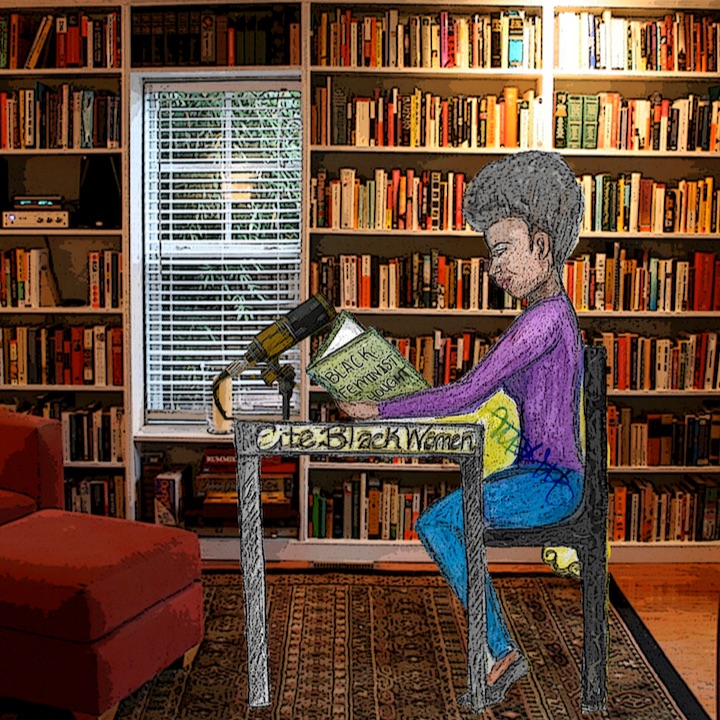
In this special episode of the Cite Black Women Podcast—our first in Portuguese— host Christen Smith talks with poet and activist Elizandra Souza of São Paulo, Brazil.
Elizandra Souza é uma das referências em literatura negra produzida nas periferias de São Paulo, com uma trajetória de 18 anos de ativismo cultural. é escritora, poeta, jornalista formada em Comunicação Social pela Universidade Presbiteriana Mackenzie e técnica em Comunicação Visual pela Etec Carlos de Campos. É ativista cultural há 18 anos com ênfase na difusão do jornalismo cultural da Periferia e da Literatura Negra Feminina. Integrante fundadora do Sarau das Pretas desde 2016. Autora dos livros de poesias: Águas da Cabaça (2012) e Punga co-autoria Akins Kintê, Edicões Toró (2007). Editora do Coletivo Mjiba dos livros: Águas da Cabaça (2012), Pretextos de Mulheres Negras (2013) e Terra Fértil (2014). Participa de diversas antologias literárias. Atuou como editora e jornalista responsável na Agenda Cultural da Periferia na Ação Educativa (2007- 2017) Participou do Festival Internacional de Poesia em Havana (Cuba), 2016 e do Congresso LASA / Nuestra América: Justice and Inclusion em Boston (EUA), 2019.
More from Cite Black Women Podcast
In this episode, first recorded in October 2021, Dr. Erica Williams (Cite Black Women Collective, Spelman College) shares her journey fighting Breast Cancer in honor of Breast Cancer Awareness Month. Here, she considers the healing power of Black women's words. Particularly, Dr. Williams reflects on the ways that Audre Lorde's The Cancer Journals inspired her through her process of diagnosis, surgery and healing, and how she has used journaling and sharing her story to heal herself.
During the 2020 Lozano Long Conference, “Black Women’s Intellectual Contributions to the Americas: Perspectives from the Global South” February 20-21,2020, was a transnational and multilingual conversation amongst women who are often excluded from contemporary debates. The range of scholars, artists, and intellectuals engaged in discourse of Blackness that are often removed from Latin American and Black studies. Faculty organizer Lorraine Leu (LLILAS/Spanish and Portuguese) recorded an interview with Afro-Brazilian keynote speaker Rosana Paulino. Rosana Paulino is a visual artist, researcher and educator. She has a doctorate in visual arts from the University of São Paulo. Her work explores themes related to Black womanhood, identity, and the legacy of enslavement. The embodied archive that exists in art is a language of resistance that Paulino uses as a Black woman in contemporary Brazil. Black Brazilians are continuously remaking themselves in order to survive. Paulino art centers Black people as the protagonist of their own narratives, this work is more than intellectual it is personal.
Dr. Jenn M. Jackson (who uses the pronouns they/them) is a queer genderflux, androgynous Black woman, an abolitionist, a lover of all Black people, and an Assistant Professor at Syracuse University in the Department of Political Science. Jackson’s primary research is on Black Politics with a focus on group threat, gender and sexuality, political behavior, and social movements. Jackson also holds affiliate positions in African American Studies, Women’s and Gender Studies, and LGBT Studies. Jackson is the author of the forthcoming book Black Women Taught Us (Random House Press 2022). The book is an intellectual and political history of Black women’s activism, movement organizing, and philosophical work. It explores how women from Harriet Jacobs to Audre Lorde and the members of the Combahee River Collective (among others) have taught us how to fight for justice and radically reimagine a more just world for us all.
¿Qué significa ser mujer negra en Argentina? ¿Qué significa ser una mujer negra activista en un país que históricamente ha invisibilizado y negado la negritud? Estas preguntas dan inicio a la conversación entre Florencia Gomes y la Dra. Prisca Gayles. Cubrimos el complejo sistema racial de extranjerización, borrado y ocultación que resulta en la posición de las mujeres negras como “otras” en Argentina, y cómo resulta en intercambios a nivel micro de patrullaje de los cuerpos y gestos de las mujeres negras. Florencia conecta la larga historia de activismo de las mujeres negras en Argentina con su historia personal como descendiente de caboverdianos. Ella detalla cómo se basa tanto en el conocimiento y el activismo de su bisabuela, su abuela, su tía y su hermana como en el trabajo de Audre Lorde, Sueli Carneiro, Victoria Santa Cruz, Yuderkys Espinosa y Oyèrónkẹ́ Oyěwùmí. Las epistemologías feministas negras proporcionan el marco general a medida que desempaquetamos el desaprendizaje que debe ocurrir dentro del activismo de las mujeres negras; interseccionalidad dentro del movimiento feminista; proyectos concretos de activistas feministas negras en Argentina; y desafíos para la comunidad negra durante la pandemia de Covid-19. Terminamos la conversación con las visiones de Florencia para su propia trayectoria. Como arquitecta que ejerce en una disciplina tradicionalmente clasista, Florencia espera fusionar su activismo con su carrera profesional. Este enfoque abordaría la historiografía de la arquitectura en el currículo en Argentina para incluir lecturas críticas de edificios construidos por personas esclavizadas pero también propondría proyectos arquitectónicos orientados hacia la justicia social. Dichos proyectos incluirían la construcción sostenible en áreas históricamente negras de Argentina que carecen de servicios básicos.
In this episode, Cite Black Women Podcast host interviews Dr. A. Lynn Bolles about her pathfinding work on Black women and the politics of citation in anthropology. A Lynn Bolles, Ph.D. is Professor Emerita in the Department of Women’s Studies and an affiliate faculty member in Anthropology, African American Studies, Comparative Literature and American Studies at the University of Maryland College Park. She is the author/co/author of 5 books that focus on women, work and political economy in the English-speaking Caribbean and the Diaspora and over 80 articles that are interdisciplinary and intersectional. Her, “ 2001 “Forging a Black Feminist Tradition in Anthropology,” in Irma McClaurin’s volume, 2013 Transforming Anthropology article, “Telling the Story Straight: Black Feminist Thought in Anthropology,” other critical biographical work on Vera M Green, Irene Diggs, and Katherine Dunham and her forthcoming intellectual biography of Black women anthropologists, “Faceless and Voiceless No More” makes Bolles the leading figure in the contributions of Black women anthropologists to the field. In 2013 she urged “ cite Black women “ and that call is being answered