Show Notes
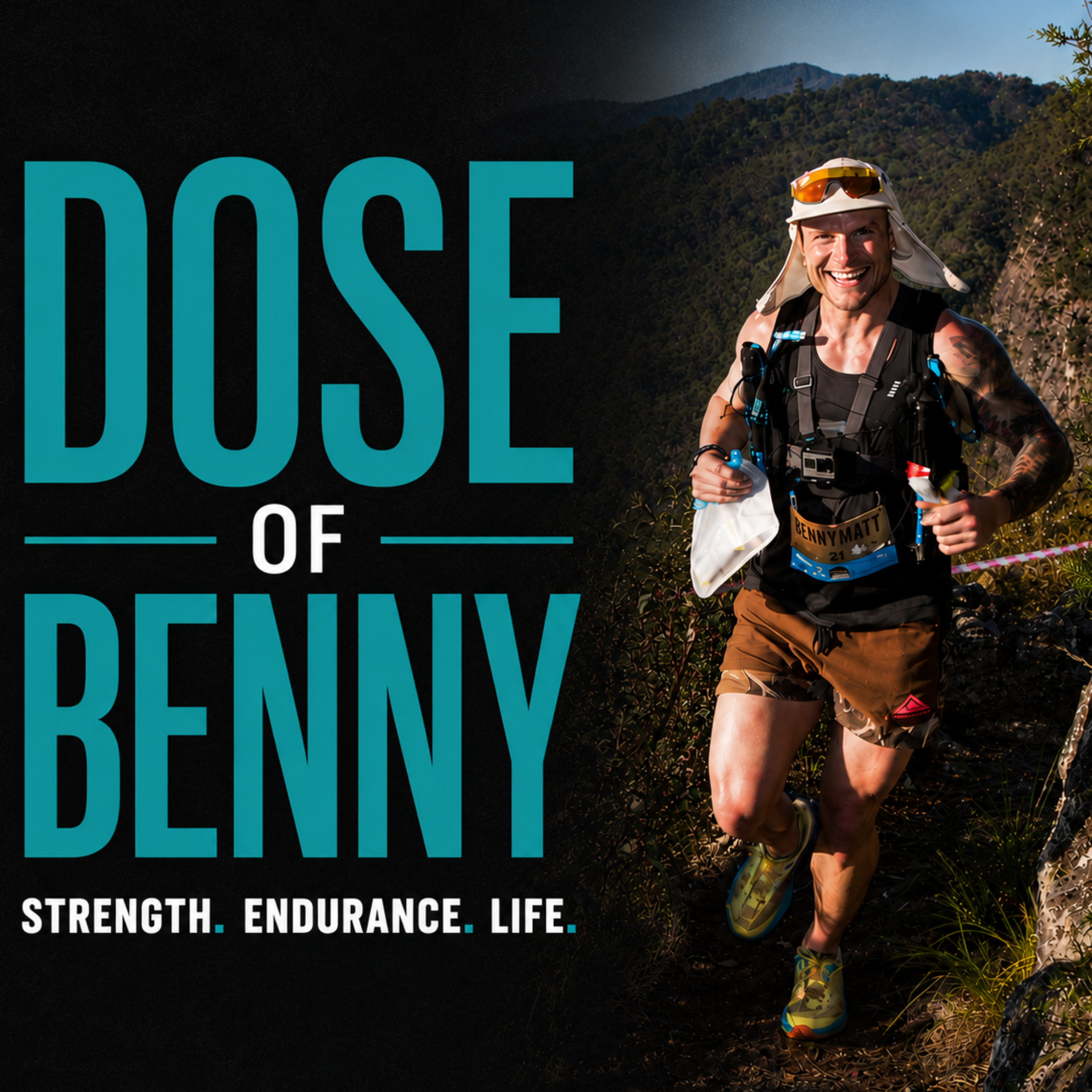
In this solo episode of Dose of Benny, I unpack a few things that have been on my mind across training, research and the direction ultrarunning is heading. First, why you don’t need to have another race lined up the moment you cross a finish line. We talk about off-seasons, reducing volume when intensity increases, reconnecting with why you run, and the danger of letting external validation dictate what comes next. Then I dive into a study looking at resistance training, uphill running and running economy. The runners got substantially stronger — but their uphill running economy didn’t improve. I break down the study design, where I think it fell short, and what I’d actually prioritise if improving uphill performance was the goal. Finally, a bit of a rant about the growth of ultrarunning. From Western States and Badwater to Last Soul Ultra and Project 168, does better coverage and more money take away from the authenticity of the sport? Or is professionalisation exactly what we need if we want ultrarunning to grow? Plus: could Backyard Ultra actually work at the Olympics?
Unsure why you're not getting the result you want? Take my 5min Training Bottleneck Quiz Get in touch: Instagram Email: [email protected]
CHAPTERS00:00 Intro & Project 168 update 01:48 You don’t always need another race on the calendar 03:01 Why you can’t keep adding intensity on top of ultra volume 05:32 Reassessing your relationship with running 06:17 “What’s next?” — internal vs external motivation 09:18 Research: Does strength training improve uphill running? 11:18 The major problems with the study design 13:34 They got stronger — so why didn’t running economy improve? 16:47 What actually improves uphill running performance? 20:29 The Runner’s Archetype Quiz 21:17 Is ultrarunning becoming too professional? 22:45 Last Soul Ultra, Project 168 & high-production coverage 24:39 Tribalism within the ultrarunning community 26:18 The downside of bigger races 28:06 Why I want ultrarunning to keep growing 28:37 Should Backyard Ultra be in the Olympics? 29:40 Growing ultrarunning in Australia & New Zealand 31:05 Final thoughts
More from Dose of Benny
What does it take to win a 100-mile ultra when life won't allow you to train the way you used to? Just 13 months postpartum, Meg Bullen (née Coffey) won the 2025 Ultra-Trail Australia 100 Miler. With disrupted sleep, family responsibilities and training weeks that looked nothing like the 20-hour blocks she once completed, Meg had to rethink her approach to preparing for one of Australia's biggest ultras. In this episode, we explore how she adapted her training through more purposeful intensity, creative hill sessions, running with a pram and prioritising recovery. We unpack her unexpected UTA victory, the mental side of racing competitively and how motherhood has changed her motivations without diminishing her ambitions. We also revisit her incredible Delirious West 200 Miler victory, including getting lost in the bush and triggering an emergency rescue, and discuss her approach to strength training, injury management and longevity in the sport as both a physiotherapist and an accomplished ultra runner. It's a conversation about balancing ambition with reality, learning to adapt and recognising that the perfect preparation isn't always possible. CONNECT WITH MEG Instagram: https://www.instagram.com/megcoffey_/ Strava: https://www.strava.com/athletes/11842951 UNSURE WHAT'S HOLDING YOUR RUNNING BACK? Take my free 5-minute Training Bottleneck Quiz to identify what's limiting your progress and get practical recommendations for improving your training. https://www.doseofbenny.com/ GET IN TOUCH Instagram: https://www.instagram.com/bennymatthews.coach/ Email: [email protected] CHAPTERS 00:00 How Meg discovered ultra running 05:30 The leap to 200 miles and finding her limits 15:06 Lost in the bush during Delirious West 24:20 Competition, adventure and finding your why 31:45 The challenges of racing and training as a mum 34:57 Less volume, more intensity and creative training 38:02 Winning the UTA 100 Miler 13 months postpartum 43:49 Managing limited sleep, recovery and training volume 46:38 Understanding pain and injury as a physiotherapist 51:13 Why strength training is non-negotiable 56:16 Meg's advice for mums chasing big running goals
How often do we set ourselves ambitious running goals without considering whether our lives can actually support the training required to achieve them? After running a lifetime mile PB of 5:42 during my current speed phase, I've been reflecting on something that goes well beyond pace, volume and performance: creating the right environment for success. In this solo episode, I unpack the relationship between our goals, values and the sacrifices we're willing to make to pursue them. We explore why comparing your training to elite runners can be counterproductive, how I've restructured my own week to balance family, business and running, and why accepting your current circumstances doesn't mean settling for less. I also reflect on my contrasting 100-mile experiences, what my conversation with Simon Cochrane taught me about the value of long-term consistency, and why raising your training floor is often more important than chasing huge short-term improvements. Whether you're preparing for your first ultra or trying to maximise the training time you already have, this episode is about appreciating how far you've come, getting realistic about where you want to go, and identifying the next logical step.
Backyard Ultra is changing and Dead Cow Gully is about to become part of something much bigger. In this episode I sit down with Tim Walsh, founder and race director of Dead Cow Gully, to unpack the newly announced partnership with Last Soul Ultra and what it could mean for the future of backyard running in Australia and around the world. We talk about how Tim built Dead Cow into one of the most recognisable Backyard Ultras in the world, why Last Soul's approach to livestreaming and social media could fundamentally change the sport, and the challenge of growing an event without losing the authenticity that made it special in the first place. We also explore the bigger questions facing Backyard Ultra as it grows. From professional athletes and prize money to drug testing, commercialisation and whether the format could eventually find its way onto major streaming platforms. Backyard Ultra has always been beautifully simple: 6.7km. Every hour. Until one person remains. But as audiences, money, production and global interest grow, that simplicity is about to be tested.
My race calendar is winding down, but October has given me plenty to think about. I start with two stories close to home: my wife, Mahli’s month-long step challenge and a client whose trail marathon lead-up went completely off plan. It left me asking "what are we capable of when training and race day don’t look the way we expected?" Then there are lactate gels. They’re starting to appear in endurance sport, and I found a study that made me wonder whether they could have a place in ultrarunning. But there’s a catch in how the research was done. Plus, a question about longer races that I can’t stop thinking about. I unpack the idea, the unknowns and the experiment I’m tempted to try myself. I also get into the adidas super shoes making headlines after Berlin, plus a shoe concept that could change how it feels during a race. How far could shoe technology go before we have to rethink what belongs on a start line? And with UTMB changing its qualification route while details for age-group runners are still to come, I ask what this could mean for the people who help make the sport what it is. Unsure why you're not getting the result you want out of training? Take my 5min Training Bottleneck Quiz
Simon Cochrane has built one hell of an endurance résumé. But what stood out to me in this conversation wasn’t the size of the achievements — it was how simple Simon makes the process sound. After 15+ years in endurance sport, Simon has developed an incredible ability to understand what his body can handle, when to push, when to back off, and how to keep stacking productive training year after year. This ended up being a proper coach-to-coach conversation about building an enormous aerobic engine without obsessing over run mileage, learning through failure, fueling huge training loads, staying composed when races get ugly, and why the fundamentals still outperform most of the shiny stuff we get sold. Simon’s a great example of what can happen when you stay curious, train consistently and give yourself enough years to find out what you’re actually capable of. TRAINING BOTTLENECK QUIZ Take the 5-minute Training Bottleneck Quiz GET IN TOUCH Instagram — @bennymatthews.coach Email — [email protected] FOLLOW SIMON Simon Cochrane — @cochranesimon Athletic Peak — @athletic.peak Athletic Peak Coaching CHAPTERS 00:00 — Introducing Simon Cochrane 02:11 — Failure, experimentation & lessons from under-fueling 10:20 — Building 20–35 hour training weeks 14:06 — What exactly is an Ultraman? 18:14 — Three Ultramans in six months 19:44 — Making extreme training work around family 22:03 — From strength coach to endurance coach 31:23 — Cross-training, run volume & building durability 35:00 — Increasing mileage without breaking down 39:35 — Gut training & ultra fueling 43:26 — The mindset required to race for 24 hours 49:08 — Longevity & still getting faster at 42 53:19 — Pacing with maturity 56:50 — From Ironman to trails, UTMB & Tarawera 60:32 — Why the fundamentals beat the shiny stuff 63:12 — Coaching in the age of apps & AI 67:08 — When extraordinary endurance becomes “normal” 68:57 — Who motivates Simon?