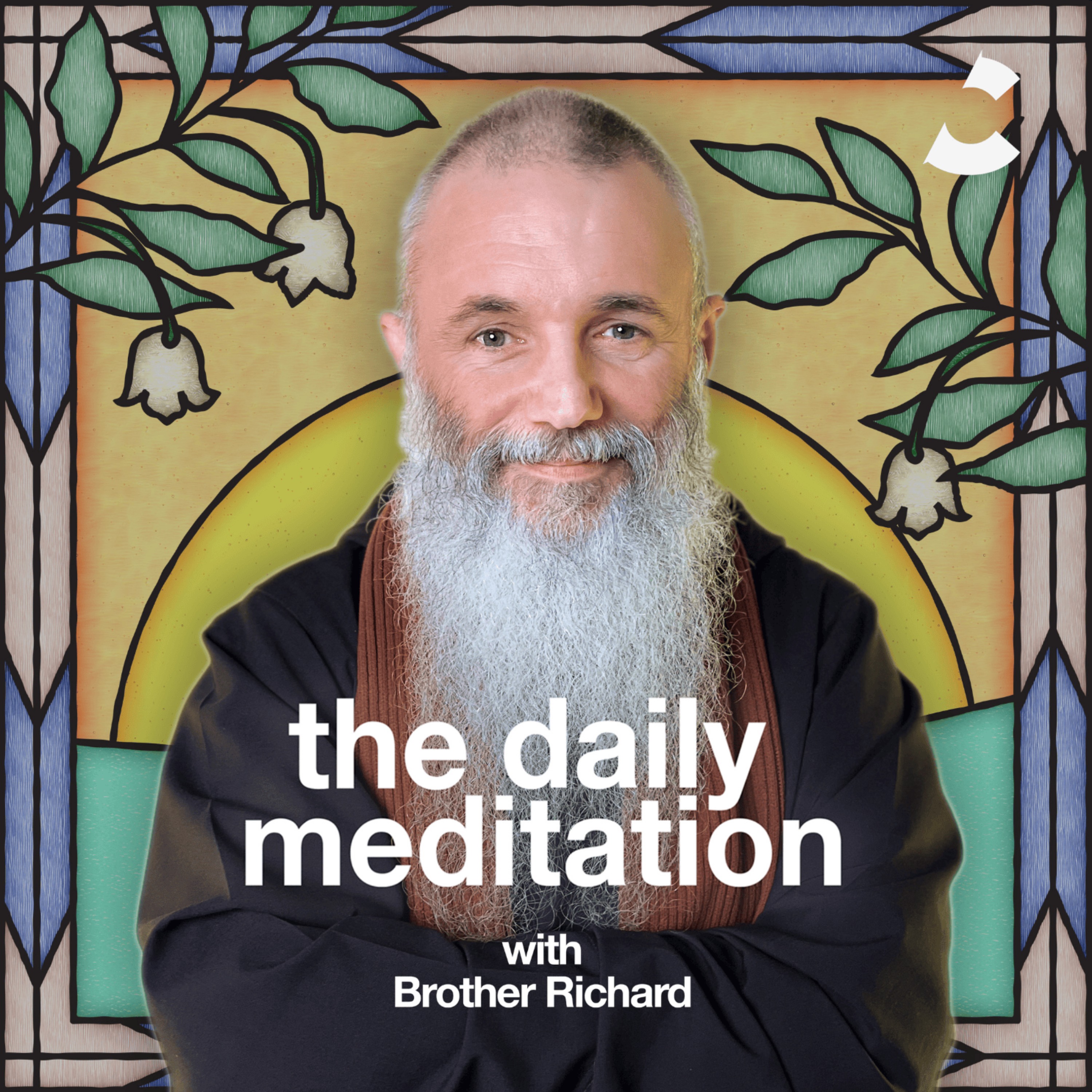
Joy Meditation: Finding Peace and Joy in the Present Moment (Repost)
The Daily Meditation with Brother RichardShow Notes
In this meditation, I guide you into a simple practice of cultivating joy, not as something dependent on circumstances, but as something that can be discovered within the present moment. Drawing on the contemplative tradition, we begin by reflecting on joy as one of the natural fruits of meditation, alongside peace. This joy is not about external conditions, but about recognising the gift of being here, now. As the body settles and the breath deepens, you are invited to gently set aside the concerns of the day and rest in the simplicity of the present moment. From here, a quieter sense of joy begins to emerge, rooted in awareness, presence and connection. This practice explores a deeper kind of joy, one that is not tied to thoughts or outcomes, but arises from a sense of being held, supported and connected. This meditation offers a moment of calm, whether you are pausing during the day or winding down before sleep, helping you reconnect with peace, presence and a steady sense of joy. This meditation supports emotional wellbeing, positivity and inner calm.
Chapters: 00:00 – Introduction 00:15 – Peace and joy in meditation 00:40 – What is joy? 00:50 – Joy beyond circumstances 01:12 – The bell 01:25 – Receiving this moment 02:50 – Settling into the body 04:00 – Letting go of the day 04:40 – Awareness of the breath 08:30 – Being held in love 08:40 – Joy beyond thoughts 09:05 – The joy of existence 09:15 – Resting in love 11:00 – Awareness of the body 11:25 – Contact with the ground 11:50 – Closing bell Hosted on Acast. See acast.com/privacy for more information.
More from The Daily Meditation with Brother Richard
In this meditation, I invite you to explore what I call the triangle of tension: the area extending from the base of the skull, down through the neck and towards the shoulder blades.
In this Lectio Divina meditation, I invite you to sit with the words of scripture: “The kingdom of God is within you.” Lectio Divina is an ancient contemplative practice in which we take a word or phrase from scripture and allow its deeper meaning to unfold through stillness, reflection and prayer. Beginning with the breath, we consider the sacredness of our own being before gently exploring the meaning of the kingdom of God and what it means for that kingdom to dwell within us. Drawing on the Franciscan understanding of divine love, we reflect on how the kingdom becomes present and visible when we allow love to reign in our hearts and lives. This is an invitation to recognise that divine presence is not something distant or separate from us, but something we can encounter in the present moment.
In this meditation, I invite you to explore the relationship between the weather and your emotional state. Using the imagination, we picture different kinds of weather, beginning with a beautiful sunny day before moving to a rainy one. As each scene unfolds, we gently observe the feelings, memories and associations that arise within us, without judgement or attachment. Through this simple practice, we begin to recognise something deeper: although our emotions may change with our surroundings, there is a stable awareness within us that remains present throughout. By becoming familiar with this inner observer, we can cultivate greater equanimity, emotional awareness and peace, whatever the weather may bring. Chapters: 00:00 – Introduction: How weather affects our emotions 00:43 – Opening bell 00:54 – Entering meditation with intention 01:07 – Settling into the body 01:37 – Becoming aware of the breath 01:51 – Breathing out tension and anxiety 02:43 – Finding stability in the present moment 03:07 – Observing emotional reactions without judgement 03:44 – Visualising a sunny summer’s day 04:16 – Noticing how sunshine makes you feel 04:42 – Exploring subtle shades of emotion 05:21 – Discovering the stable observer within 06:11 – Changing the scene to a rainy day 06:45 – Exploring your associations with rain 07:06 – Observing emotional reactions to rainy weather 07:49 – Recognising the awareness beneath your emotions 08:43 – Finding stability, strength and grace 09:17 – The weather changes, but you remain stable 09:43 – Breathing in peace and breathing out calm 10:07 – Returning to the here and now 10:48 – Carrying inner calm into the day 11:15 – Closing bell Hosted on Acast. See acast.com/privacy for more information.
In this meditation, I return once again to the basic relaxation form that underpins our contemplative practice. Beginning with a simple ritual gesture, we settle the body and check in honestly with how we are. We then move through awareness of the body, breath, emotions and thoughts, learning to observe each without judgement or attachment. By returning regularly to these foundations, we build the “meditative muscle” that helps us find stillness in changing circumstances and reconnect with the stable centre of awareness within. Chapters: 00:00 – Introduction: Recovering the form 00:46 – Opening bell 00:50 – Beginning with a ritual gesture 01:28 – Taking your seat 01:58 – Finding stability and support 02:27 – Checking in with the body 03:01 – How am I in this moment? 03:34 – Scanning the body for tension 04:13 – Returning awareness to the breath 04:51 – Breathing out stress, anxiety and pain 05:17 – Breathing in warmth, light and calm 05:39 – Relaxing the whole body 06:03 – I have a body, but I am more than my body 06:32 – Checking in with emotions and thoughts 07:01 – Observing without judgement 07:11 – I am more than my emotions and thoughts 07:47 – Following the breath to the centre 08:08 – Resting in perfect peace and light 08:22 – I am I 08:39 – Created and held in divine love 08:51 – Choosing to meditate for all who are in need 09:23 – Resting in the breath 09:26 – Returning to stable awareness 09:44 – Carrying peace into the rest of the day 10:09 – Returning to the body 10:22 – Closing bell Hosted on Acast. See acast.com/privacy for more information.
Understanding acedia and the subtle pull of distraction Hosted on Acast. See acast.com/privacy for more information.