Show Notes
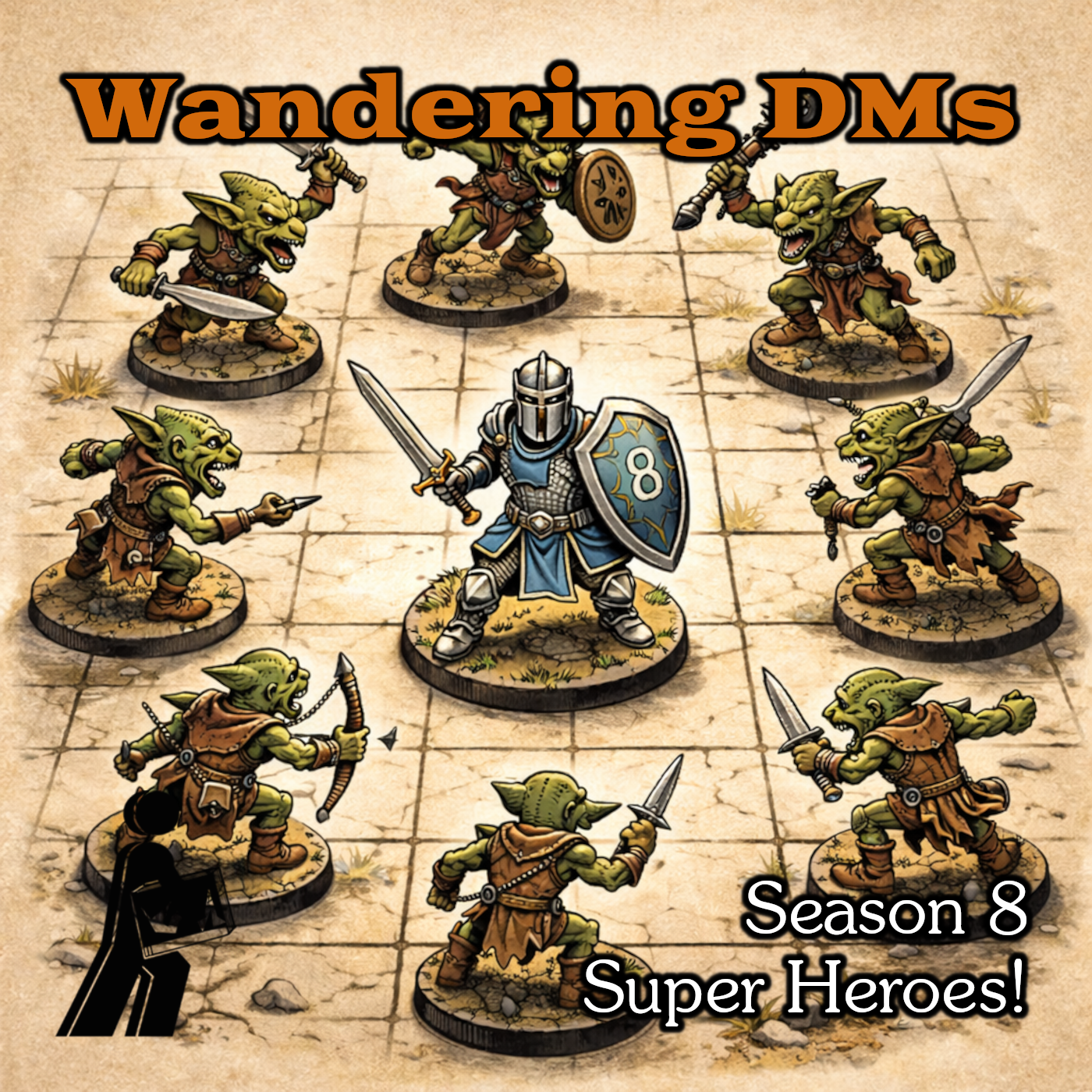
Dan and Paul discuss the many ways they've brought tactical combat to life at the tabletop over decades of running Dungeons & Dragons and other RPGs. From classic wet-erase mats and gaming paper to elaborate 3D terrain, projector systems, and modern digital battle mats, every solution comes with its own strengths, weaknesses, and surprises.
What makes a battle mat worth using? When is detailed terrain worth the setup time? Are digital displays finally practical for in-person games? How much tactical detail do you really need to run exciting encounters? We'll compare the tools we've used over the years, share lessons learned, and talk about what works best for different styles of play.
More from Wandering DMs
Dan & Paul look back to our favorite covers in classic D&D modules. What makes for a great cover? How well do they balance the tension between showing the most exciting content versus giving away too much of the surprise? Do covers matter in the online streaming environment today?
Paul and Dan chat about Fatigue rules in D&D and other RPG's. It was a key part of the Chainmail progenitor to D&D, and also an important mechanic in modern 5E rules. But it was absent or overlooked in classic rulesets like AD&D and B/X. Doesn't movement and encumbrance make sense without it? Is it too exhausting to track? Or is there some better way?
Dan and Paul talk about mapping the dungeon: how does the DM communicate an unknown physical space to the players as they explore it?
Paul and Dan chat about the history of poison mechanics in D&D. Is the classic save-or-die a realistic model, or does it make for lousy gaming? Should we distinguish between ingestible poisons versus animal venoms? Should your PCs have access to poisons, or should they be gatekept by alignment or class categories? We'll figure out the best way to handle them!
Dan and Paul dive into the practical problem of keeping notes and records for long-running D&D campaigns.