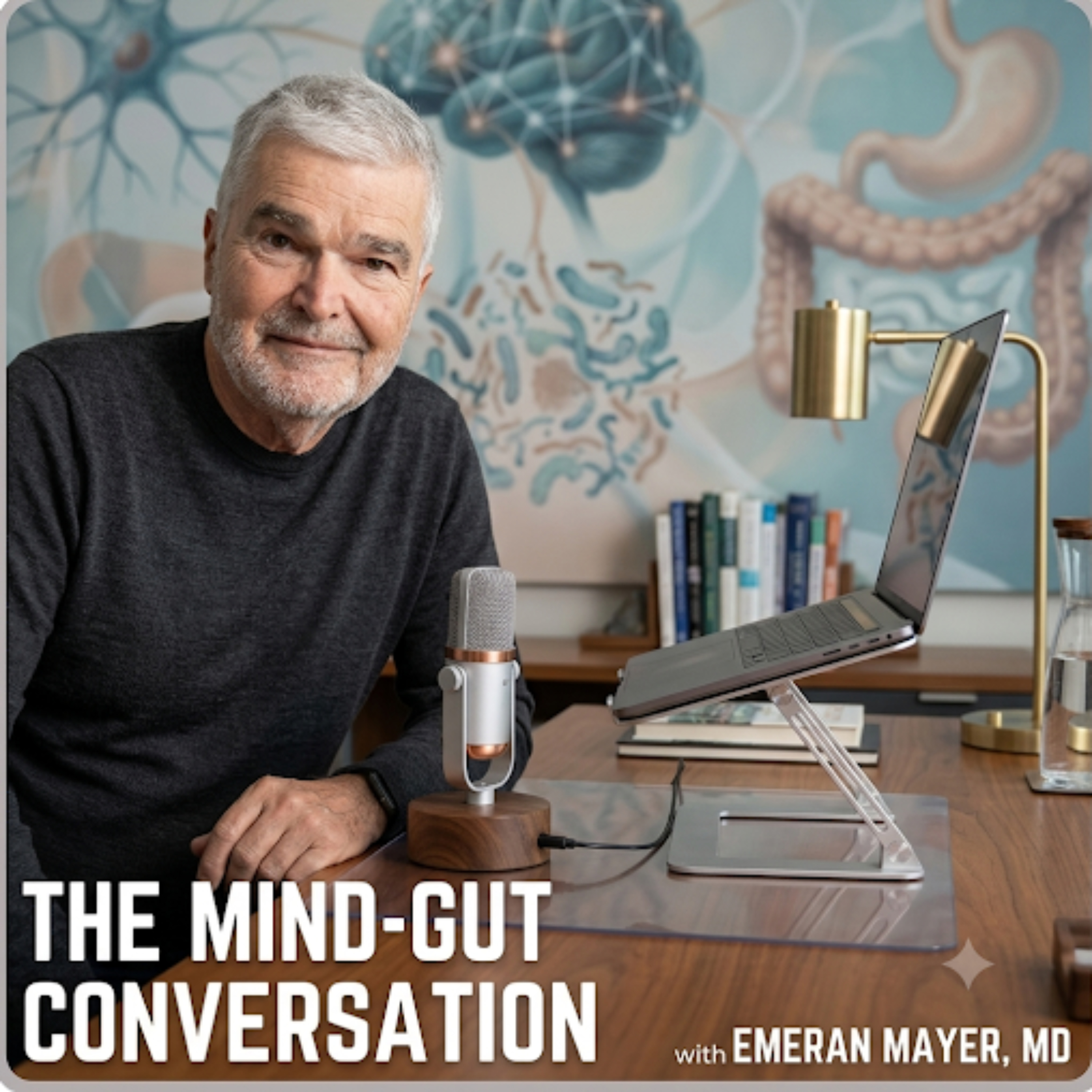
Why Are We Living Longer But Not Healthier? with Emeran Mayer, MD | MGC Ep. 124
The Mind-Gut Conversation PodcastShow Notes
Modern medicine has never been better at keeping people alive. So why are we spending more of our lives unwell?
In this episode of The Mind-Gut Conversation, Dr. Emeran Mayer examines a new analysis from the Global Burden of Disease project, published in Lancet Public Health, comparing how long people live with how many of those years are lived in good health across 204 countries and territories.
The difference between those two numbers is called the morbidity gap. In 1990 the average person could expect to spend 8.8 years of life in poor health. By 2023 that had risen to 10.7 years, and the gap widened in 203 of the 204 places studied. The wealthiest countries fare worst of all, with the United States leading globally at 14 years.
Dr. Mayer explains what is actually driving those unhealthy years, why the trend now extends across the entire adult lifespan rather than clustering in old age, and why two of the largest contributors sit squarely within the brain-gut-microbiome system.
Topics discussed include: • What the morbidity gap is and how it is measured • Why the 45-year-old compression of morbidity hypothesis is being challenged • Why high-income countries carry the largest health gaps • The five conditions responsible for most unhealthy years worldwide • Why health decline is starting in middle age • The gender health paradox • Why years lived may be the wrong scoreboard
This is a science-driven discussion for anyone interested in healthspan, healthy aging, and chronic disease prevention.
---------------------------
This episode is sponsored by Mayer Nutrition. Food comes first, always. For the places where diet leaves a gap, use code MINDGUT for 10% off your first order.
---------------------------
Chapters: 0:00 - Introduction 1:00 - What This Study Set Out to Test 2:23 - The Morbidity Gap Explained 3:35 - Why Wealthy Countries Rank Worst 5:05 - Health Decline in Middle Age 6:10 - What Fills the Unhealthy Years 7:28 - Men, Women, and the Health Gap 8:31 - Rethinking How We Measure Success 9:39 - Closing Thoughts 11:25 - A Word From Our Sponsor
More from The Mind-Gut Conversation Podcast
Nutrition advice seems to change every week, but Dr. Christopher Gardner says the core of what we know has barely moved in fifty years.
Over the past century, average lifespan in Western countries has grown by about 30 years. The years we spend in good health have not kept pace.
After 45 years of research on how the brain and the gut communicate, the question Dr. Emeran Mayer hears most often is not about mechanisms or studies. It is much simpler than that. People tell him they understand the science, they just do not know how to live it.
For most of the last forty years, irritable bowel syndrome was treated as a problem of the gut alone. The idea that the brain plays a central role took decades to gain acceptance, and it remains contested today.
Millions of people take a daily probiotic without ever asking a basic question: does any of it survive long enough to do anything?