Who Tells the Story? Dementia, Hollywood, and Caregiving (with Alfredo Botello)
The Dementia CollectiveShow Notes
What if dementia is not only a medical condition, but a story shaped by who gets to tell it?
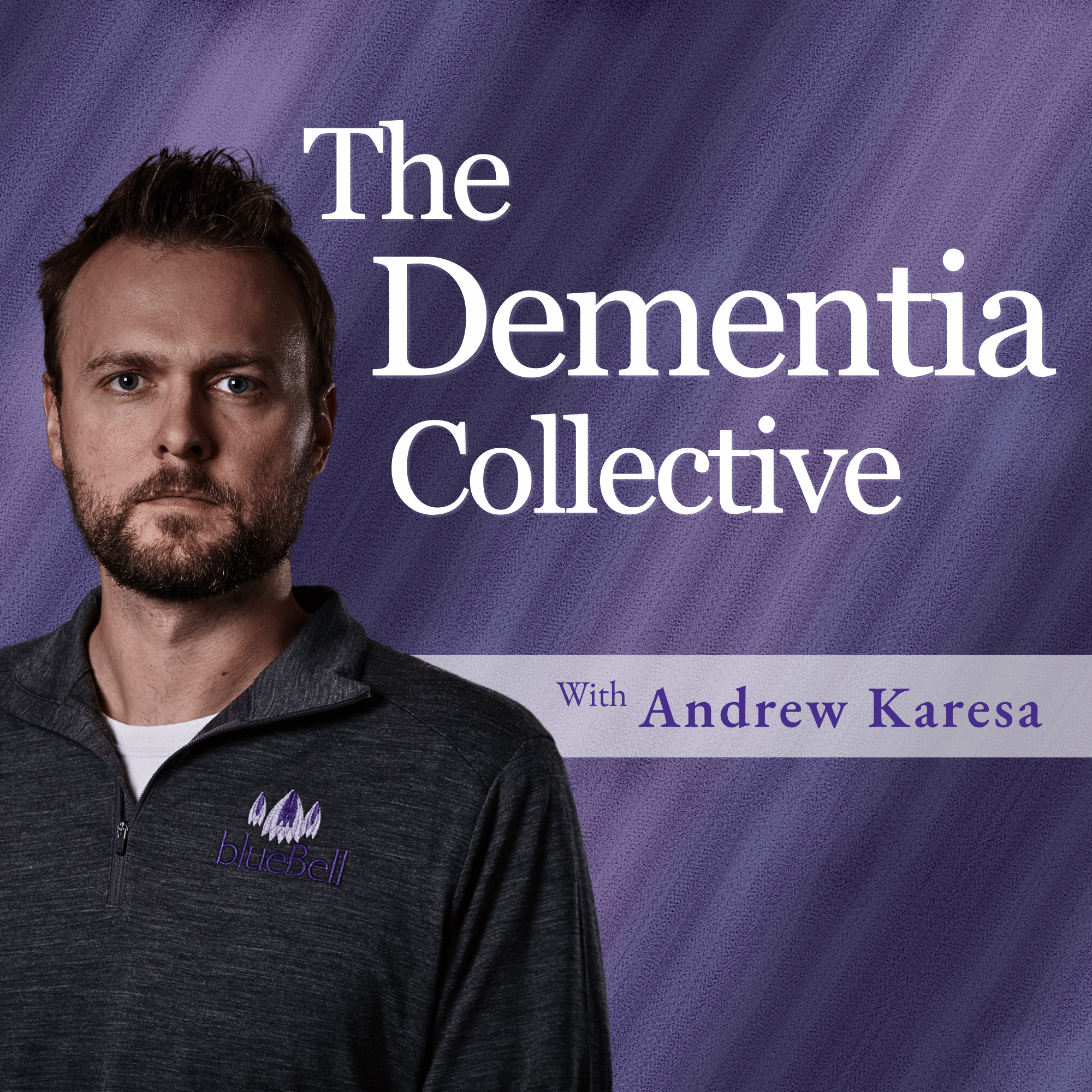
In this episode, Andrew Karesa sits down with novelist and screenwriter Alfredo Botello to explore caregiving, storytelling, and the power of representation.
Alfredo shares his experience caring for his mother and how that journey influenced his writing. From the private realities of family caregiving to the public portrayals of dementia in film and media, the conversation examines the tension between lived experience and cultural narrative.
Together, Andrew and Alfredo ask a deeper question: who controls the story of dementia, and how does that shape how society responds to it?
They discuss humor and heartbreak, the emotional contradictions of caregiving, and the responsibility that comes with writing about cognitive change. Alfredo reflects on how storytelling can either flatten people into stereotypes or preserve their complexity.
The conversation also moves into the gap between what families experience and what audiences are shown. What gets dramatized? What gets softened? What gets left out entirely? And how does that influence stigma, understanding, and policy?
Along the way, they consider how stories can restore dignity, challenge assumptions, and give caregivers language for what often feels impossible to explain.
In this episode: • How caregiving reshaped Alfredo’s understanding of story • The difference between lived experience and public portrayal • Why humor matters in dementia conversations • The tension between vulnerability and representation • How media influences stigma and perception • What families wish more people understood • The responsibility of writers telling dementia stories • Where storytelling can help, and where it can harm • How narrative control shapes cultural understanding
Whether you are a caregiver, a storyteller, or someone trying to understand dementia beyond headlines and tropes, this conversation invites you to reconsider not just what the story is, but who is telling it.
Learn more at: https://www.bluebellvillage.ca https://alfredobotello.com
———
Join The Village and help shape conversations like this by submitting questions to our guests: https://www.patreon.com/cw/blueBellVillage
———
Disclaimer: The information shared in this podcast is for general informational purposes only and is not intended as medical advice. It should not be used to diagnose, treat, or prevent any medical condition. Always consult your physician or another qualified healthcare provider regarding any questions you may have about a medical condition or treatment. The views and opinions expressed by guests are their own and do not necessarily reflect those of Andrew Karesa, blueBell Village Ltd., or any of its employees, contractors, or team members.
More from The Dementia Collective
What if learning about dementia started before a family ever had to face it?
What happens when someone who has spent his life rescuing people faces something he cannot rescue his own mum from? In this episode, Andrew Karesa sits down with Andrew “Reidy” Reid, longtime Bondi Rescue lifeguard, endurance athlete and dementia advocate, for an incredibly open conversation about lifeguarding, family, caregiving, grief, endurance sport, and his mum Trish’s journey with dementia. Reidy has spent more than 20 years as a lifeguard, becoming one of the familiar faces of Bondi Rescue. He has also completed more than 50 marathons, competed in Ironman triathlons, and even holds a Guinness World Record for running a marathon carrying a surfboard. But years before dementia became part of his own family, Reidy had already started using that endurance background to support dementia research through the 155-kilometre Bondi2Berry ride. Then his mum, Trish, was diagnosed with Alzheimer’s disease and vascular dementia. The conversation explores Reidy’s life beyond dementia, from growing up around Bondi and becoming a lifeguard to the beginnings of Bondi Rescue, extraordinary rescues, more than 50 marathons, Ironman racing, his 2:49 marathon, and the unlikely story behind his Guinness World Record marathon carrying a surfboard. In this episode: Growing up around Bondi and how Reidy became a lifeguard The real-life rescues behind Bondi Rescue What more than 20 years of lifeguarding has taught him about patience and caregiving Trish’s early signs of dementia and eventual diagnosis What it feels like to mourn someone who is still alive The emotional difficulty of visiting a parent living in a nursing home Navigating caregiving and complicated family relationships The wild story behind running a 3:17 marathon carrying a surfboard Bondi2Berry and raising money for dementia research This is a conversation about much more than Bondi Rescue. It is about what happens when the person accustomed to being the rescuer becomes a son trying to navigate something he cannot fix. Learn more at: https://www.bluebellvillage.ca ———
NOTE: This is Part 2 of 2 of our Silver Tech Summit 2.0 special. In this special episode of The Dementia Collective, Andrew Karesa sits down with seven guests at the Silver Tech Summit 2.0 in Edmonton to explore what aging well really looks like, who gets a say in shaping that future, and why older adults need to be part of the conversation. Featuring: Darlene Schindel, Founder, NurseWell Collective Dr. Martin Ferguson-Pell, Professor, Faculty of Rehabilitation Medicine, University of Alberta Janice Baskin, Manager, Edmonton Regional Innovation Network Karen Murdock, Founder, Silver Longevity Business Association Jay Pritchard, President, WE Seniors Zoran Kovacevic, entrepreneur and founder of Pace Pet Chief Billy Morin, Member of Parliament for Edmonton Northwest, former Chief of Enoch Cree Nation, and Indigenous Services Critic In this episode: What “Build With Us, Not For Us” actually means Why older adults need a voice in the technologies and services created for them Why care is about more than technology Loneliness, isolation, and rebuilding community Turning research and innovation into real-world solutions Entrepreneurship and designing alongside the people you serve Indigenous entrepreneurship and culturally appropriate care for Elders Rethinking how we define and measure successful aging This special episode was filmed at and produced in conjunction with the Silver Tech Summit 2.0, hosted by WE Seniors in Edmonton, Alberta. Learn more at: https://www.bluebellvillage.ca https://silvertechsummit.ca/ https://slba.ca/ ———
NOTE: This is Part 1 of 2 of our Silver Tech Summit 2.0 special. In this special episode of The Dementia Collective, Andrew Karesa sits down with seven guests at the Silver Tech Summit 2.0 in Edmonton to explore what aging well really looks like, who gets a say in shaping that future, and why older adults need to be part of the conversation. Featuring: Darlene Schindel, Founder, NurseWell Collective Dr. Martin Ferguson-Pell, Professor, Faculty of Rehabilitation Medicine, University of Alberta Janice Baskin, Manager, Edmonton Regional Innovation Network Karen Murdock, Founder, Silver Longevity Business Association Jay Pritchard, President, WE Seniors Zoran Kovacevic, entrepreneur and founder of Pace Pet Chief Billy Morin, Member of Parliament for Edmonton Northwest, former Chief of Enoch Cree Nation, and Indigenous Services Critic In this episode: What “Build With Us, Not For Us” actually means Why older adults need a voice in the technologies and services created for them Why care is about more than technology Loneliness, isolation, and rebuilding community Turning research and innovation into real-world solutions Entrepreneurship and designing alongside the people you serve Indigenous entrepreneurship and culturally appropriate care for Elders Rethinking how we define and measure successful aging This special episode was filmed at and produced in conjunction with the Silver Tech Summit 2.0, hosted by WE Seniors in Edmonton, Alberta. Learn more at: https://www.bluebellvillage.ca https://silvertechsummit.ca/ https://slba.ca/ ———
What does caregiving look like when no one sees what you’re carrying?