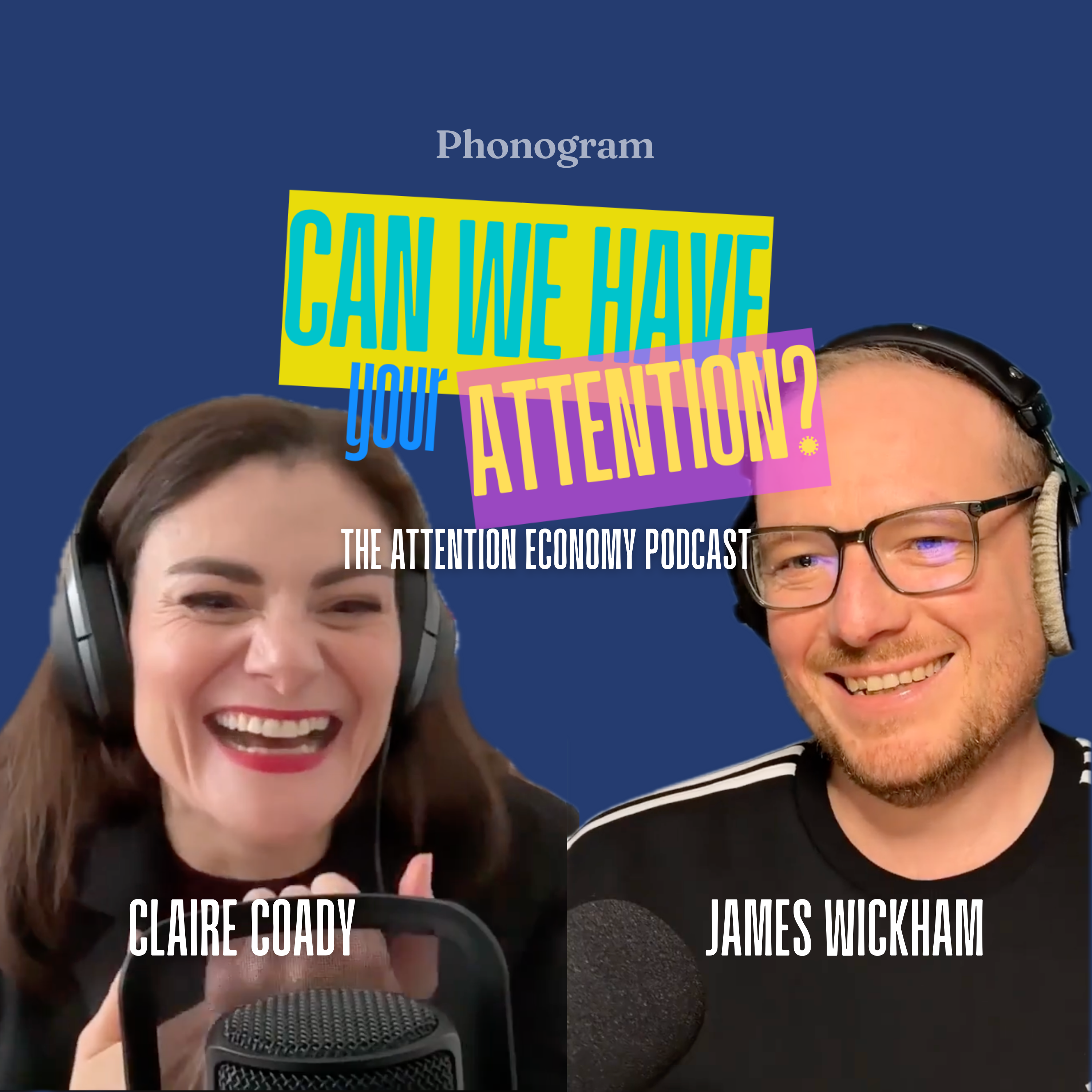
Can X’s rage baiting strategy survive? X, Grok AI, algorithms, and the war for attention
Can We Have Your Attention?Show Notes
In this episode of the Can We Have Your Attention? podcast, hosts Claire Coady and James Wickham dive into the escalating crisis around algorithms, free speech, and corporate responsibility in the attention economy.
We explore how platforms like X and its AI, Grok, promote "complete freedom of speech" as a core product feature, and the disruption it creates - how does a business like X versus a business like Meta weigh up the reward of influence and attention against risks of public backlash, or breaking local laws?
We dissect the complex balancing act that global tech giants like Meta and Alphabet (Google) must perform, comparing their publicly traded strategies with the decisions made by privately-owned companies like X, and uncover how they try to satisfy users, advertisers, and global lawmakers all at once.
Algorithms: Washington Post: Evolution of the Facebook algorithm https://www.washingtonpost.com/technology/interactive/2021/how-facebook-algorithm-works/
Excerpt from Emily Baker-White’s book on the history of TikTok and its algorithm, Every Screen on Every Planet: https://www.forbes.com/sites/emilybaker-white/2025/09/27/origins-of-tiktok-algorithm-every-screen-on-the-planet-book-excerpt/
Buy the book here: https://uk.bookshop.org/a/16591/9781035049264
Business Insider on every change made by Elon Musk after taking over Twitter (now X): https://www.businessinsider.com/elon-musk-twitter#november-2022-2
New York Magazine on how algorithm changes affect creators, looking mainly at YouTube - ‘The YouTube Vibecession’: https://nymag.com/intelligencer/article/the-youtube-vibecession.html
For a laugh: Facebook ad from 2012, unaffectionately known as ‘Chairs’, created by world-class ad agency wieden+kennedy, and directed by Oscar-winning film director Alejandro Gonzalez Iñarritu. I know.
https://www.youtube.com/watch?v=SSzoDPptYNA
Parodied to perfection on the HBO series ‘Silicon Valley’ - the Pied Piper ad, ‘Tables’ https://www.youtube.com/watch?v=KQ4CuJm_lws
About The Show
Can We Have Your Attention? explores the unseen forces that shape what we see, what we buy, and who we become. Hosted by Claire Coady and James Wickham, we dive into the mechanics of the Attention Economy to understand how value is created (and manipulated) in a distracted world.
Production Credits:
Hosted by: Claire Coady & James Wickham Produced by: Phonogram https://www.phonogram.co.uk
Enjoying the episode? If you found this conversation valuable, please leave a rating or review - it helps us break through the noise—and get the attention of more listeners like you.
More from Can We Have Your Attention?
Claire and James discuss Aaron Sorkin’s film, The Social Reckoning, a companion to The Social Network.
You can also watch this episode on our YouTube channel!
You can also watch this episode on YouTube!
Ad tech, the backbone of digital advertising, is a lucrative business. But why? Who is profiting from it? And at what cost? Claire and James are joined this week by Claire Atkin, Co-founder and CEO of the Check My Ads Institute. They discuss ad tech: what it is, how it works, why it makes money, for whom it makes money - and what the consequences are.
For the past 25 years, claims on packets of crisps have been subject to more regulation than claims in election campaigns. But that could finally be about to change. Amendments to the Representation of the People Bill promise to apply some of the UK’s strenuous - and effective - advertising standards to election advertising. We are joined by Alex Tait, ad industry veteran and founder of the non-partisan campaign organisation Reform Political Advertising, one of the groups advocating these changes. Alex, together with Benedict Pringle, set up Reform Political Advertising to change the law. What does fact-based election advertising mean in practice? How can regulation that applies to commercial brand advertising improve political trust? How long does it take to turn an idea into a law? And can turkeys really vote for Christmas?