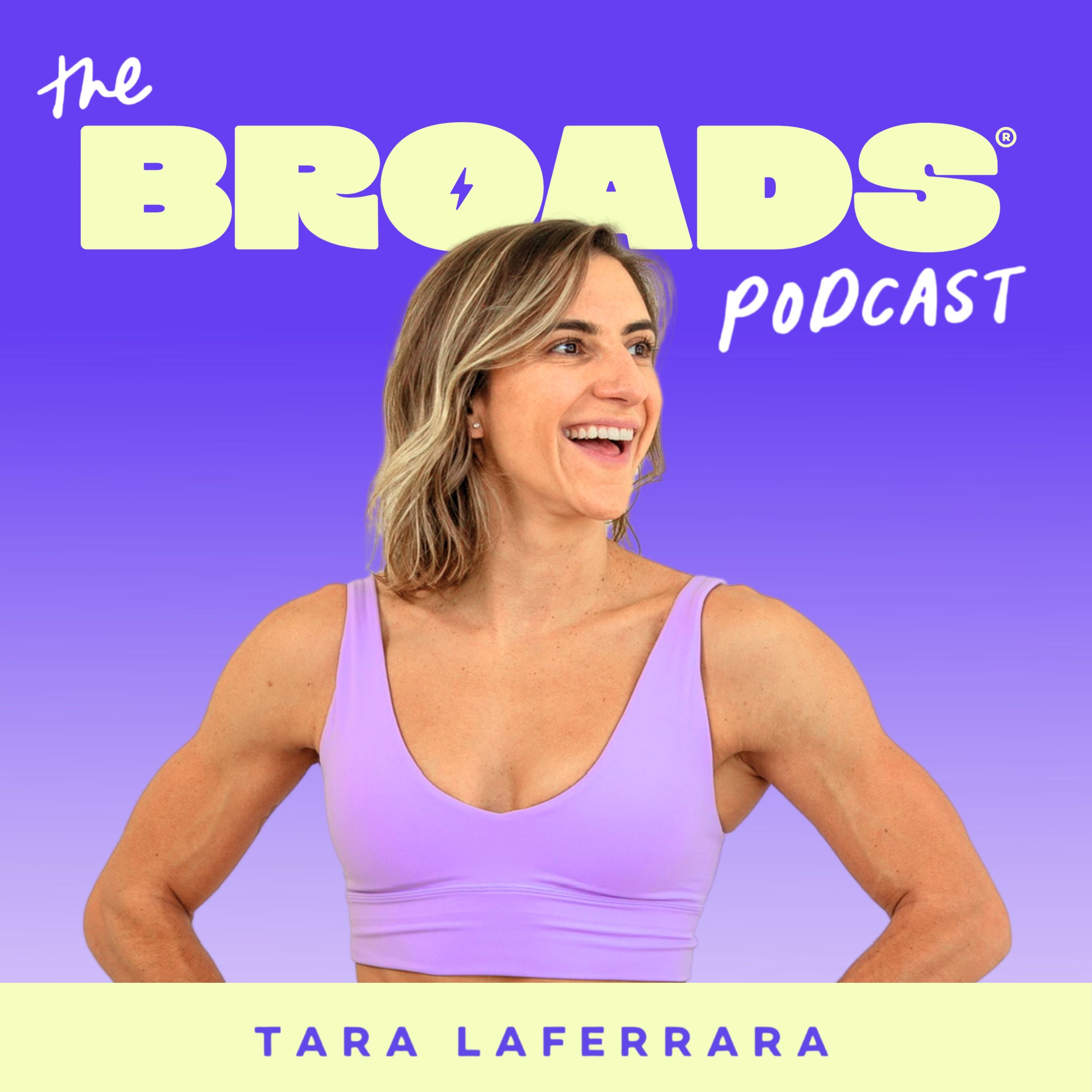
152: How to Actually Use Cardio: A Framework for Women Who Strength Train
Broads: The Bold & Badass Fitness Podcast for WomenShow Notes
You’ve been told cardio kills your gains. Or that you need more of it. Or that HIIT is the answer. Or that HIIT is the problem. You open Instagram and find a different opinion every time, and at some point you just start guessing because the information around cardio is genuinely that contradictory.
Here is the thing: cardio itself is not complicated. The noise around it is.
Just like with strength training, there are nuances with cardio that you need to know if you want to see + get results.
Most of the time, the lack of results are not because you’re doing too little, but usually because you’re doing the wrong type, at the wrong time, for the wrong goal. This episode fixes that.
What's Discussed:
The three types of cardio — Zone 2, steady state, and HIIT — what each one actually does to your body, and why knowing the difference changes everything about how you program your week
Why Zone 2 is the most underrated form of cardio for women who strength train — and why a 30-minute brisk walk during a work call counts as a legitimate training session
The Peloton problem: why the popular high-energy classes are almost always steady state or HIIT efforts, why that is not building the aerobic base you think it is, and what to choose instead
How much cardio you actually need based on your goal — strength-first, balanced fitness, or training for a specific event — with realistic session numbers for each
The interference effect: why doing cardio and lifting too close together blunts the results of both, why order matters, and the one exception that is not actually cardio
Six signs your cardio volume is exceeding your recovery capacity — including the ones that show up in your joints and your sleep before they show up anywhere else
Why the fix is always subtraction and not more effort — and why none of the warning signs mean you are failing
A practical weekly structure for women lifting four days a week and women lifting three — with specific session types, timing, and how HIIT fits in as a tool rather than a default
The specific cardio plan for the busy woman who lifts two to three days and has a Peloton she uses once a week. Let’s simplify this!
If your joints have been feeling beat up, grab the free Mobility Guide — five minutes a day for seven days. https://www.broads.app/mobility-guide
For the full picture on how cardio, protein, and strength training work together to actually shift your body composition, the free Body Recomp Webinar covers all of it. https://www.broads.app/body-recomp-webinar
Ready to have your cardio and training programmed so everything works together instead of against each other? Apply for BroadsCOACH at broads.app/broadscoach.
Learn more about Broads:
https://www.instagram.com/broads_coach/
https://www.instagram.com/broads.podcast/
Check out more from Tara LaFerrara:
https://www.taralaferrara.com/
https://www.instagram.com/taralaferrara/
YouTube: @TaraLaferrara TikTok: @taralaferrara
More from Broads: The Bold & Badass Fitness Podcast for Women
You know what consistent people have that you don’t?
Rocio Cortez had never played a sport or trained in a gym when she walked into her first jujitsu class at 27. Three and a half years later she's competing across four martial arts, she's deadlifted 275 pounds at a bodyweight of 119, and she's added 15 pounds of muscle she never set out to add. In this conversation she and Tara get into what changes when you train for performance instead of appearance, how to handle a body that's changing faster than your brain can keep up with, and why the friendships that fade when your lifestyle shifts were never the ones holding you up. If you've decided you started too late, Rocio's timeline will recalibrate what you think is possible.
Nutrition advice for women is loud, contradictory and usually built for someone else's body. In this solo Q&A, Tara answers your most-asked questions. She covers intermittent fasting, tracking macros, how to actually get enough protein and which protein bars are worth buying. She also gets into healing your relationship with food and going alcohol-free when your partner still drinks. You'll walk away knowing which tools fit your body right now, and which ones you can skip.
For women who strength train consistently and feel like something is still missing, it is probably not the program or the effort. The tools that elite collegiate strength coaches use with their athletes — plyometrics, isometrics, contrast training, tempo work — are almost never included in general fitness programming. In this episode, Erica Lowery breaks down exactly what those tools are, why they work, and how any woman can start adding them to her week without overhauling what she is already doing.
Most women who are not seeing results from their training are not failing because of their program, their supplements, or how hard they are pushing. The problem is consistency — and not in the way most people think. This episode breaks down seven specific ways to build the kind of consistency that actually holds, so you can stop spinning your wheels and start making progress that compounds.