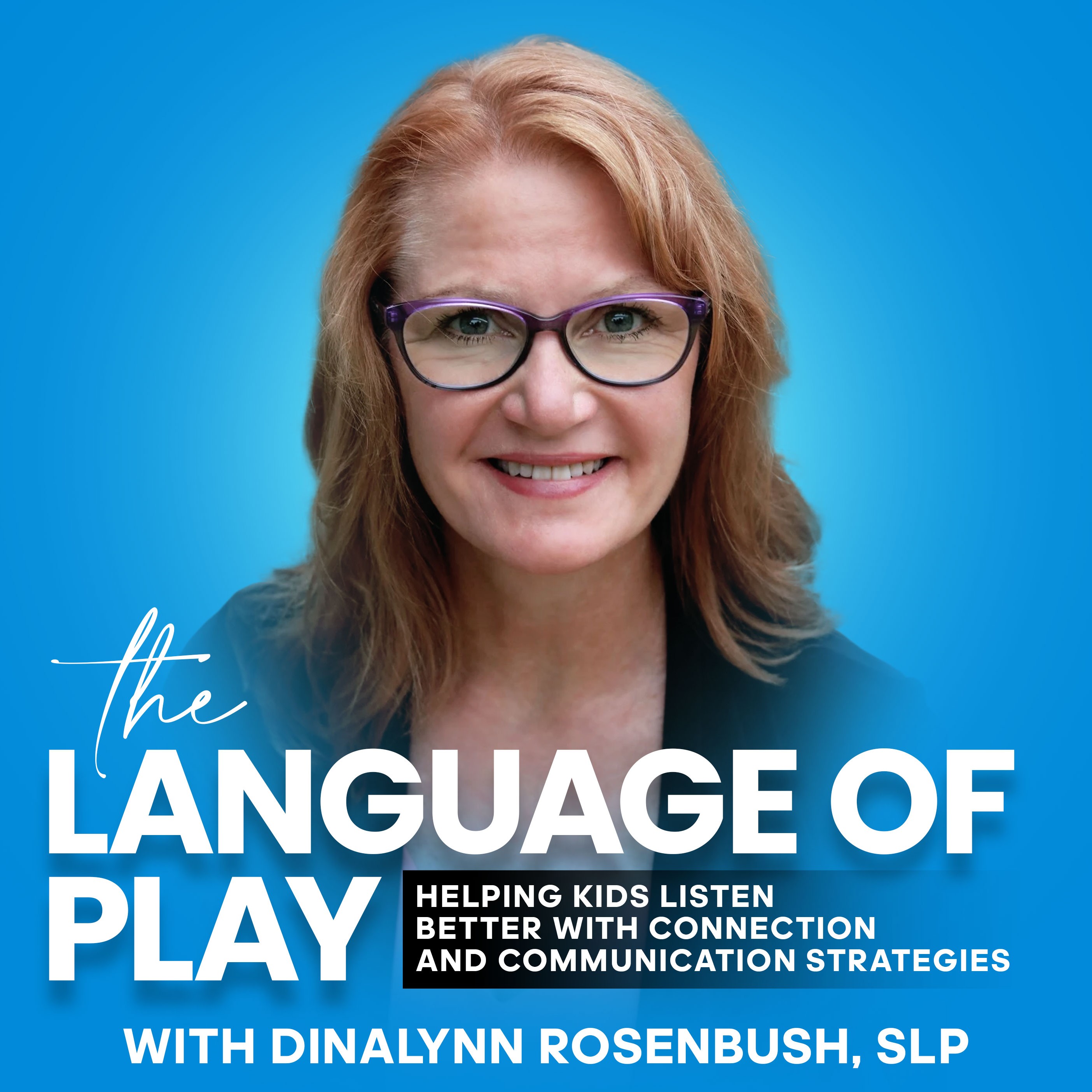
273 Margot Bevington: Can Music Help Kids Acquire Language?
The Language of Play - Kids that Listen, Speech Therapy, Language Development, Early InterventionShow Notes
Hey Friends~ Have you ever noticed your child can sing every word of a favorite song but struggles to say those same words in conversation? Or maybe your child isn't talking yet, avoids back-and-forth interaction, has difficulty with rhythm or imitation, or simply learns differently than other children. What if music could become a bridge? In this episode, we explore how music creates a safe space for children to learn. Rhythm, repetition, melody, and predictable patterns slow language down, making it easier for the brain to process, remember, and use. Music also activates multiple areas of the brain, strengthening memory, movement, attention, and learning in ways that everyday conversation often cannot. My guest knows this personally. She was largely nonverbal until she was four or five years old, and music became the place where language finally made sense. Today, she's an award-winning children's musician whose songs are intentionally designed to build language, communication, and connection for all children, especially those who learn differently. If you've ever wondered whether music could help your child communicate, this conversation may open an entirely new way of thinking about learning. Always cheering you on! Dinalynn CONTACT the Host, Dinalynn: [email protected] Have a QUESTION or COMMENT? Leave a voice message! https://castfeedback.com/play WEBSITE: https://www.thelanguageofplay.com/
ABOUT THE GUEST: Margot Bevington is an award-winning songwriter, educator, and performer whose music helps children grow through rhythm, imagination, and connection. Inspired by her own childhood speech delay, she has released three children's albums, two of which received the National Parenting Product Award. A graduate of Oberlin Conservatory of Music, Margot creates music that celebrates communication, creativity, and the belief that every child counts. CONTACT THE GUEST: MsMargotsMusic.com Instagram- @margotbevingtonFree "I Count" Coloring Page with Email Newsletter Sign Up (on website)
A BIG THANK YOU TO OUR SPONSORS! Clever EllyThe a car charger that talks to you and helps you remember. Click here to learn more and claim the special listener bonus! https://cleverelly.com/r?id=246rdm Penelope Jane Smith: Real Prosperity Inc. Link for FREE financial guide ebook: https://realprosperity.isrefer.com/go/FFF/dinalynn Link for Financial Freedom 101 event scholarship: https://realprosperity.isrefer.com/go/scholarship/dinalynn
IF YOU LIKED THIS EPISODE, YOU WILL WANT TO LISTEN TO THESE EPISODES: 268 Emily Cadiz: What If Music Isn’t a Bonus—but the Brain’s Gateway to Reading? 243 Claire Miller: The Power of Storytelling to Build Confidence & Connection 248 Dr. Emily Levy: Effectively Teach Reading with Orton Gillingham & Multi-Sensory Techniques 270 Tracie Rieder: Using Signs As A Bridge To Speaking WE’VE MADE IT EASY FOR YOU! Love this podcast? Let us know! https://lovethepodcast.com/play Follow & subscribe in 1-click! https://followthepodcast.com/play
To SPONSOR The Language Of Play, schedule your call here: https://calendly.com/hello-play/discovery-session To DONATE to The Language Of Play, Use this secure payment link: https://app.autobooks.co/pay/the-language-of-play
More from The Language of Play - Kids that Listen, Speech Therapy, Language Development, Early Intervention
Hey Friends~ You’ve told your child what comes next, but they’re still not moving. Then the tears start, and a simple morning routine becomes a struggle - again. What if your child needs more time and support to do what you’re asking? Today’s guest was once that child, having those big meltdowns. Getting ready for school could become so overwhelming that her parents carried her to the car, and the school director helped her transition into the classroom. Now, she she shares her story to help families understand what may be happening beneath the tears and resistance. She explains how predictable routines, simpler language, and time to process can help children move from overwhelmed to ready for the next step. From slowing down the morning rush to adding a silly wiggle between tasks, Shraddha shares practical ways to make everyday routines feel more manageable and connected. In this episode, you’ll hear:
Hey Friends~ Would you love for your child to learn another language, but wonder how to help when you don’t speak it yourself? You can begin learning together, and everyday moments offer a place to start. In this episode, fellow speech-language pathologist Lindsey joins me to explore how parents can introduce another language through the things their little ones are already doing, noticing, and caring about. Where do you begin? You might think of colors, counting, or the alphabet, but Lindsey shares a different starting point, one that follows your child’s interests and fits naturally into the rhythm of your day. In this conversation, we explore:
Hey Friends~ How many words should your 2-year-old be saying? There are developmental norms - and those numbers matter. But words don’t come out of nowhere. There are foundational communication skills developing underneath spoken language that help those words grow. In this episode, we’ll talk about what’s typical at age two, what actually builds vocabulary, and where to focus when words are slow to come. You’ll leave knowing what to pay attention to and some simple ways to encourage more meaningful language in everyday life. In this episode:
Hey Friends~ Does your child come home from school and suddenly seem like a different kid? They're whining. Fighting with siblings. Ignoring directions. Melting down over something tiny. And you're thinking, “You know how to do this. Why is everything so hard?” What if that behavior isn't just something you need to stop? What if it's giving you information about what your child needs in order to do the next thing? In this episode, we're going beyond “What is my child's behavior communicating?” We're talking about what you do with that information, how you decide what really needs to happen tonight, and how you can actually make tomorrow go better. Because knowing how to do something doesn't always mean your child can access that skill right now. And sometimes, changing what happens next begins with understanding what's happening underneath. Always cheering you on! Dinalynn CONTACT the Host, Dinalynn: [email protected] Have a QUESTION or COMMENT? Leave a voice message! https://castfeedback.com/play Website: https://www.thelanguageofplay.com/ WAITLIST: https://www.thelanguageofplay.com/waitlist
Hey Friends~ Homeschooling is a choice more families are considering, and it opens up some interesting conversations about how children learn best. In this episode of The Language of Play, we explore freedom and flexibility in learning, following a child's curiosity, and paying attention to the individual child rather than assuming one approach works for everyone. My guest, Amanda Schenkenberger, is a homeschooling coach whose own experiences shaped how she chose to educate her children and why she believes so strongly in homeschooling. Whether your children are homeschooled, attend public or private school, or you're wondering what might work best for your family, this conversation gives you plenty to think about. Ultimately, we're asking: Is my child learning, growing, building relationships, and getting the support they need? You don't have to agree with every idea to come away with something valuable for your own family. Always cheering you on! Dinalynn CONTACT the Host, Dinalynn: [email protected] Have a QUESTION or COMMENT? Leave a voice message! https://castfeedback.com/play Website: https://www.thelanguageofplay.com/ WAITLIST: https://www.thelanguageofplay.com/waitlist