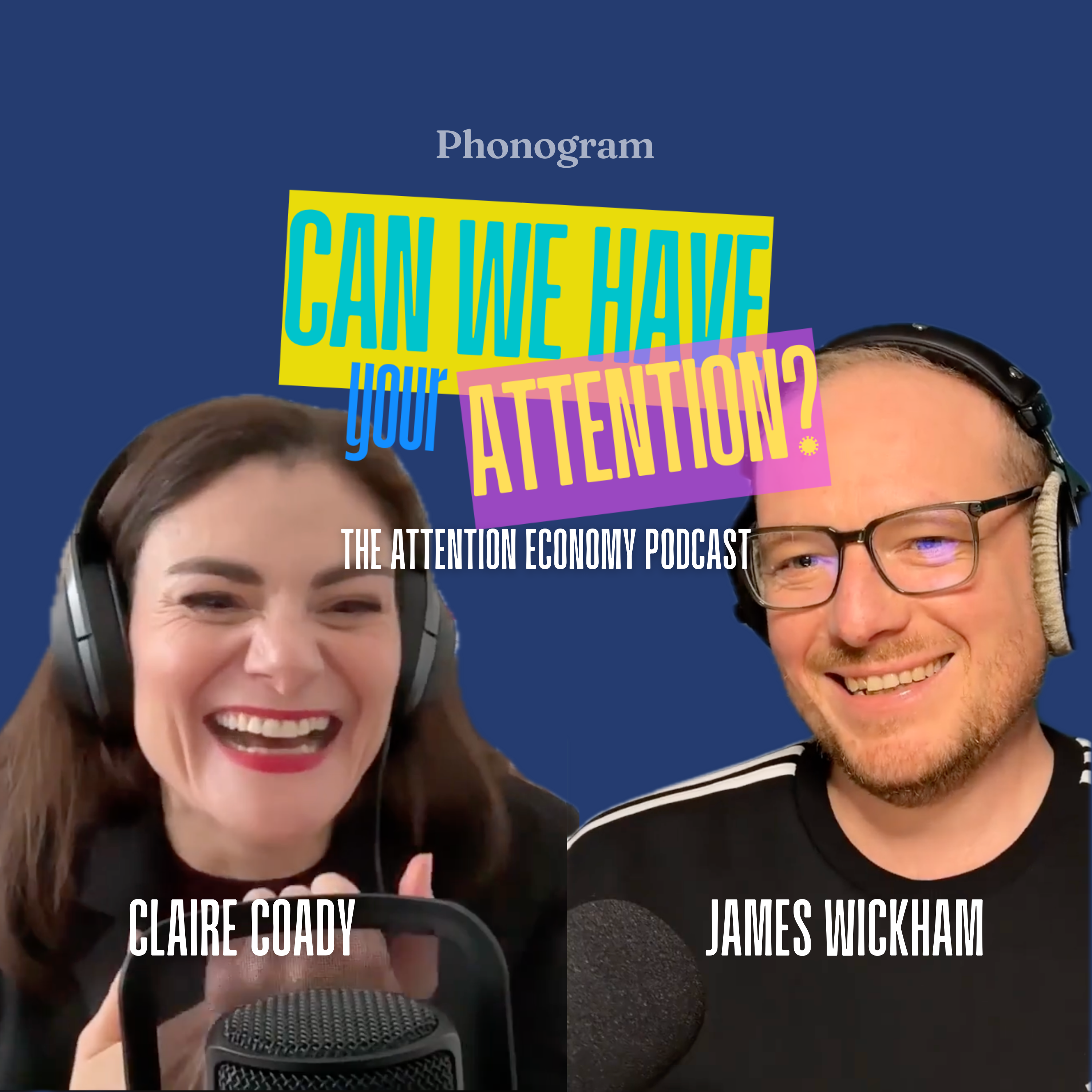
Turning our attention onto… this podcast: what we’ve learned about making a podcast (so far)
Can We Have Your Attention?Show Notes
In this episode, James & Claire - who host the show - talk about... the show.
We have not, promise, completely vaulted over our own collective shark. Instead we are looking at the barriers to entering the creative attention economy; setup costs, technical issues, avoiding view farms, excessive editing time - through the prism of this very podcast.
We also explain why we're going fortnightly - it's related to all this stuff above.
Remember if you would like to feed back on anything we mention in the podcast, or you have ideas and people you'd like to hear from and about, please message:
About The Show
Can We Have Your Attention? explores the unseen forces that shape what we see, what we buy, and who we become. Hosted by Claire Coady and James Wickham, we dive into the mechanics of the Attention Economy to understand how value is created (and manipulated) in a distracted world.
Production Credits:
Hosted by: Claire Coady & James Wickham Produced by: Phonogram https://www.phonogram.co.uk
Enjoying the episode? If you found this conversation valuable, please leave a rating or review - it helps us break through the noise—and get the attention of more listeners like you.
More from Can We Have Your Attention?
Claire and James discuss Aaron Sorkin’s film, The Social Reckoning, a companion to The Social Network.
You can also watch this episode on our YouTube channel!
You can also watch this episode on YouTube!
Ad tech, the backbone of digital advertising, is a lucrative business. But why? Who is profiting from it? And at what cost? Claire and James are joined this week by Claire Atkin, Co-founder and CEO of the Check My Ads Institute. They discuss ad tech: what it is, how it works, why it makes money, for whom it makes money - and what the consequences are.
For the past 25 years, claims on packets of crisps have been subject to more regulation than claims in election campaigns. But that could finally be about to change. Amendments to the Representation of the People Bill promise to apply some of the UK’s strenuous - and effective - advertising standards to election advertising. We are joined by Alex Tait, ad industry veteran and founder of the non-partisan campaign organisation Reform Political Advertising, one of the groups advocating these changes. Alex, together with Benedict Pringle, set up Reform Political Advertising to change the law. What does fact-based election advertising mean in practice? How can regulation that applies to commercial brand advertising improve political trust? How long does it take to turn an idea into a law? And can turkeys really vote for Christmas?