Show Notes
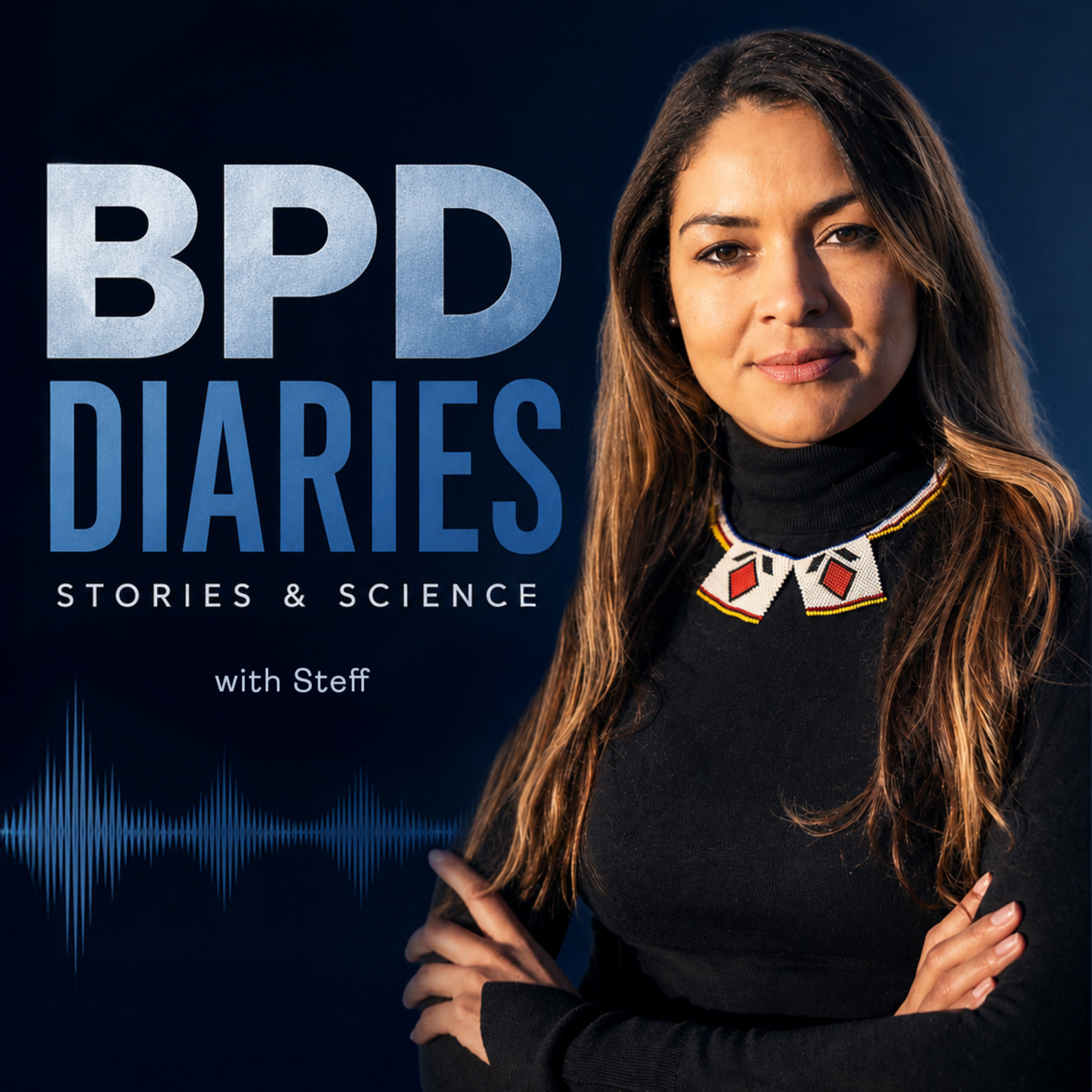
In this episode we explore the disorienting symptoms of transient paranoia and dissociation in Borderline Personality Disorder*. You'll hear personal stories, learn what the latest research says, and most importantly, we dive into real strategies for grounding yourself, challenging paranoid thoughts, and reconnecting with reality.
🌱 Have questions, stories, or something you’d like us to cover? We’d love to hear from you. Email us at [email protected] and let’s keep the conversation going. 🎧 Looking for guided meditations made for emotional regulation, BPD, and more? Check out our YouTube channel Empowered Heroes for free meditations created with love and care:https://www.youtube.com/@Empoweredheroes Also available on Spotify at Empowered Heroes Meditations. 📩 For support on your BPD recovery journey with DBT-based skills and Mindfulness practices, email me for a free 30-Minute Consultation: [email protected] or check out the website: www.bpdsupport.org *If you or someone you care about is struggling with symptoms of BPD, know that you’re not alone. Support is out there, and healing is absolutely possible.
📚 Referenced Research Includes: Fertuck, E. A., Jekal, A., Song, I., Wyman, B., Morris, M. C., Wilson, S. T., ... & Stanley, B. (2009). Enhanced ‘Reading the Mind in the Eyes’ in borderline personality disorder compared to healthy controls. Psychological medicine, 39(12), 1979-1988. Doi:10.1017/S003329170900600X Lyssenko, L., Schmahl, C., Bockhacker, L., Vonderlin, R., Bohus, M., & Kleindienst, N. (2018). Dissociation in psychiatric disorders: A meta-analysis of studies using the dissociative experiences scale. American Journal of Psychiatry, 175(1), 37-46. https://doi.org/10.1176/appi.ajp.2017.17010025 Fonagy, P., & Luyten, P. (2009). A developmental, mentalization-based approach to the understanding and treatment of borderline personality disorder. Development and psychopathology, 21(4), 1355-1381. https://doi.org/10.1017/S0954579409990198 Schore, A. N. (2001). The effects of early relational trauma on right brain development, affect regulation, and infant mental health. Infant Mental Health Journal: Official Publication of The World Association for Infant Mental Health, 22(1‐2), 201-269. https://doi.org/10.1002/1097-0355(200101/04)22:1<201::AID-IMHJ8>3.0.CO;2-9 Sieswerda, S., Arntz, A., Mertens, I., & Vertommen, S. (2007). Hypervigilance in patients with borderline personality disorder: specificity, automaticity, and predictors. Behaviour research and therapy, 45(5), 1011-1024. https://doi.org/10.1016/j.brat.2006.07.012 Zanarini, M. C., Frankenburg, F. R., Reich, D. B., Silk, K. R., Hudson, J. I., & McSweeney, L. B. (2007). The subsyndromal phenomenology of borderline personality disorder: a 10-year follow-up study. American Journal of Psychiatry, 164(6), 929-935. https://doi.org/10.1176/ajp.2007.164.6.929 Zanarini, M. C., Frankenburg, F. R., Wedig, M. M., & Fitzmaurice, G. M. (2013). Cognitive experiences reported by borderline patients and Axis II comparison subjects: A 16-year prospective follow-up study. The American journal of psychiatry, 170(6), 671.
More from BPD Diaries: Stories and Science with Steff
Is Medication the Best Solution for BPD? In this episode, I sit down with Professor Joanna Moncrieff, Professor of Critical and Social Psychiatry at University College London and practising consultant psychiatrist, for a conversation that challenges some of the assumptions about mental health, psychiatric diagnosis and medication. Joanna's work has challenged the idea that psychiatric drugs work by correcting an underlying “chemical imbalance” in the brain. So what does that mean for people with BPD? Content note: This episode discusses psychiatric medication, depression, suicide, trauma and mental health diagnoses. ⚠️ This episode is for education and discussion, not medical advice. Please don't stop or change any medication without talking to your prescriber. Some medications can cause withdrawal effects if stopped suddenly. 🌱 Have questions, stories, or something you’d like us to cover? We’d love to hear from you. Email us at [email protected] and let’s keep the conversation going. If you’d like more support in your journey toward BPD recovery, Steff offers 1:1 sessions using evidence-based tools from DBT, Schema Therapy, and Mindfulness to help you heal. Email for a free 30-Minute Consultation: 📩 [email protected] or check out the website: www.bpdsupport.org
I Was Hospitalised Again and Again. Then I Discovered DBT What does recovery from BPD actually look like? In this deeply honest conversation, Debbie DeMarco Bennett, better known as Debbie Corso, author of Stronger Than BPD and founder of DBT Path, takes us back to the years when her life was dominated by intense emotions, chaotic relationships, suicidal thoughts and repeated psychiatric hospitalizations. Debbie talks openly about being misunderstood and misdiagnosed, the stigma surrounding BPD, her eventual diagnosis, and the moment DBT began to change the course of her life. Debbie also talks about her concerns about the potential risks of the growing reliance on AI for emotional support and why she wants to be part of shaping how we use it safely. This is a conversation about BPD, DBT, recovery, hope, lived experience, stigma, relationships, AI and what it means to build a life worth living.
Why can spending money feel like emotional relief when you have BPD? You feel empty, lonely, rejected, angry or overwhelmed. Then you see something you want. And that little voice says, "Buy it!" In this episode, I explore the complicated relationship between BPD, impulsive spending, emotional regulation and shame. I look at why spending can become a way of escaping emotional pain, filling chronic emptiness, extending a good mood or even trying to buy a different version of yourself. This episode is about understanding why the spending happens and what we can actually do about it.
What if the label everyone's afraid to give a teenager is the one thing that could save their future? Professor Joost Hutsebaut has spent a career working with young people on the edge of a diagnosis most clinicians won't touch: borderline personality disorder (BPD). In this episode, Joost explains why he wrote a paper called The Diagnosis That Should Speak Its Name, arguing it's ethically right to diagnose personality disorders in teens. We dig into where a "difficult personality" ends and a disorder begins, the real risks of stigma versus the risks of staying silent, and how his own philosophy - "make therapy simple again" - reshaped the way he practices. He also honestly answers some of the internet's most asked questions. Whether you're a clinician, a parent, or someone who's ever been told to "wait and see," this conversation reframes early diagnosis as an act of hope, not a life sentence.
Whether you've just been diagnosed with BPD or have been living with the diagnosis for years, deciding whether to disclose it can feel overwhelming. Should you tell your partner? Your family? Friends? Your employer? Or is it safer to keep it private? In this episode, I explore one of the most common and emotionally difficult questions people with BPD ask. 🌱 Have questions, stories, or something you’d like us to cover? We’d love to hear from you. Email us at [email protected] and let’s keep the conversation going. 🎧 Looking for meditations made for emotional regulation, BPD, and more? Check out Empowered Heroes Meditations on Spotify. If you’d like more support in your journey toward BPD recovery, Steff offers 1:1 sessions using evidence-based tools from DBT, Schema Therapy, and Mindfulness to help you heal. Email for a free 30-Minute Consultation: 📩 [email protected] or check out the website: www.bpdsupport.org