Show Notes
It’s been 50 years since Neil Armstrong made his giant leap for mankind by becoming the first person to set foot on the lunar surface. While the historic event was followed by six further crewed missions – five of which landed – nobody has been back to the moon since the astronauts of Apollo 17 bid their goodbyes in 1972.
A growing number of countries and private companies have since started exploring the moon with robotic spacecraft and landers, with China recently becoming the first country to land a rover on the far side of the moon. These players are now in a new space race to put people back on the moon in the next few years. But who will be first and where will it all take us?
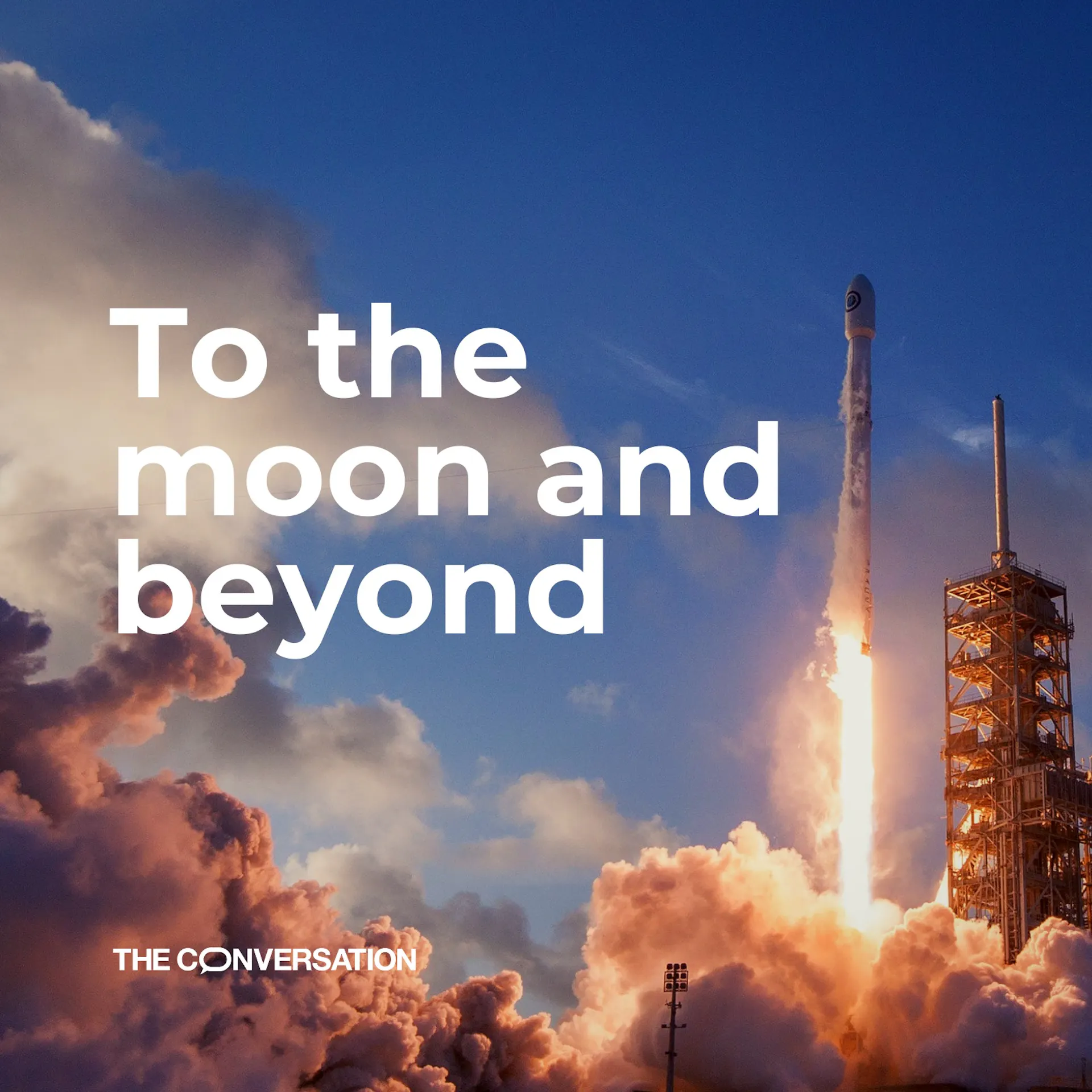
These are some of the questions we’ll explore in To the moon and beyond – a five part global podcast series created by the different editions of The Conversation around the world. We’ll investigate the past 50 years of space exploration and the 50 years ahead of us by talking to academic experts across the world, ranging from space scientists and psychologists to historians, lawyers and futurists.
Starting in 1969, we’ll speak to an astronaut-turned-academic about what it must have been like for Armstrong to take that first small step. And we’ll find out from historians why we suddenly stopped sending people to the moon in 1972. We’ll also discover what impact the moon landings have had on humanity and why they have generated so many conspiracy theories.
We’ll then travel all the way to 2069, looking at plans to use the moon as a staging post for future space exploration. This could take humans as far as Mars and the habitable icy moons surrounding the gas giant planets.
The first episode will launch on July 3. You can listen via The Conversation, or subscribe wherever you get your podcasts from by hitting the “Listen and Subscribe” button at the top of this page.
MORE ON THE MOON AND BEYOND
Join us as we delve into the last 50 years of space exploration and the 50 years to come. From Neil Armstrong’s historic first step onto the lunar surface to present-day plans to use the moon as a launchpad to Mars, hear from academic experts who’ve dedicated their lives to studying the wonders of space.
Credits:
To the moon and beyond is produced by Gemma Ware and Annabel Bligh. Sound editing by Siva Thangarajah. Thank you to City, University of London’s Department of Journalism for letting us use their studios.
Picture source: Buzz Aldrin on the moon, NASA
Music: Even when we fall by Philipp Weigl, via Free Music Archive
News archive: China lands a rover on the far side of the moon, CBS News
Apollo 11 and 17 audio from NASA
Miriam Frankel works for The Conversation. Martin Archer receives funding from the Science and Technology Facilities Council.
More from To the moon and beyond
What will space exploration look like in 2069, a century after the first moon landing? In the fifth and final episode of podcast series, To the moon and beyond, we speak to space scientists about the missions they are dreaming about and planning for the future.
It’s been 47 years since the last time a man stepped on the moon, and yet now a host of countries – from the US, to Russia and China – are racing to send astronauts back there, and set up base.
From Algeria to Vietnam, there are 72 countries with some sort of space programme. And the new space race involves a number of private companies too, that are becoming increasingly crucial to national missions.
In the second episode of The Conversation’s To the moon and beyond podcast series, we take a look at the impact going to the moon had on humanity – and why it generated so many conspiracy theories.
blank Welcome to the first episode of To the moon and beyond, a brand new global podcast series from The Conversation marking 50 years since the first moon landing in July 1969.